Exhibition Featuring 79 Works from Eight Countries
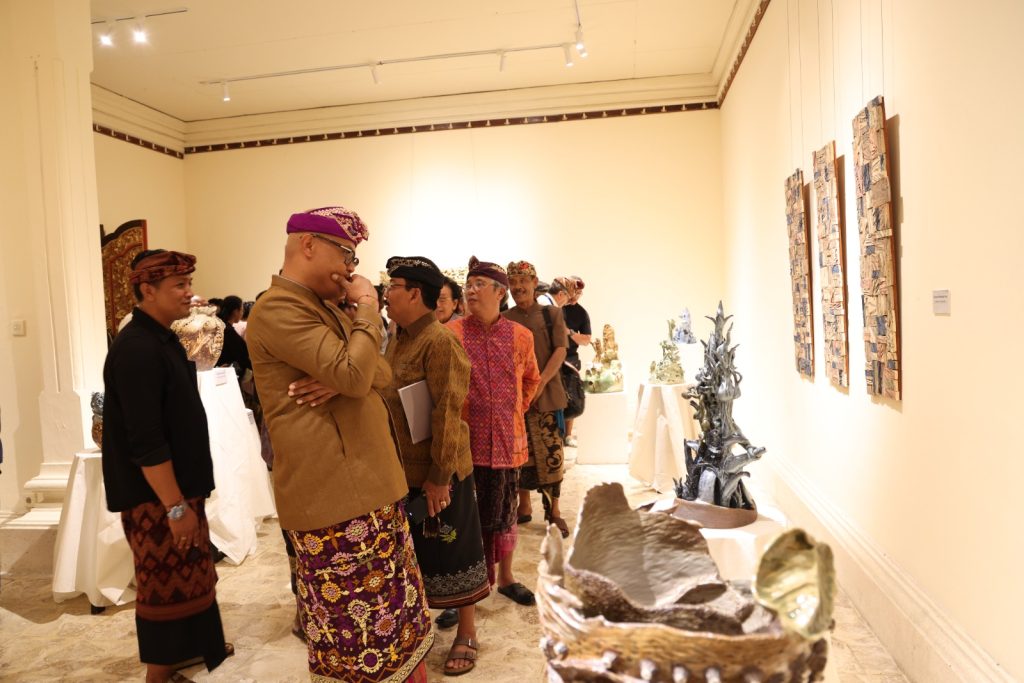
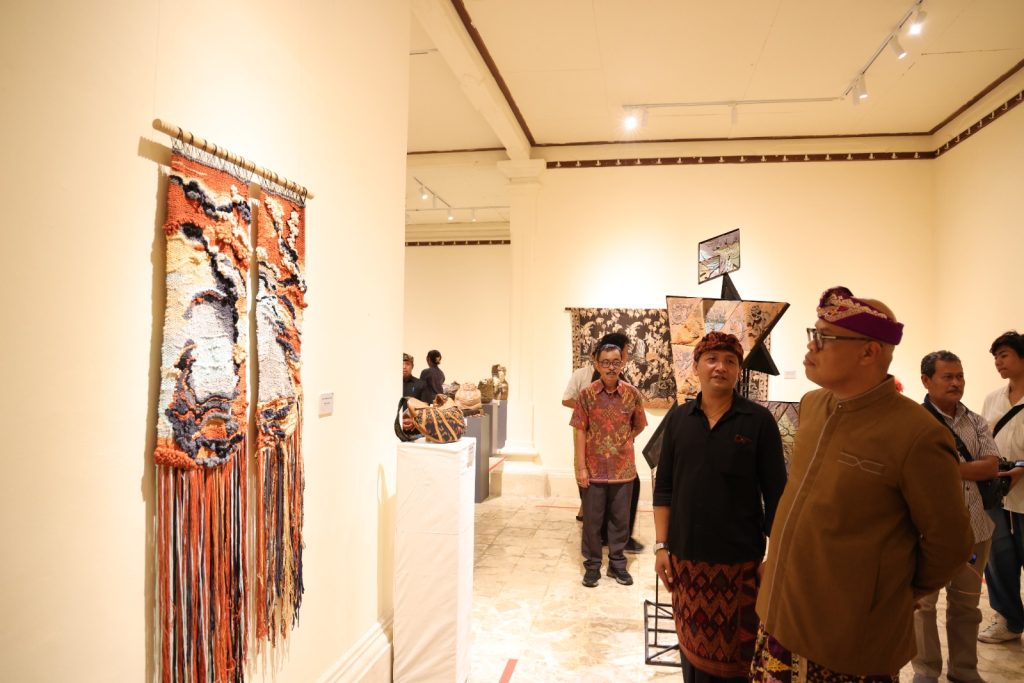
Photo: The Rector of ISI Bali visits the international craft exhibition Becoming: Prakriti–Pustaka–Padma at ARMA, Ubud, on 5 July.
The Indonesian Institute of the Arts (ISI) Bali, in collaboration with the Agung Rai Museum of Art (ARMA), presented an international craft exhibition entitled Becoming: Prakriti–Pustaka–Padma as part of the museum’s 30th anniversary commemorative program. The exhibition was officially inaugurated by the Rector of ISI Bali, Prof. Dr. Wayan “Kun” Adnyana, on 5 July at ARMA, Ubud.
Curated by Jean Couteau, Wayan Seriyoga Parta, and Warih Wisatsana, the exhibition serves as both a platform for artistic appreciation and a venue for intercultural exchange among contemporary craft artists. A total of 50 artists from eight countries—the United States, the Netherlands, Germany, Switzerland, India, Kenya, Iran, and Indonesia—present 79 two- and three-dimensional artworks representing a wide range of craft media.
According to the Chair of the Organizing Committee, Prof. Dr. Wayan Suardana, the exhibition constitutes one of the principal programs commemorating ARMA’s 30th anniversary, celebrated on 9 June 2026. Through collaboration with the Craft Study Program of ISI Bali, ARMA has organized this international-scale exhibition, which runs from 5 to 18 July 2026.
Prof. Suardana further explained that, in addition to international participants, the exhibition also involves academics and art practitioners from numerous higher education institutions across Indonesia, including ISI Yogyakarta, ISI Surakarta, ISBI Bandung, Universitas Negeri Surabaya (UNESA), Institut Informatika Indonesia Surabaya, Universitas Muhammadiyah Bandung, Universitas Negeri Gorontalo, Universitas Bumigora Nusa Tenggara Barat, as well as members of the Surabaya visual arts community.
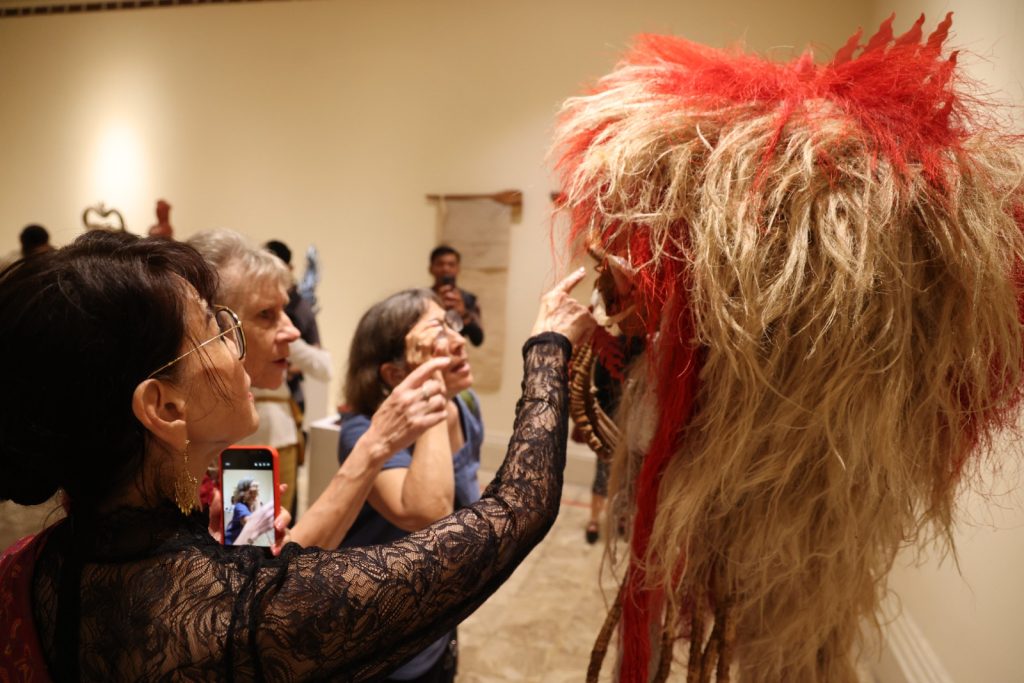
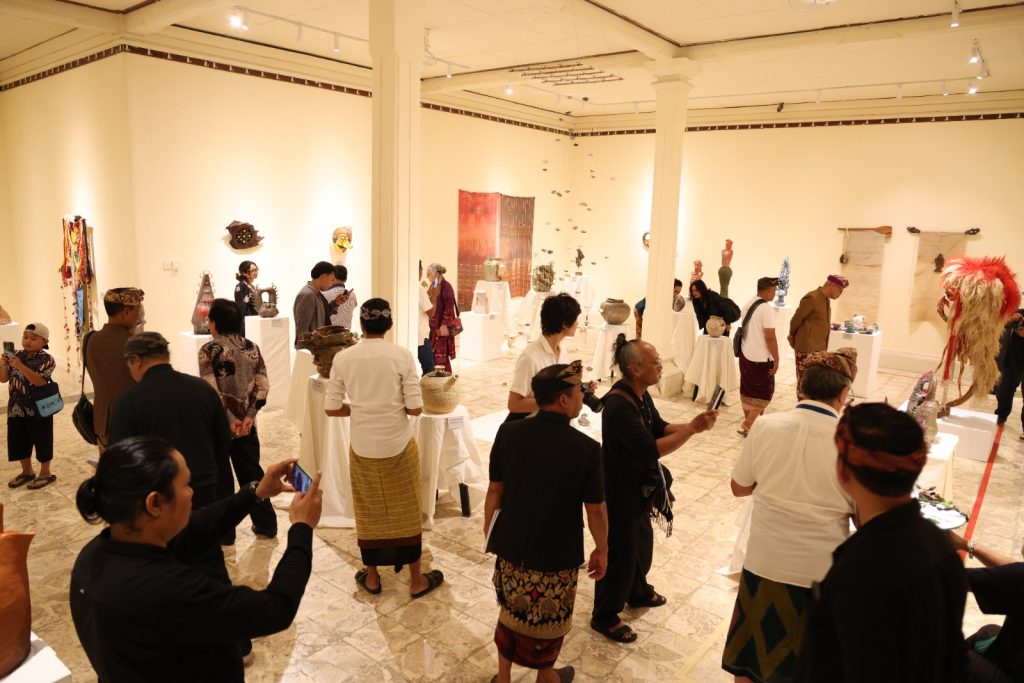
Photo: The international craft exhibition Becoming: Prakriti–Pustaka–Padma at ARMA, Ubud, on 5 July.
The exhibition showcases 79 artworks, comprising 28 ceramic sculptures, six terracotta works, nine ceramic vessels, four metal craft works, three keris (traditional Indonesian daggers), six textile works, three artistic batik pieces, two woodcraft works, four tapestries, six mixed-media works, one shadow puppet (wayang kulit), and four installations.
In his opening remarks, the Rector of ISI Bali, Prof. Dr. Wayan “Kun” Adnyana, expressed his appreciation for the Craft Study Program of ISI Bali, which initiated and served as the principal organizer of the exhibition.
“This exhibition is a genuine initiative of the Craft Study Program of ISI Bali, organized without external institutional funding. It demonstrates an admirable commitment to artistic practice and an exceptional capacity to establish collaborative networks,” he stated.
Prof. Adnyana emphasized that craft has often been narrowly perceived as handicraft or mass-produced objects, whereas it is fundamentally the result of a creative process rooted in the long history of human civilization. He argued that art and craft should not be regarded as separate domains, as both emerge through contemplation, creativity, and the search for meaning. Craft, in particular, embodies both artistic expression and functional value.
He further explained that the exhibition theme, Prakriti–Pustaka–Padma, offers a philosophical reflection on the creative process underlying craft practice. Prakriti symbolizes nature as the primary source of inspiration, materials, energy, and knowledge. Pustaka represents the intellectual traditions, empirical experiences, technical exploration, and cultural dialogue through which creativity develops. Padma (lotus) signifies the realization of aesthetic achievement attained through profound artistic contemplation, resulting in craft works that embody functional, artistic, spiritual, and universal humanistic values.
“Craft is not a secondary form of art. This exhibition serves as an important moment to reaffirm that art is an essential component of cultural and civilizational development. Creativity originates from nature, knowledge refines artistic production, and beauty enables cultural values to be transmitted to future generations,” affirmed the Professor of Art History.
On the same occasion, Prof. Adnyana also highlighted ISI Bali’s expanding international collaborations in the field of craft arts. He announced that ISI Bali had signed a Memorandum of Understanding (MoU) with the Hasami Tohjiki Industrial Association and BESTie Co., Ltd., located in Hasami, Nagasaki Prefecture, Japan. Through this partnership, ISI Bali will develop an international internship curriculum that enables students to undertake Japanese language instruction and ceramic production training prior to participating in internships and professional placements within the Hasami ceramic industry.
He also expressed his appreciation to the ARMA family for fostering a collaborative environment, as well as to the curators, lecturers, students, alumni, participating artists, organizing committee, and institutional partners whose contributions ensured the success of the exhibition.
Meanwhile, Anak Agung Gde Rai, Founder of ARMA, conveyed his appreciation for the enduring partnership with ISI Bali. According to him, Becoming: Prakriti–Pustaka–Padma is not merely an exhibition of artworks but also an embodiment of the enduring spirit of growth and transformation.
He expressed the hope that the exhibition would stand as evidence that, from Ubud and from Bali, cultural connections continue to be woven across the world. Craft, he noted, is not an inanimate object but a living cultural heritage that continues to evolve.
“Becoming is more than a title; it reflects an ongoing process of transformation. From a modest dream in Ubud, ARMA has grown into a place where the world encounters the spirit of Bali. That same spirit of becoming is vividly reflected in the craft works presented in this exhibition,” he concluded.