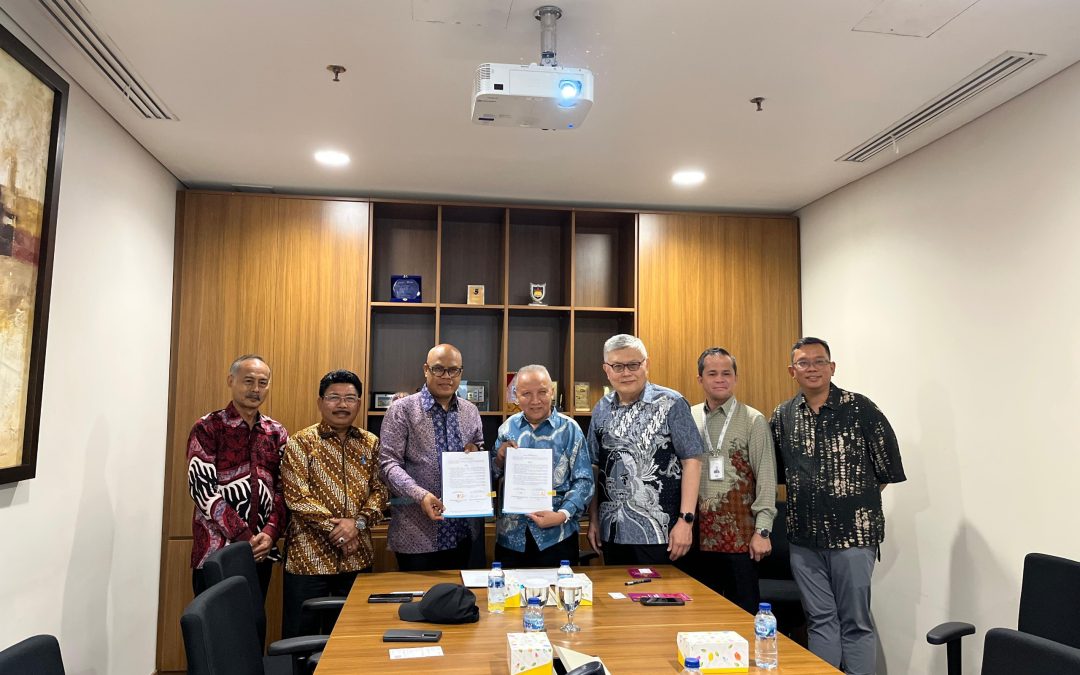
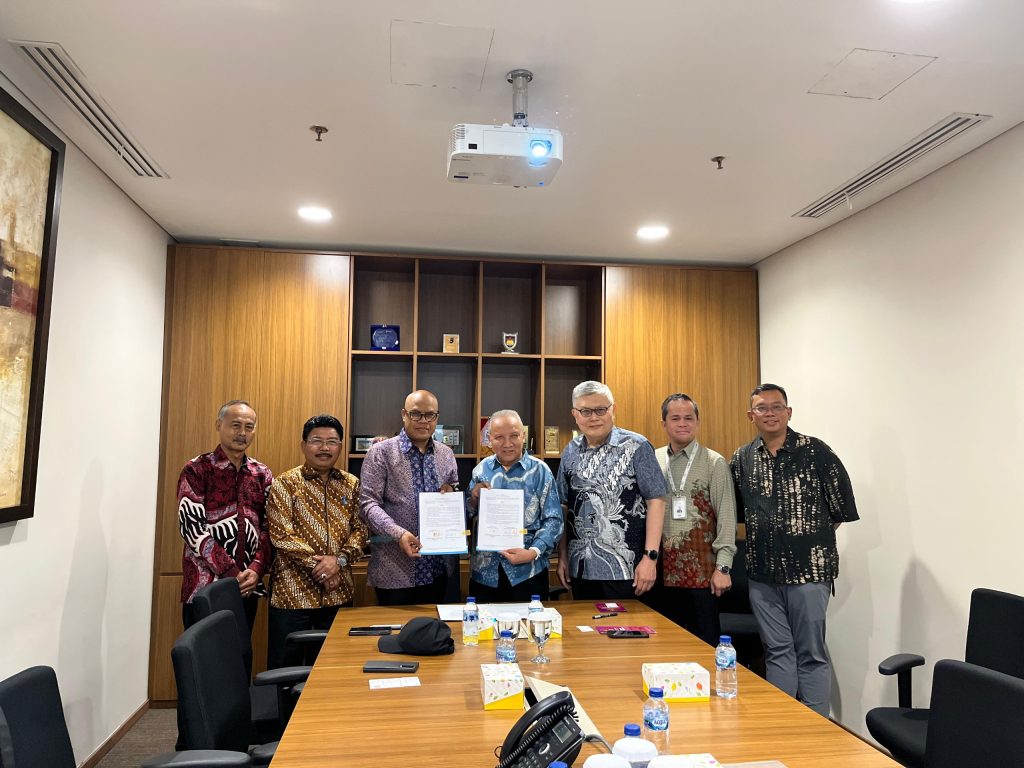
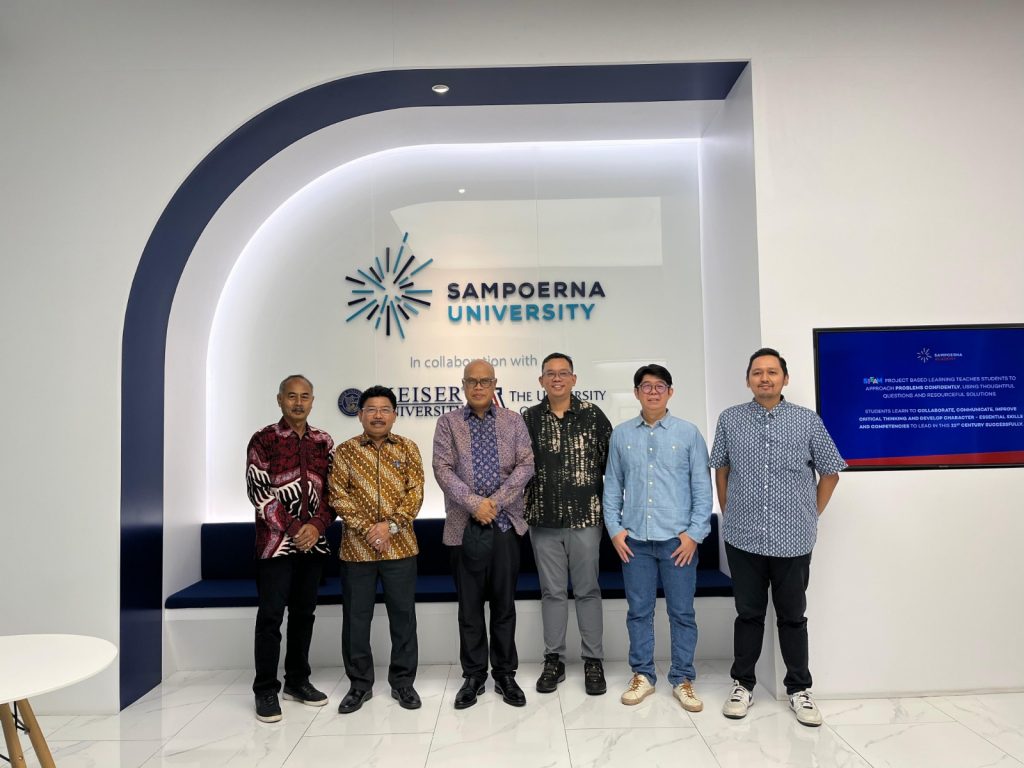
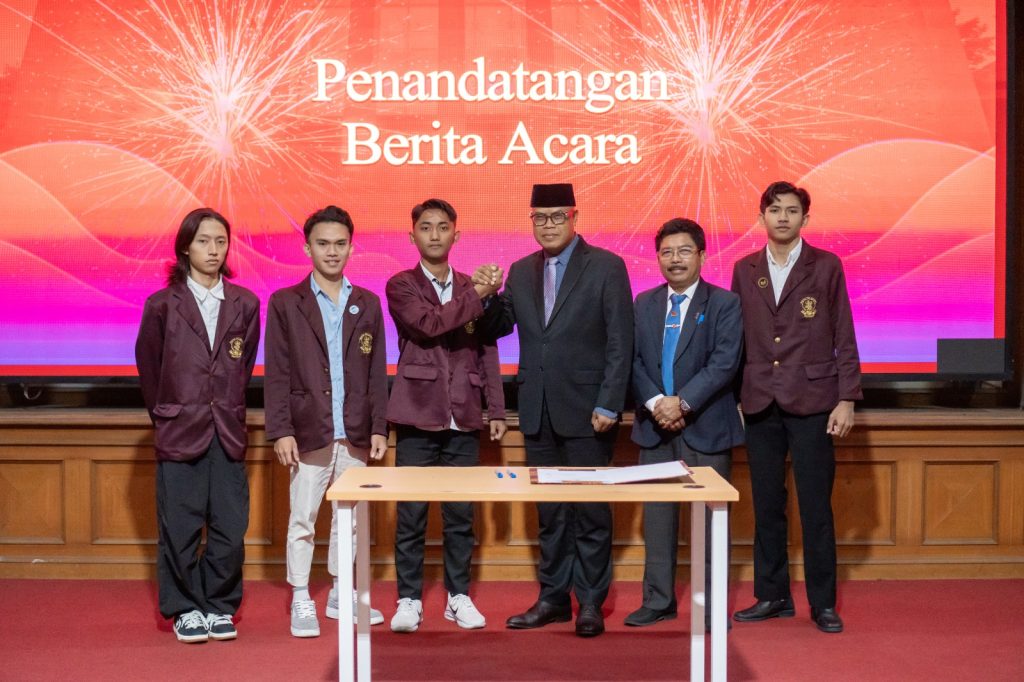
Photo: Signing of the Memorandum of Understanding (MoU) between ISI Bali and Sampoerna University, Friday (6/2), at the Sampoerna University Meeting Room.
Institut Seni Indonesia Bali (ISI Bali) and Sampoerna University have formally established a partnership in the implementation of the tridharma of higher education, encompassing education, research, and community service. This collaboration was officially marked by the signing of a Memorandum of Understanding (MoU) by the Rector of ISI Bali, Prof. Dr. Wayan ‘Kun’ Adnyana, and the Rector of Sampoerna University, Dr. Wahid Salasi April Yudhi, on Friday (6/2), at the Sampoerna University Meeting Room.
The MoU signing was witnessed by the Vice Rector for Student Affairs and Cooperation of ISI Bali, Prof. Dr. Komang Sudirga; the Chair of the ISI Bali Senate, Prof. Dr. Ketut Muka; as well as members of the leadership of Sampoerna University, including the Dean of the Faculty of Engineering and Technology, Dr. Eng. Farid Triawan; the Head of the Visual Communication Design Study Program, Tombak Matahari, M.Ds.; and lecturers of the Visual Communication Design Study Program, namely Santo Tjhin, M.M., M.Ds., M.CHt, and Arlene Dwiasti Soemardi, M.Arts.
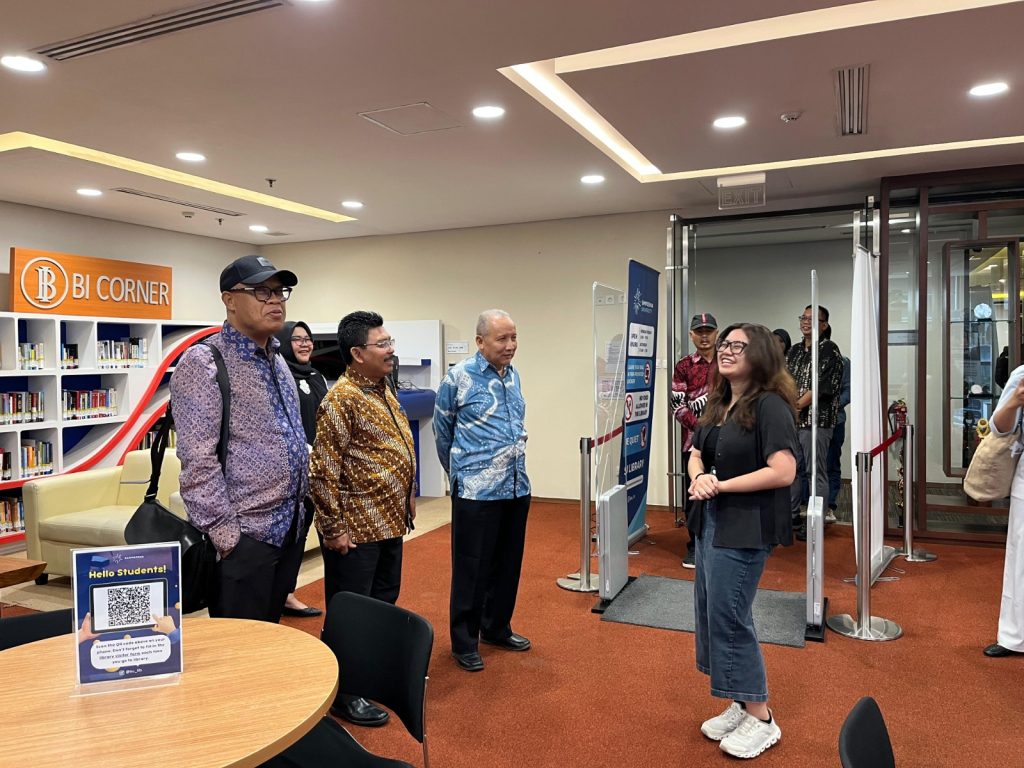
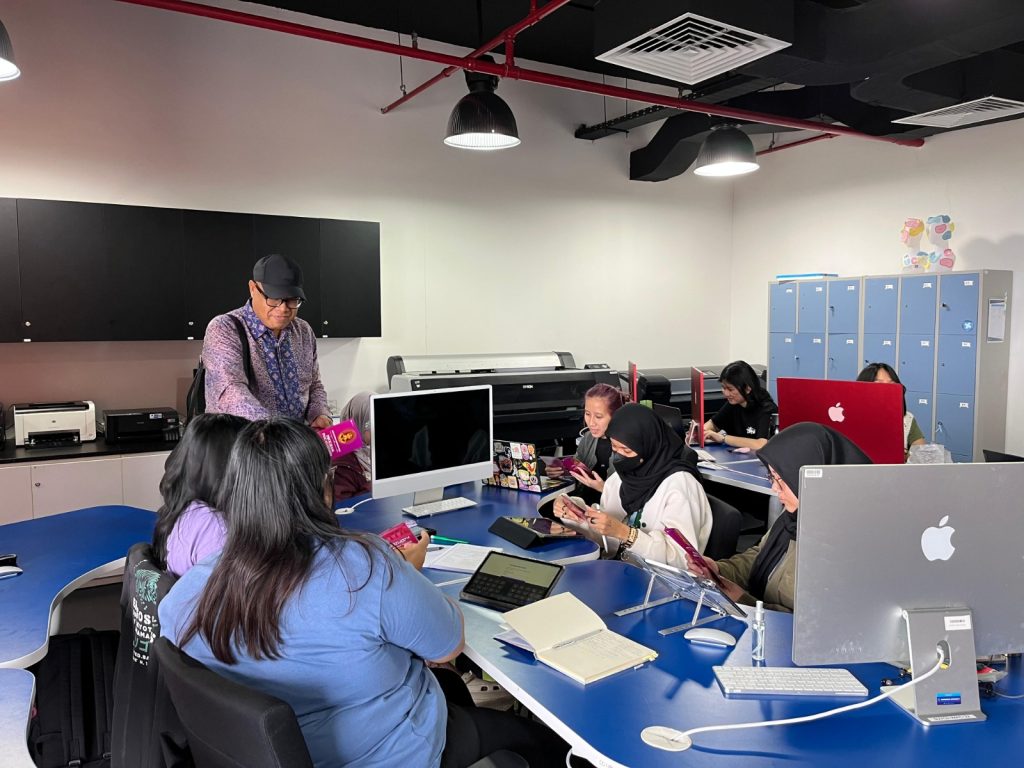
Photo: The Rector of ISI Bali and delegation touring several learning facilities at Sampoerna University, Friday (6/2).
The Rector of ISI Bali, Prof. Dr. Wayan Adnyana, stated that this collaboration opens broad opportunities for partnership, particularly in the areas of education, research, and community engagement. Potential forms of cooperation include joint research initiatives, faculty exchange and guest lectures, collaborative academic activities, and curriculum development based on the respective strengths and excellence of each institution. In addition, Prof. Wayan Adnyana offered opportunities for Sampoerna University lecturers to pursue doctoral studies at ISI Bali, noting that ISI Bali currently offers a Doctoral Program (S3) in Design, which is the only program of its kind in Indonesia.
Meanwhile, the Rector of Sampoerna University, Dr. Wahid Salasi, warmly welcomed the establishment of this partnership. He emphasized that Sampoerna University, particularly through its Visual Communication Design (VCD) Study Program, views this collaboration as a strategic opportunity to strengthen elements of uniqueness and local wisdom in academic development and design practice, in line with the character and strengths consistently upheld by ISI Bali as an arts higher education institution.
On this occasion, the Rector of ISI Bali and the delegation also had the opportunity to visit several learning facilities at Sampoerna University, including design studios, computer laboratories, classrooms, the library, and other supporting academic facilities. This visit is expected to serve as an initial step toward realizing various forms of concrete collaboration between the two institutions in the future.
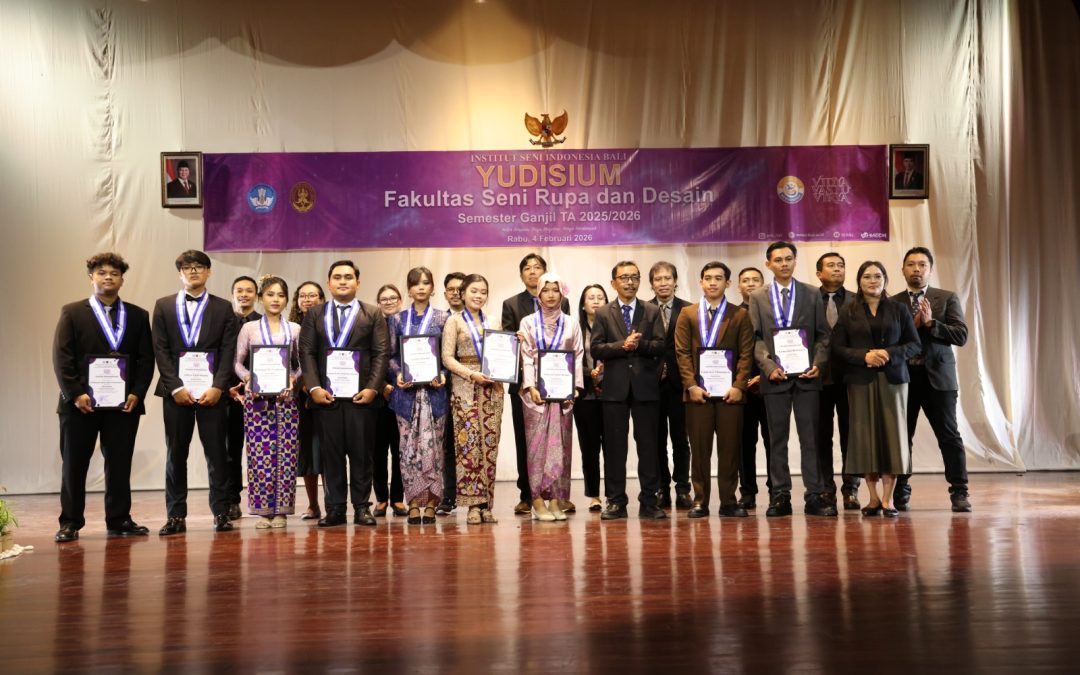
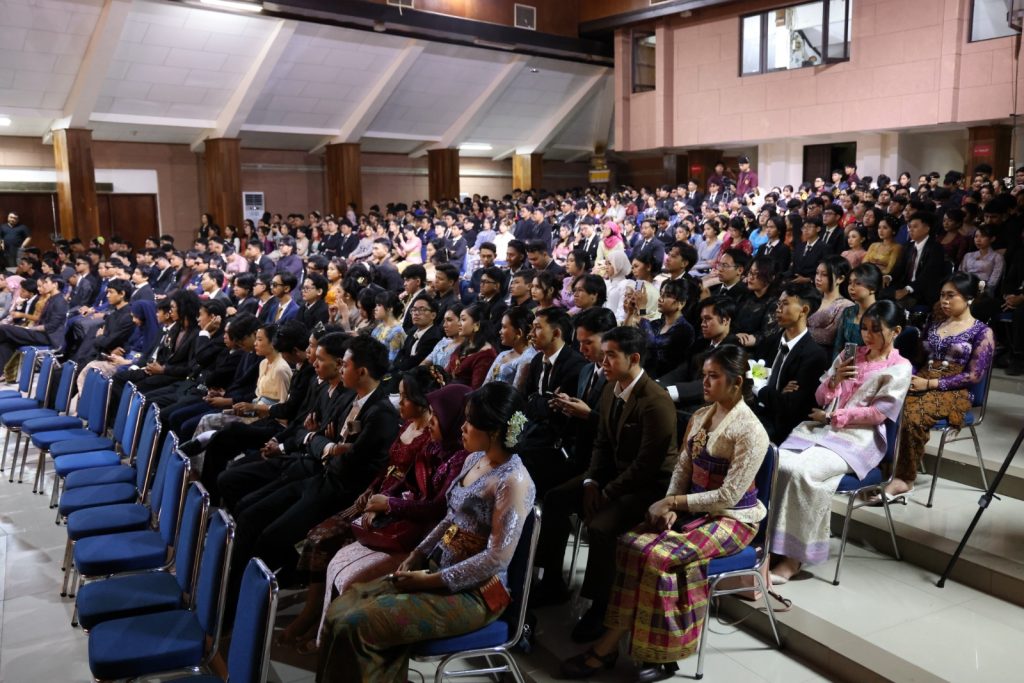
Photo: FSRD ISI Bali Yudisium, Wednesday (4/2) at the Natya Mandala Building, ISI Bali
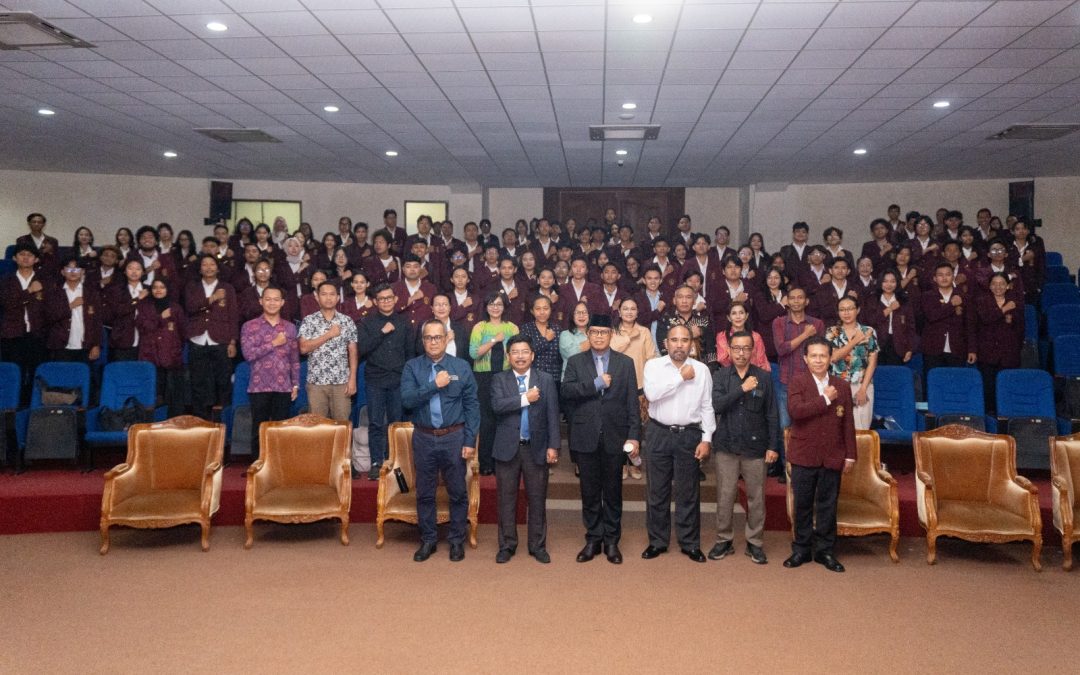
The Yudisium of the Faculty of Fine Arts and Design (FSRD), Institut Seni Indonesia Bali (ISI Bali), for the Odd Semester of the 2025/2026 Academic Year, held on Wednesday (4/2) at the Natya Mandala Building, ISI Bali, was particularly significant as it once again marked the largest yudisium ever conducted by FSRD ISI Bali. Following the completion of the ISI Bali Berdampak Final Project Dissemination and the attainment of their final academic assessments, a total of 391 students from nine study programs within FSRD participated in the yudisium. These comprised the Study Programs of Fine Arts (37 students), Craft (11), Interior Design (65), Visual Communication Design (DKV) (106), Photography (28), Fashion Design (71), Film and Television Production (PFTV) (28), as well as the two newest programs—Product Design (22) and Animation (22)—which also produced graduates of the Applied Bachelor (D4) degree.
According to the report delivered by the Vice Dean I of FSRD ISI Bali, who also served as the Chair of the Yudisium Committee, Dr. I Made Pande Artadi, S.Sn., M.Sn., the ISI Bali Berdampak programs that had been implemented included the Independent Study Berdampak Program, Entrepreneurship Berdampak, Internship Berdampak, and Teaching Assistant Berdampak. It is expected that future creative works produced by the graduates will not merely represent aesthetic achievements, but will also embody humanitarian values, provide utility, and generate a meaningful impact on society at large. “Today marks the initial gateway for you to truly Meraya Citta Samasta. Remember that the academic degree you will carry is a responsibility to become individuals who are both solution-oriented and innovative,” Dr. Artadi emphasized.
It was also announced that the top graduates of FSRD ISI Bali from the nine study programs achieved notably high Grade Point Averages (GPAs), ranging from 3.90 to 4.00. Three Best Graduates at the Faculty Level for the Bachelor’s Degree (S1) Program were recognized: Naomi Eunike Erasti Andrianto as Best Graduate I with a GPA of 4.00 from the Craft Study Program; Komang Pradnya Triandana Iswara as Best Graduate II with a GPA of 4.00 from the Interior Design Study Program; and Kadek Candra Purnami as Best Graduate III with a GPA of 4.00 from the Visual Communication Design (DKV) Study Program. In addition, three Best Graduates at the Faculty Level for the Applied Bachelor’s Degree (D4) Program were also awarded: Trixie Liang Gono as Best Graduate I with a GPA of 4.00 and Ni Putu Ayu Sugiari as Best Graduate II with a GPA of 4.00, both from the Fashion Design Study Program; and Gede Bumi Apnala Bayu as Best Graduate III with a GPA of 4.00 from the Film and Television Production (PFTV) Study Program.
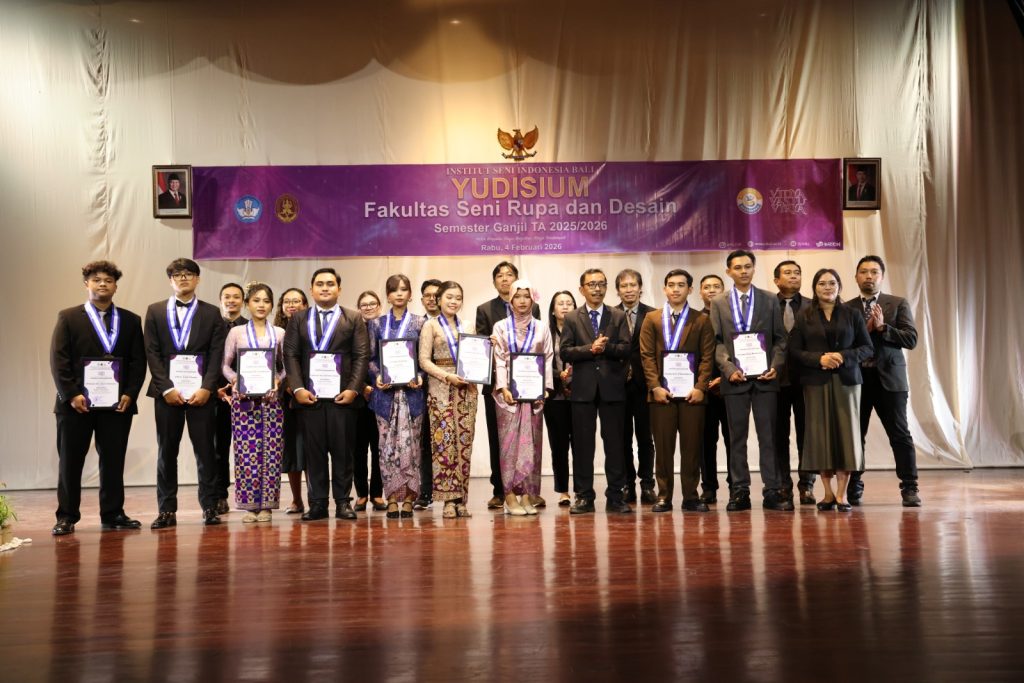
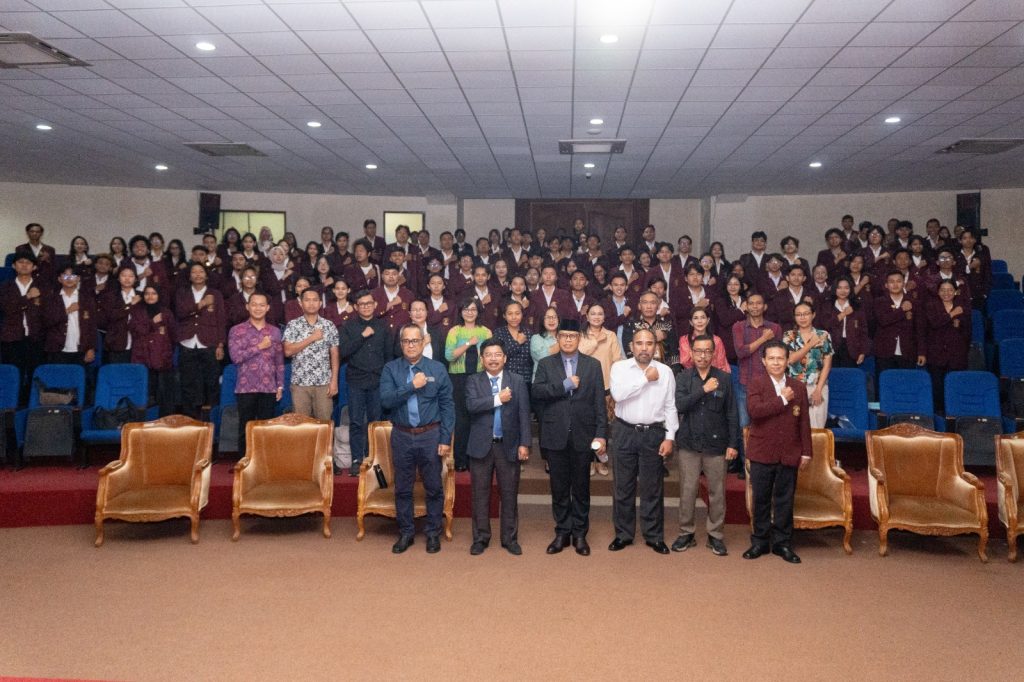
Photo: Participants of the FSRD ISI Bali Yudisium, Wednesday (4/2) at the Natya Mandala Building, ISI Bali
Meanwhile, the Best Creative Works were awarded to Shafa Auliapay Aisyah (Fine Arts), I Kadek Yogi Kertayasa (Craft), I Made Bayu Prihanjagat (Interior Design), I Gusti Ayu Agung Ari Yovita Adriani (Visual Communication Design), I Made Surya Hendra Sujana (Photography), Ni Kadek Dwi Astridiani (Fashion Design), Gloriya Trivika (Film and Television), I Putu Gede Osana (Product Design), and I Nyoman Arya Bagus Pangestu (Animation). This year, Naomi Eunike Erasti Andrianto from the Craft Study Program was appointed to represent the graduates in delivering reflections and messages on behalf of the yudisium participants. She conveyed that the academic journey at FSRD was neither as brief nor as effortless as it might appear, highlighting the strong sense of solidarity among her peers who continuously struggled, collaborated, and created together. She expressed her hope that FSRD ISI Bali would continue to serve as a positive role model, progressing with improved facilities that further support academic activities.
“The MBKM program and ISI Bali Berdampak have become essential experiences in our academic journey, as we were entrusted with opportunities to explore and refine our competencies, as well as to engage directly with industry realities, thereby gaining deeper scholarly and professional insights,” Naomi explained.
During the course of the event, several performances—including gamelan music, traditional dance, vocal performances, band music, and acoustic sessions—were presented to entertain the yudisium participants and attending lecturers. The yudisium proceedings were then concluded with closing remarks from the Dean of FSRD, Drs. I Nengah Sudika Negara, M.Erg. He congratulated the students on reaching this long-awaited milestone and expressed his hope that the graduates would continue to maintain strong relationships with one another while upholding the good name of their alma mater in their future endeavors, whether in professional careers or further academic pursuits. “This yudisium marks the end of your journey at FSRD ISI Bali, but also the beginning of your journey beyond it. Never forget your alma mater,” he reminded the graduates.
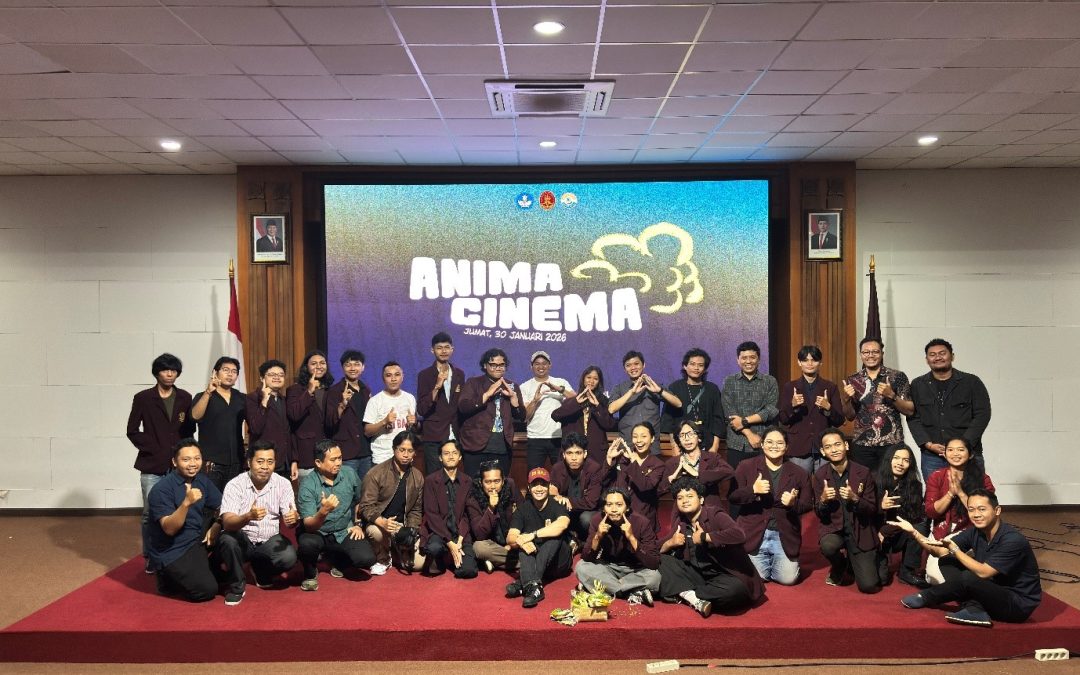
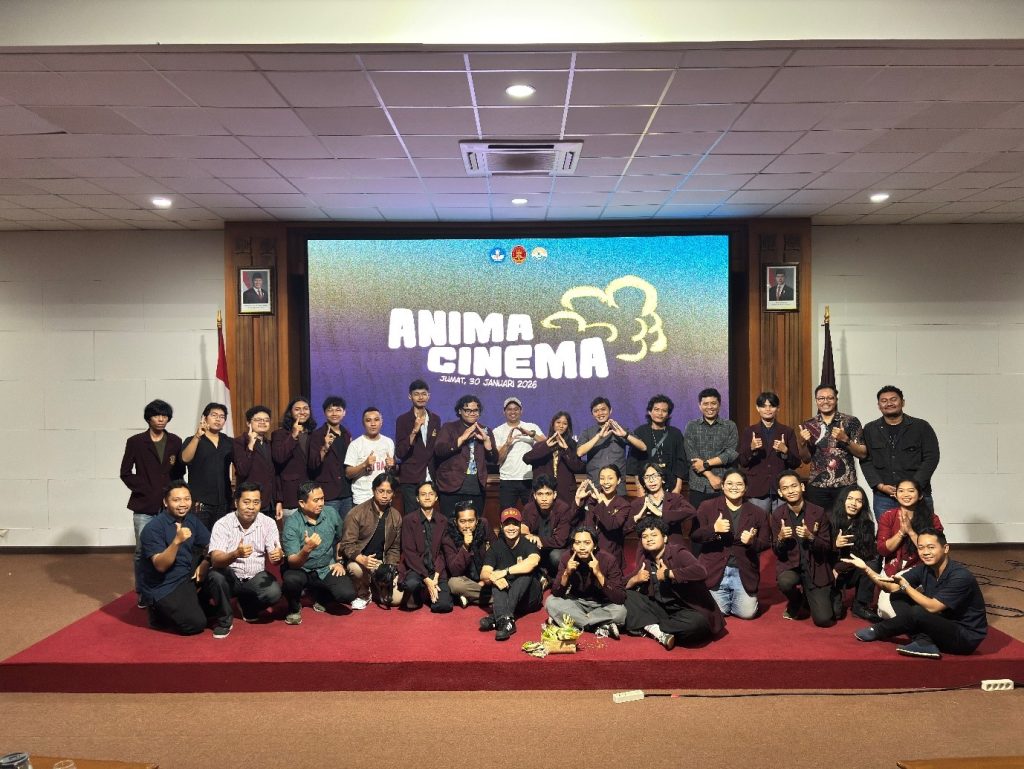
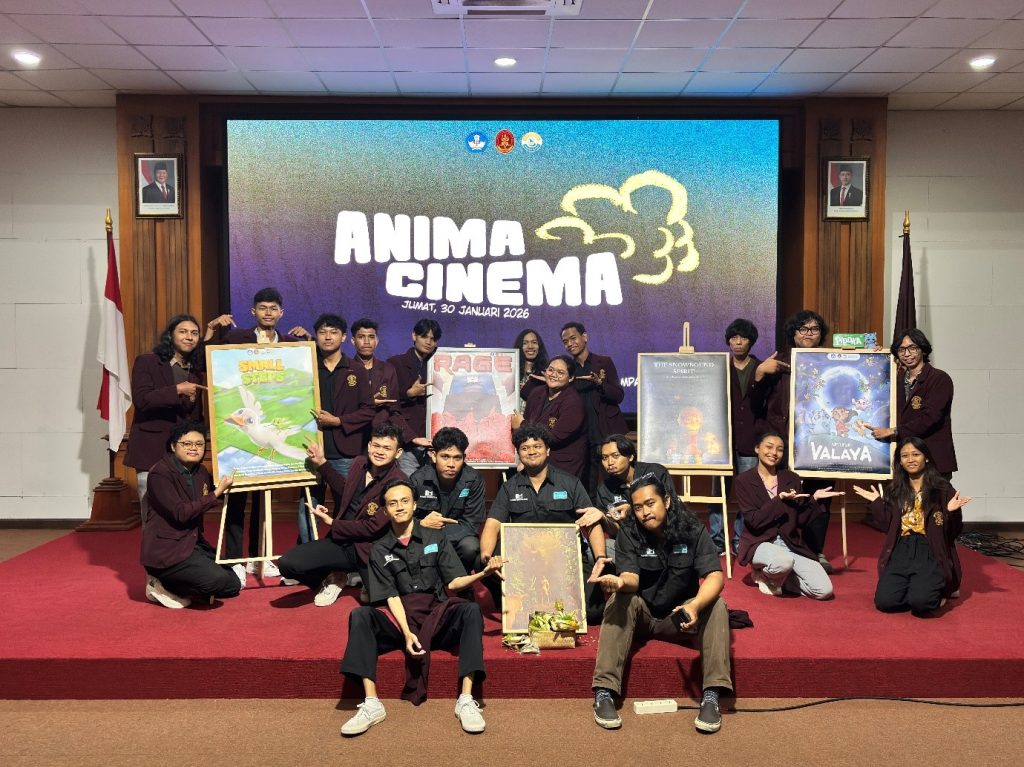
The Animation Study Program, Faculty of Fine Arts and Design, Institut Seni Indonesia Bali, conducted its inaugural Final Project Dissemination for the first cohort of students admitted in 2022. This activity represents a significant milestone in the development of the Animation Study Program at ISI Bali, while simultaneously marking the completion of the students’ academic journey, which spanned approximately three and a half years or seven semesters.
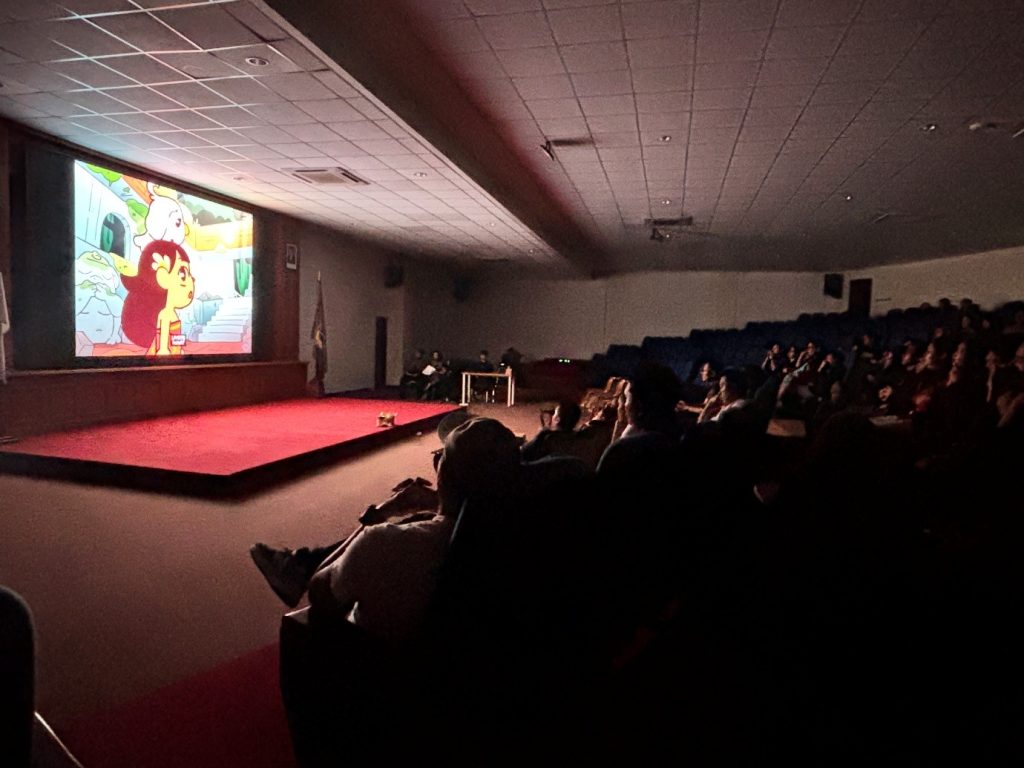
The inaugural Final Project Dissemination was held under the theme “Anima Cinema,” which represents the learning outcomes of the Animation Study Program in the form of animated film works. The entire creative process was implemented in accordance with the ISI Bali Berdampak Curriculum, which emphasizes practice-based learning, collaboration, and alignment with the needs of the professional workforce. Through this scheme, Animation students collaborated with ISI Berdampak partners to gain professional experience relevant to the creative industry.
The Final Project Dissemination took place on 30 January 2026 at the Vicon Room, Citta Kelangen Building, ISI Bali. The dissemination served as an academic presentation forum for students to articulate the creative processes, concepts, and underlying ideas of the animated films they produced.
In this inaugural dissemination, students from the 2022 cohort presented five animated film works, consisting of both two-dimensional (2D) and three-dimensional (3D) animations. These works explored themes related to social impact, environmental impact, and economic impact, conveyed through innovative storytelling approaches grounded in artistic and cultural values.
The implementation of this dissemination is a source of pride for the Animation Study Program, Faculty of Fine Arts and Design, ISI Bali, as it marks the emergence of its first graduates who possess academic competence, creativity, and readiness to contribute to the field of animation and the creative industry. This activity also reflects ISI Bali’s commitment to delivering arts education that is adaptive, relevant, and impactful.
Through this inaugural Final Project Dissemination, ISI Bali extends its appreciation and congratulations to the Animation Study Program students of the 2022 cohort for their academic achievements. It is hoped that this accomplishment will serve as an inspiration for other students and members of the academic community to continue creating, innovating, and enhancing the institution’s reputation at both national and international levels.
Release by Arya Pageh Wibawa and I Komang Try Adi Stanaya
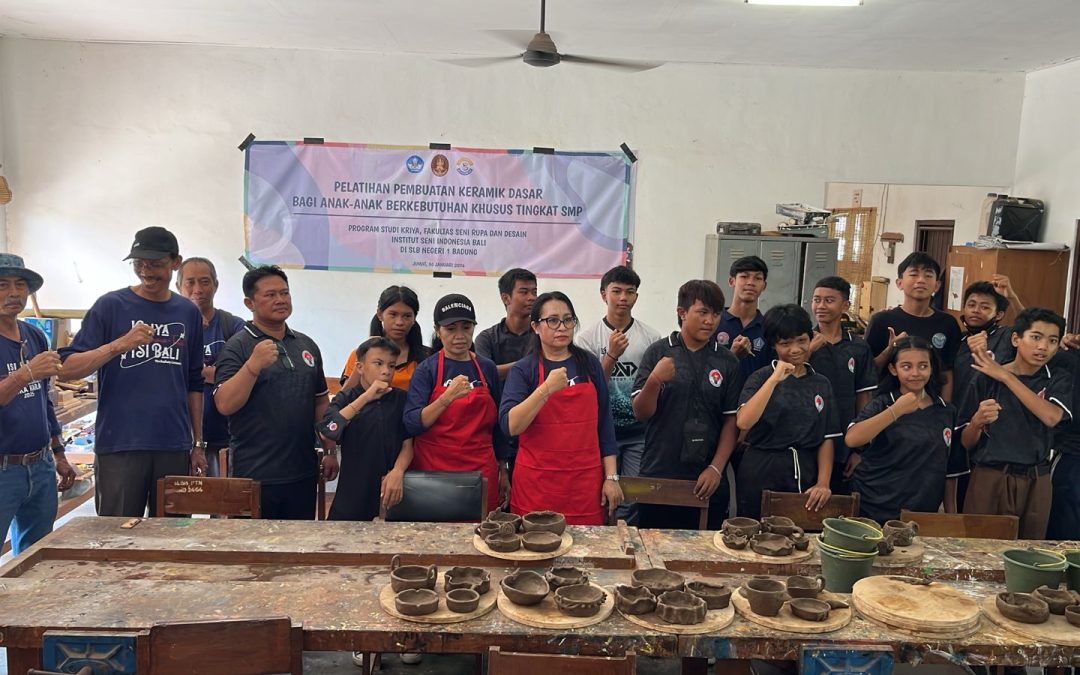
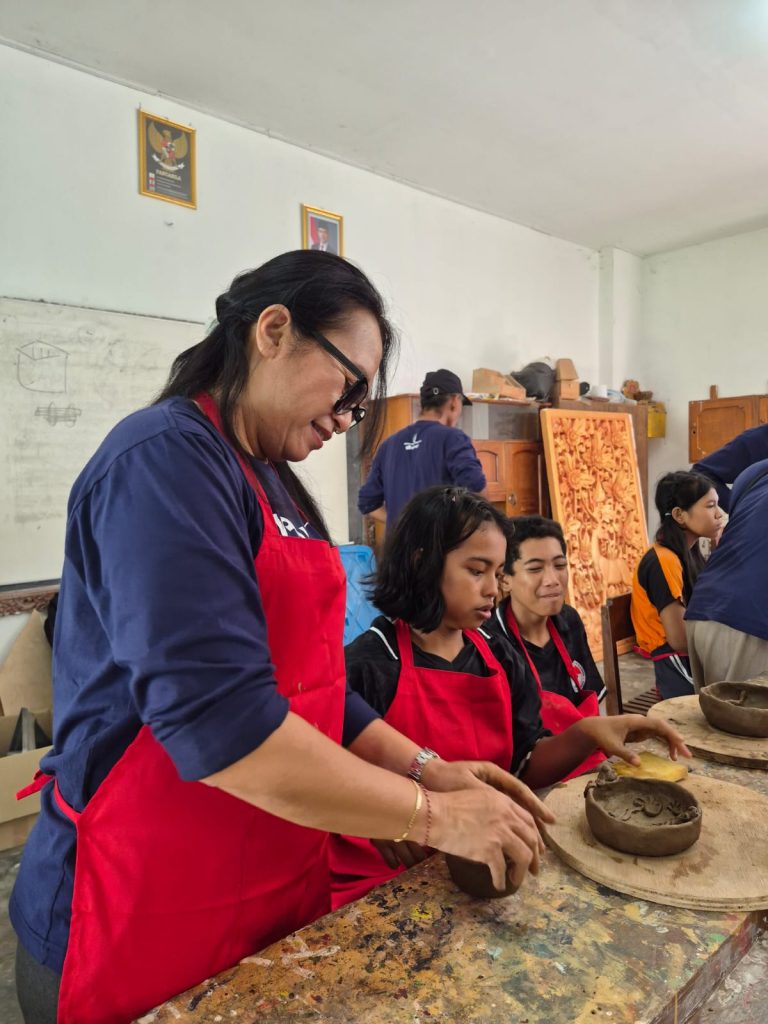
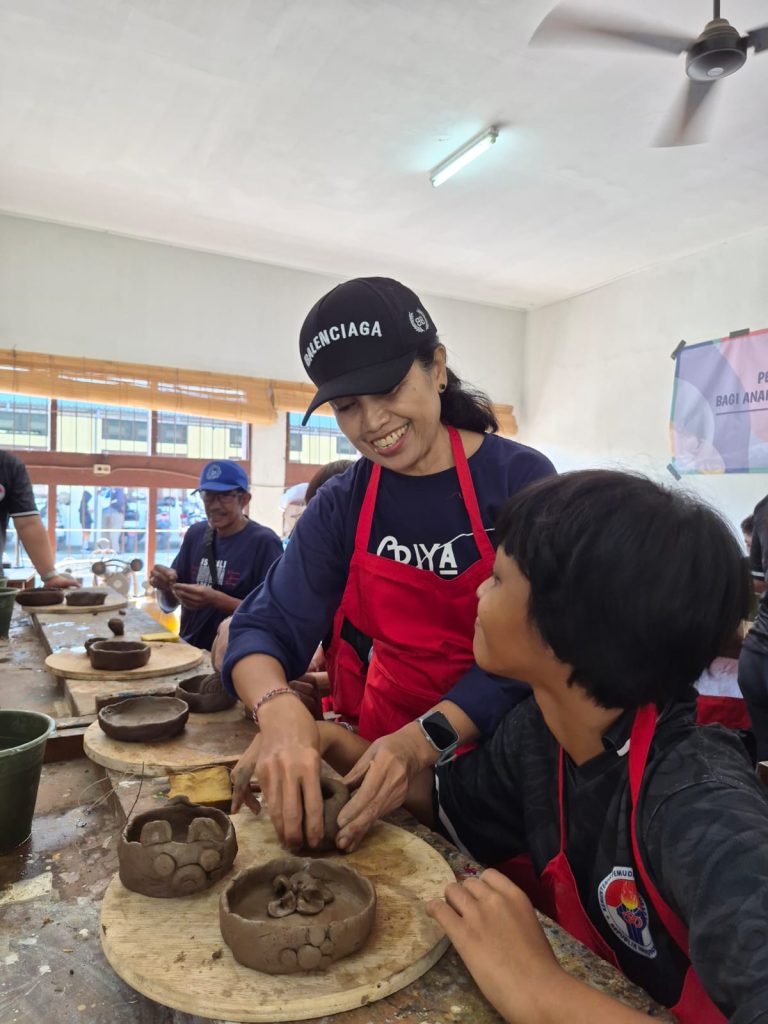
The Craft Study Program of the Institut Seni Indonesia Bali (ISI Bali) conducted a Community Service Program (Pengabdian kepada Masyarakat/PKM) in the form of Basic Ceramic-Making Training for students of SLB Negeri 1 Badung at the junior secondary school (SMP) level, located on Jalan By Pass Ngurah Rai, Nusa Dua, Badung Regency, Bali, on Friday (January 30). The community service activity was attended by 15 students of SLB Negeri 1 Badung and was guided by lecturers involved in the program.
At the opening of the event, the Coordinator of the Craft Study Program of ISI Bali, Dr. Ida Ayu Gede Artayani, S.Sn., M.Sn., explained that the basic ceramic-making training constituted an implementation of the Tri Dharma of Higher Education, specifically in the field of community service, which is routinely carried out each year with varying themes and target groups. The training was not merely an artistic practice activity but also served as a highly beneficial learning medium, particularly for children with special needs. Through hands-on interaction with clay—shaping, pressing, and experiencing its texture—students were trained to develop sensory awareness, fine motor skills, concentration, and self-confidence.
Furthermore, the Head of the Craft Study Program emphasized that every work produced represented a process of learning, self-expression, and self-discovery. Each child is believed to possess unique abilities and potential. It is the responsibility of educators, facilitators, and educational institutions to provide a safe, enjoyable, and meaningful environment in which such potential can develop optimally. Craft art, particularly ceramics, offers an inclusive and humanistic approach to achieving these objectives. At the conclusion of her remarks, she expressed her appreciation to SLB Negeri 1 Badung for the collaboration and expressed hope that the activity would provide new experiences for the students and serve as an initial step toward opening sustainable skill-development opportunities in the future.
On this occasion, the Principal of SLB Negeri 1 Badung conveyed gratitude to the Craft Study Program of ISI Bali for its attention, concern, and partnership through the training activity. The principal also noted that the presence of the Craft Study Program of ISI Bali represented a tangible form of synergy between higher education institutions and special education in creating inclusive and meaningful learning experiences. The basic ceramic training activity was considered to hold significant value, as the process of recognizing and working with clay not only enhances artistic skills but also contributes to the development of sensory abilities, fine motor skills, focus, and self-confidence. Students were given opportunities to express themselves, learn through direct experience, and experience joy in the creative process. The school further hoped that students would gain new learning experiences, while teachers and assistants would acquire additional insights that could be developed in future instructional activities.
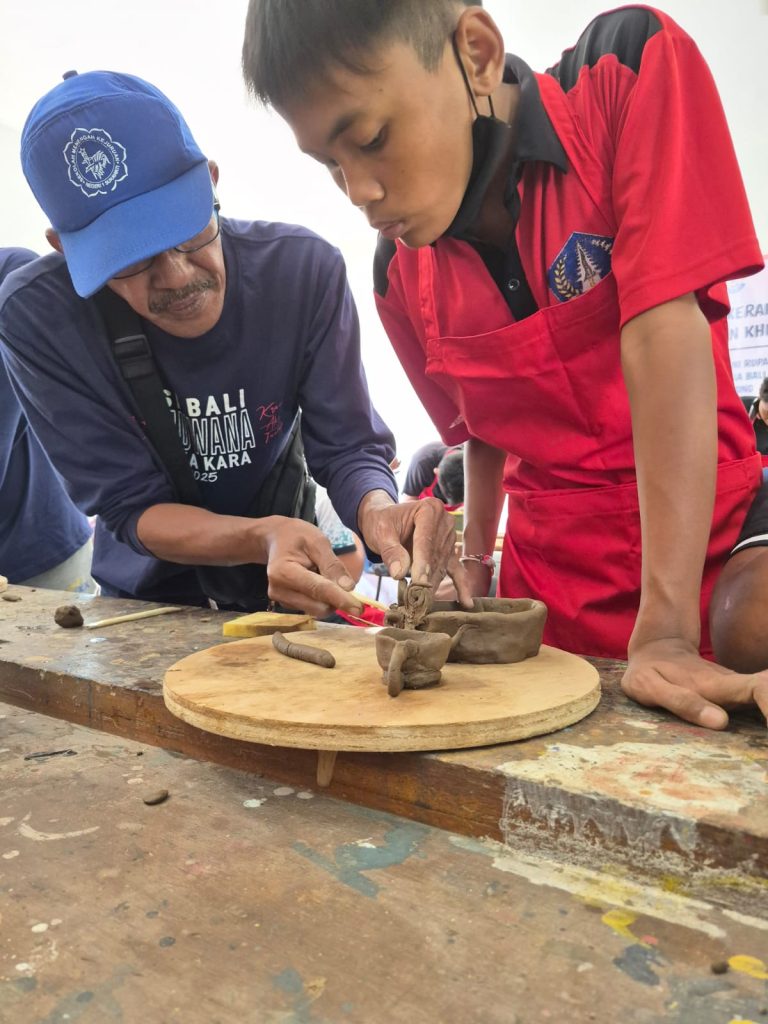
The stages of this community service program began with the introduction of ceramic materials and tools, followed by an introduction to basic hand-building ceramic techniques. The activities then continued with practical sessions in creating simple works such as pencil holders, small bowls, or free-form objects, followed by simple finishing and drying processes. The students participated enthusiastically in a cheerful atmosphere and were able to produce fairly good works in accordance with their individual abilities.
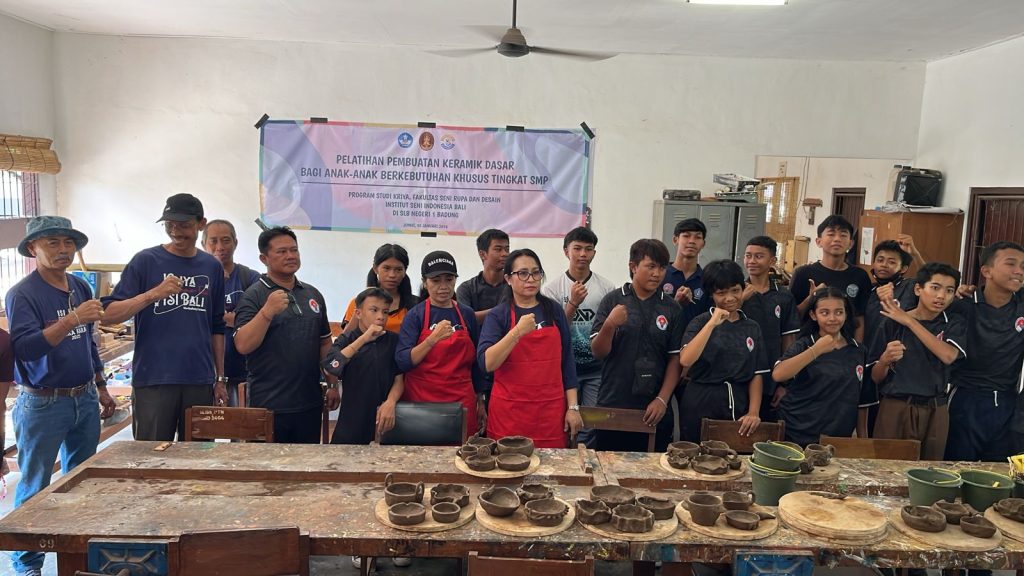
Photo: Students of SLB Negeri 1 Badung with their artworks, accompanied by teachers, assistants, and lecturers of the Craft Study Program, Institut Seni Indonesia Bali (ISI Bali), after the training session, Friday (January 30), at SLB Negeri 1 Badung.
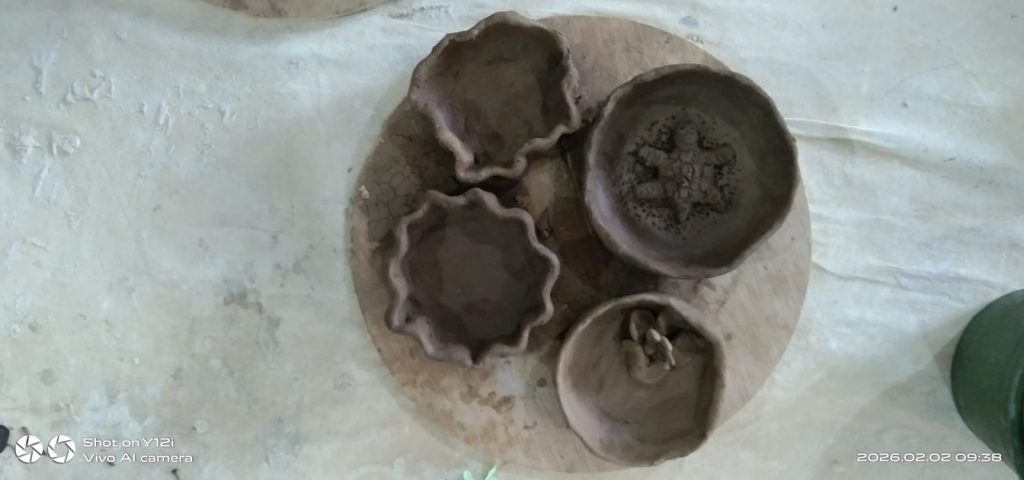
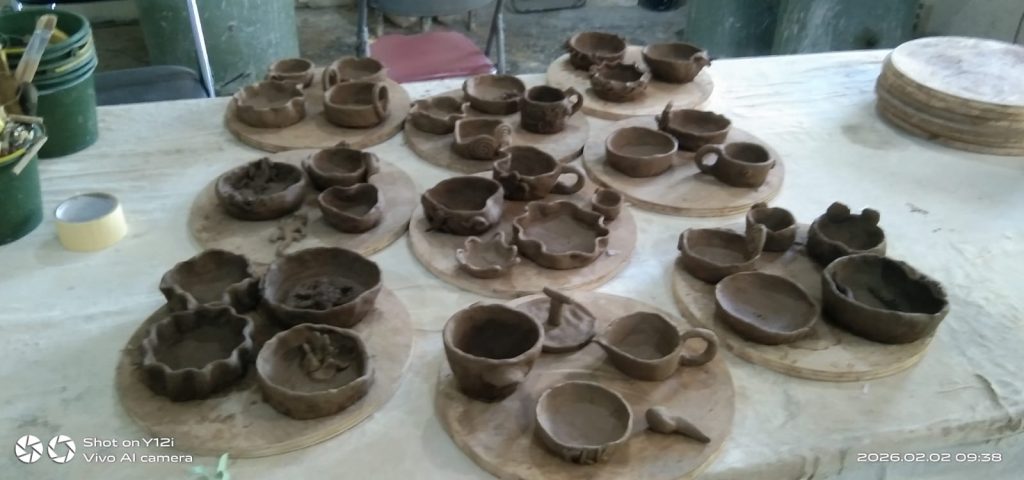
Photo: Ceramic artworks created by students of SLB Negeri 1 Badung.
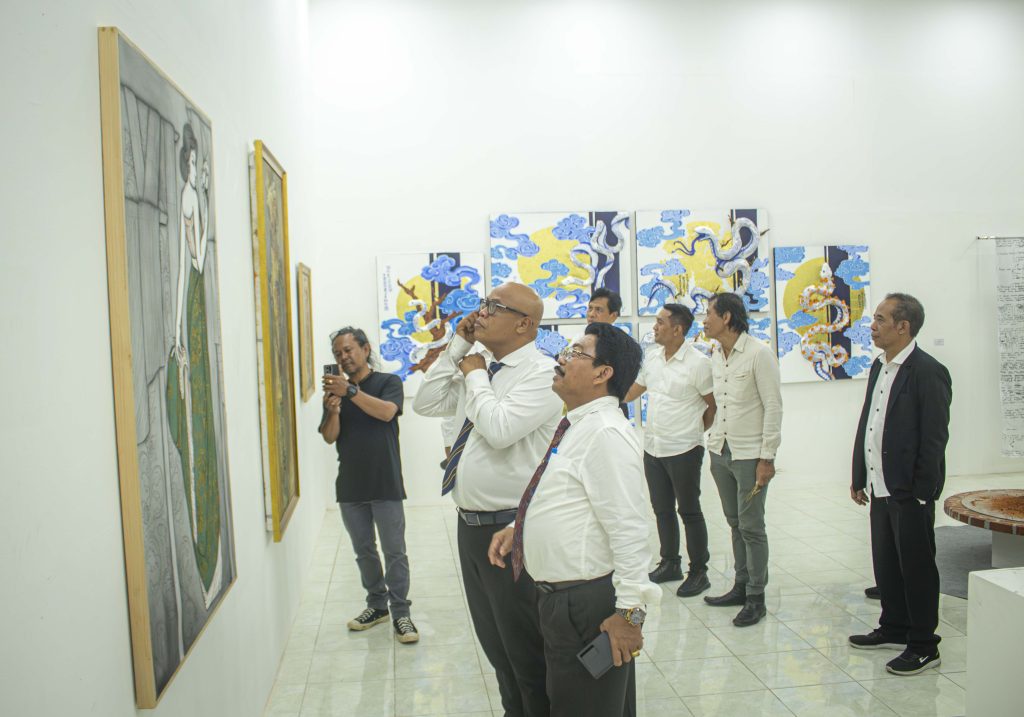
Photo: The Rector and the leadership team of ISI Bali visiting the “Tuai Tabur” exhibition, Monday (26 January), at N-CAS ISI Bali.
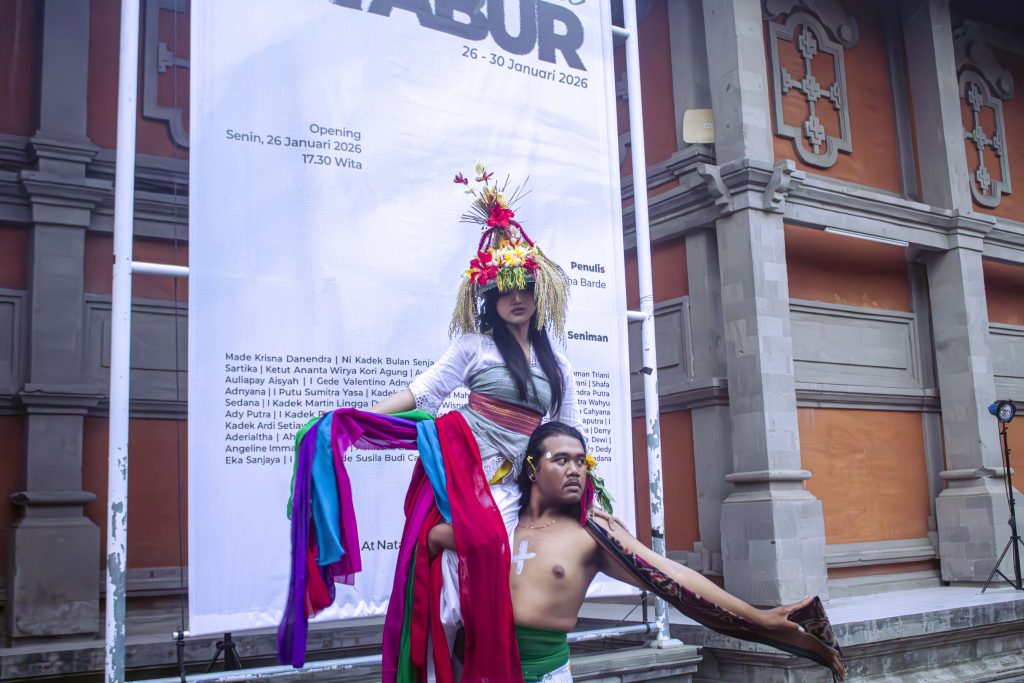
Students of the Fine Arts Study Program, Faculty of Fine Arts and Design (FSRD), Institut Seni Indonesia Bali (ISI Bali), presented their final project works for the Odd Semester of the 2025/2026 Academic Year in the art exhibition entitled “Tuai Tabur.” The exhibition was held from 26 to 30 January 2026 at Nata Citta Art Space (N-CAS), ISI Bali. Featuring a wide range of artworks across diverse media and displayed in an exploratory manner, the exhibition offered an emotionally evocative experience through 37 distinct narratives.
The “Tuai Tabur” exhibition was officially opened by the Rector of ISI Bali, Prof. Dr. Wayan ‘Kun’ Adnyana, S.Sn., M.Sn., on Monday (26 January). The opening ceremony was also attended by the Vice Rectors, the Dean and Vice Dean of FSRD ISI Bali, the Coordinator of the Fine Arts Study Program, and lecturers of the Fine Arts Study Program.
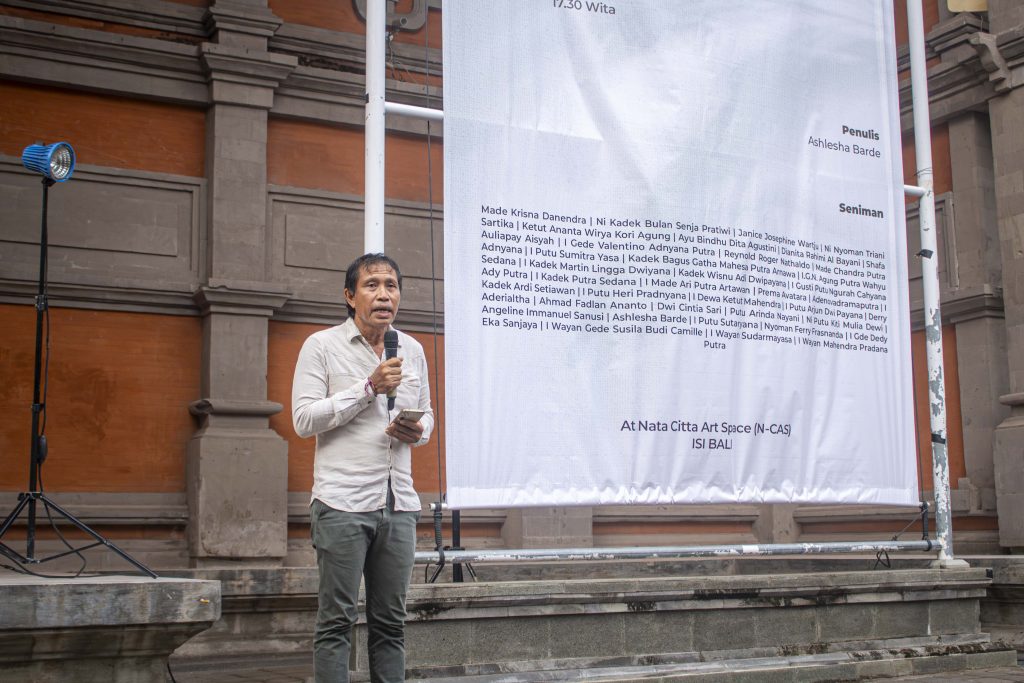
The title “Tuai Tabur,” coined by one of the exhibiting students, Ashlesha Barde, is interpreted as a “metaphor for a long journey,” in which she and her peers have “planted ideas, nurtured processes, and harvested results,” before subsequently “sowing new seeds” for future stages of artistic creation. This metaphor is clearly reflected in the exhibition, which features works by Fine Arts students from the 2022 cohort. “What we gain through the campus experience—cross-study program learning, followed by independent study or internships outside the institution, and culminating in the final project—does not represent an end, but rather a step forward,” stated Made Krisna Danendra, Chair of the “Tuai Tabur” Exhibition Committee.
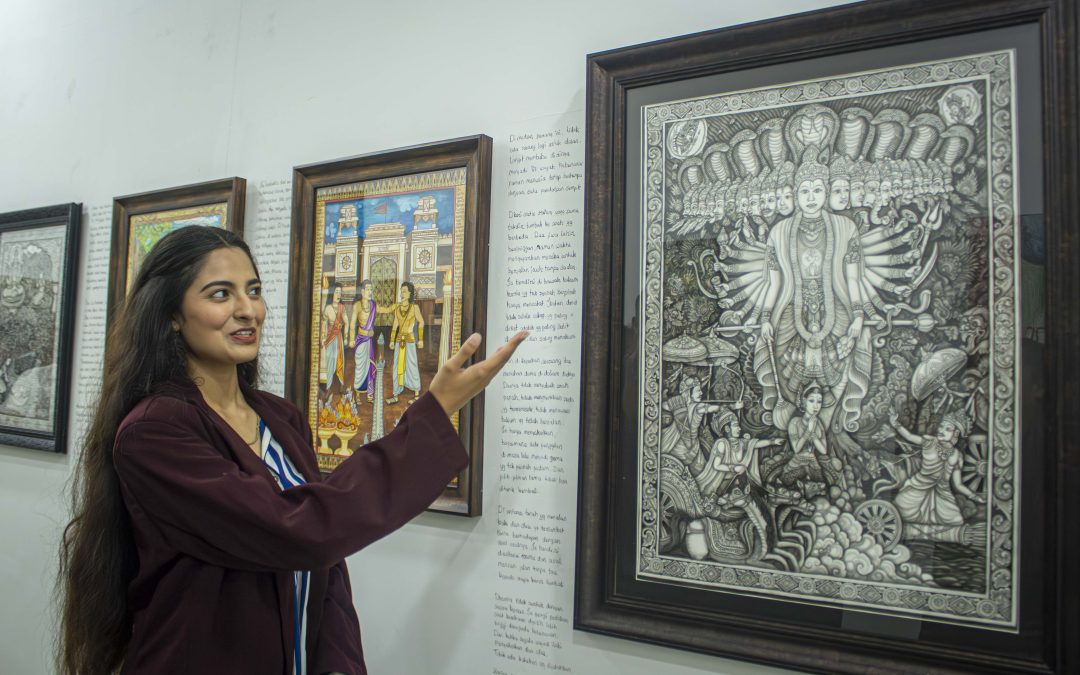
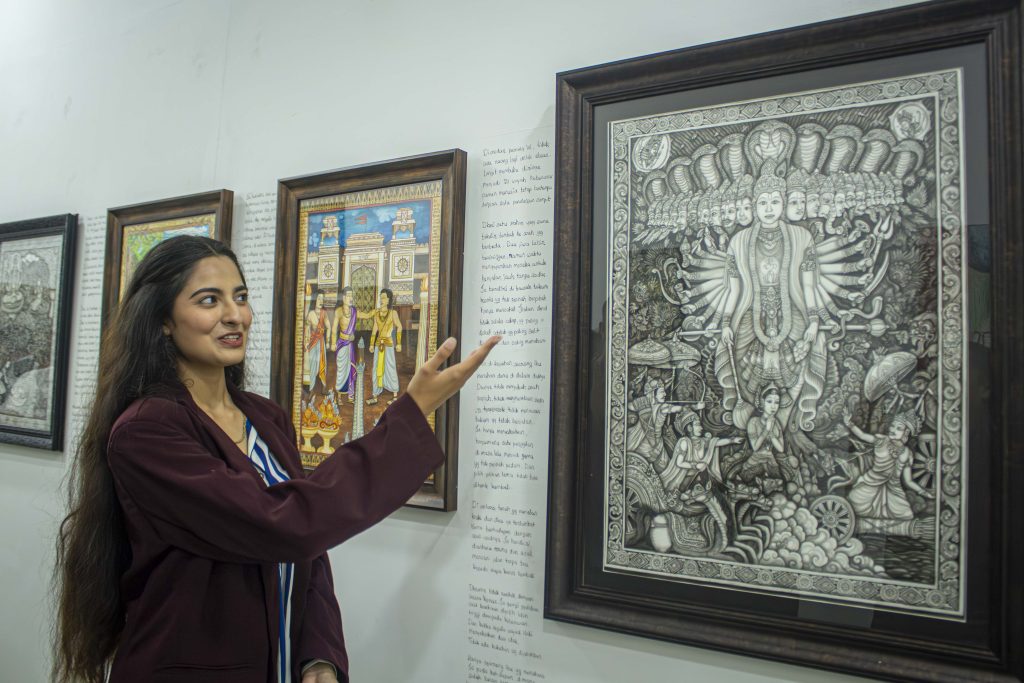
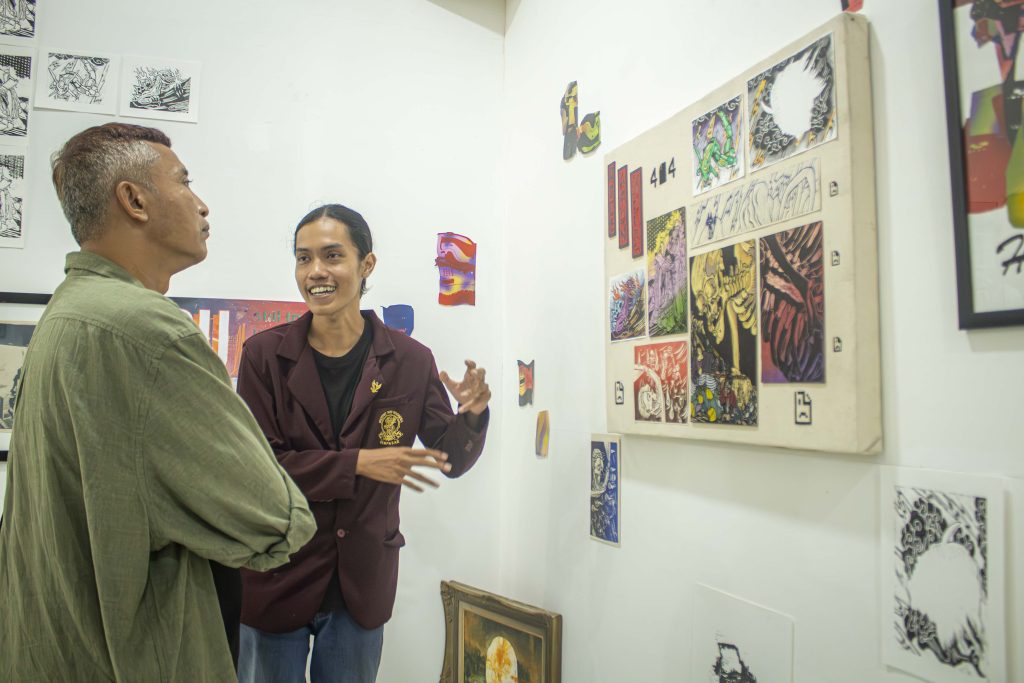
Photo: Fine Arts students of ISI Bali presenting painting works in the “Tuai Tabur” exhibition, Monday (26 January), at N-CAS ISI Bali.
Janice Josephine Wartju, Secretary of the “Tuai Tabur” Exhibition Committee, explained that her cohort was strongly driven toward artistic exploration. Since the first semester sketching classes, lecturers encouraged students to use tools and materials beyond standard drawing paper and Chinese ink; even wood was introduced as a sketching medium. Moreover, their engagement with partner institutions during the ISI Bali Berdampak Program further motivated them to develop their artistic capacities. As one of the students from outside Bali, Janice initially felt hesitant, as Balinese culture is deeply rooted in artistic traditions. However, over time, she and other non-local students were able to adapt, contributing new perspectives, colors, and identities. “People may think Fine Arts is just painting or sculpture. It is not—Fine Arts is far more than that,” Janice emphasized.
Janice and Krisna exemplify distinct modes of expression and artistic approaches. Through cross-study program learning, Krisna discovered his expressive potential in woodcut printmaking techniques. He subsequently sought a compatible partner for his Independent Study under the ISI Bali Berdampak Program and collaborated with BHG, where he learned various manual printing methods. After nine months of experimentation, he aimed to narrate the speed and fragility of contemporary digital information through traditional printmaking techniques. “I want to address forms of memory, both printed and digitally shared, where today negative phenomena such as scams and doxing can easily occur,” Krisna explained.
Janice, who underwent drawing therapy during her childhood, became interested in further developing this practice at the university level. At ISI Bali, she felt she gained extensive insights into engaging with tradition. During the initial phase of her Independent Study under the ISI Bali Berdampak Program, she explored digital art practices in collaboration with artist Gangga Saputra, but encountered issues related to plagiarism. Under the supervision of Prof. Dr. I Wayan Kun Adnyana, S.Sn., M.Sn., and Prof. Dr. Drs. I Wayan Karja, MFA, she was advised to create larger-scale, manual, and more exploratory works. Consequently, Janice chose to highlight aspects of Chinese tradition with which she was more familiar. “I am actually more interested in tradition than in digital media. I want to inform audiences that tradition is not as negative as it is sometimes perceived, especially since Chinese culture contains many meaningful narratives,” Janice shared.
Janice and Krisna expressed their hope that, through collaboration with their colleague Made Chandra Putra Adnya, who served as the exhibition display director, their final project works could be presented from alternative perspectives to a broader audience. They also advised junior students and future cohorts not to hesitate in exploring their artistic practices and to carefully evaluate criticism and feedback received from lecturers and partners. It is hoped that a strong sense of collegiality among students will continue to grow, fostering innovation and broader networking. “Do not become independent before undertaking independent study,” Krisna remarked.
Finally, both Janice and Krisna acknowledged that they learned extensively from their academic journey at ISI Bali and expressed their hope to continue learning in the future. The perspectives on art and culture they acquired were broad and enriching. The experiences shared by Janice and Krisna demonstrate the engaging and dynamic nature of studying in the Fine Arts Study Program at ISI Bali.
Photo: Inauguration of the Executive Boards of Student Organizations at ISI BALI, Wednesday (28 January), Vicon Room, Citta Kelangen Building, ISI BALI.
The Rector of the Indonesian Institute of the Arts Bali (ISI BALI), Prof. Dr. Wayan “Kun” Adnyana, officially inaugurated the executive boards of 29 student organizations (Organisasi Kemahasiswaan/Ormawa) within ISI BALI for the 2026 term. The inauguration ceremony was held on Wednesday (28 January) in the Vicon Room, Citta Kelangen Building, ISI BALI.
At the institute level, the inaugurated student leaders included the Chairperson of the Student Representative Council (Dewan Perwakilan Mahasiswa/DPM) ISI BALI, Yasuke Yamamoto, a student of the Animation Study Program, accompanied by the Vice Chairperson, I Made Randhawa Senna from the Architecture Study Program. Also inaugurated were the President of the Student Executive Board (Badan Eksekutif Mahasiswa/BEM) ISI BALI, Muhammad Duroris Shohab, a student of the Fine Arts Study Program, together with the Vice President, Rais Zain Syafar from the Architecture Study Program.
The inauguration also encompassed the executive boards of faculty-level DPM and BEM, the Student Associations of Study Programs (Himpunan Mahasiswa Program Studi/HMPS), as well as the Student Activity Units (Unit Kegiatan Mahasiswa/UKM) within ISI BALI, as part of efforts to strengthen sustainable governance of student organizations.
In his address, the Rector of ISI BALI, Prof. Dr. Wayan “Kun” Adnyana, emphasized the importance of synergy and goodwill in managing student organizations. He encouraged all ISI BALI students to share a common spirit in utilizing the institutional platforms and various spaces for expression provided by the university. According to him, these spaces should be enlivened through continuous creative activities that generate positive impact.
Furthermore, Prof. Kun Adnyana underscored that ISI BALI students are expected to consistently engage and synergize with the community. Active student involvement in research activities and community service in collaboration with faculty members is regarded as essential, both as an expression of academic responsibility and as a tangible contribution of an arts higher education institution to the social and cultural environment.
Photo: Inauguration of the Executive Boards of Student Organizations at ISI BALI, Wednesday (28 January), Vicon Room, Citta Kelangen Building, ISI BALI.
The Chair of the Inauguration Committee, who also served as the Chairperson of the ISI BALI Student Representative Council for the 2025 term, Kadek Ongky Dwi Dhavinci, stated in his report that through this inauguration, the organizational relay of student leadership has officially been continued by the newly appointed boards. “This moment also marks a historic milestone, as it is the first time that the inauguration of student organizations has been held under the name of the Indonesian Institute of the Arts Bali, signifying a new beginning of a long journey and renewed struggle to cultivate creative thinkers and visionary leaders through student organizations, in order to uphold the institution’s reputation on the global stage,” said the student of the Visual Communication Design Study Program.
Meanwhile, the President of BEM ISI BALI for the 2025 term, Kadek Eky Virji, expressed his gratitude and appreciation to all members of the 2025 student organization boards for their dedication and hard work. He expressed his hope that the 2026 Ormawa leadership would continue the relay of leadership with a strong sense of responsibility and deliver tangible contributions to society through various creative programs.
The inauguration ceremony was attended by the Rector of ISI BALI along with the Vice Rectors, the Deans and Vice Deans of the Faculty of Performing Arts (Fakultas Seni Pertunjukan/FSP) and the Faculty of Fine Arts and Design (Fakultas Seni Rupa dan Desain/FSRD), as well as the Principal Advisors and Assistant Advisors of each student organization. (ISIBALI/Public Relations)