
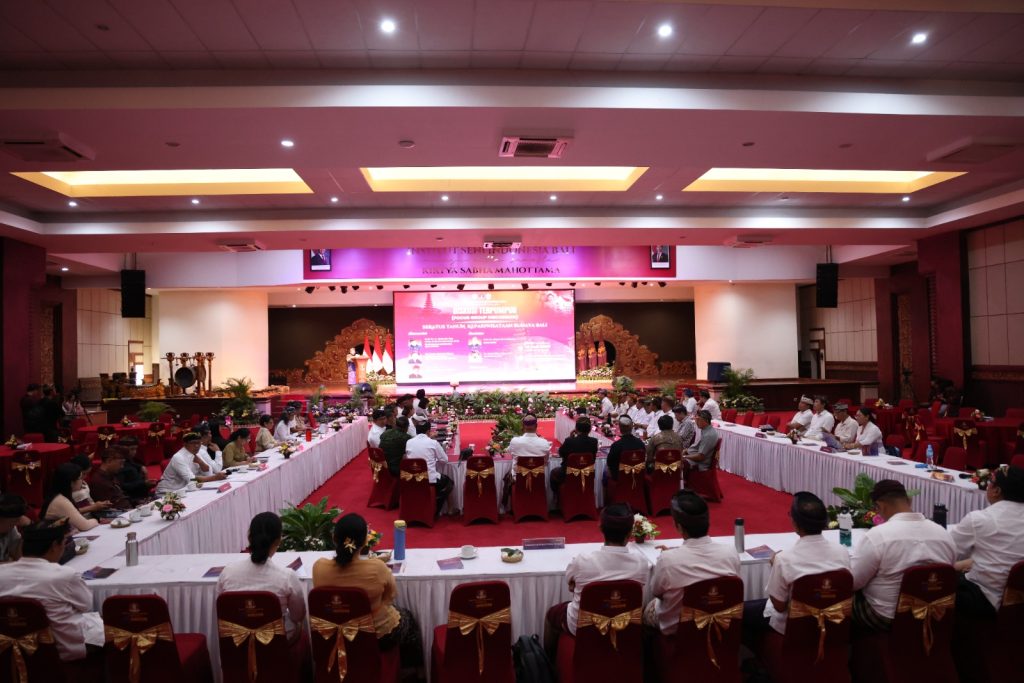
Photo: Focus Group Discussion (FGD) on One Hundred Years of Balinese Cultural Tourism, Monday (13 July), at the Kirtya Sabha Mahottama Auditorium, Citta Kelangen Building, Third Floor, ISI Bali.
The Indonesian Institute of the Arts Bali (ISI Bali), in collaboration with the Bali Provincial Research and Innovation Agency (BRIDA), organized a Focus Group Discussion (FGD) entitled One Hundred Years of Balinese Cultural Tourism on Monday (13 July) at the Kirtya Sabha Mahottama Auditorium, Citta Kelangen Building, Third Floor, ISI Bali. The event formed part of a collaborative research initiative between ISI Bali and BRIDA aimed at developing a comprehensive study reflecting on the century-long evolution of Balinese cultural tourism.
The FGD featured three distinguished speakers who examined the historical development of tourism in Bali from diverse perspectives. They included Prof. Dr. Ir. Tjokorda Oka Artha Ardhana Sukawati, M.Si., Deputy Governor of Bali (2018–2023) and Chairman of the Bali Chapter of the Indonesian Hotel and Restaurant Association (PHRI); Ida Bagus Ngurah Wijaya, a prominent Balinese tourism practitioner; and Sugi Lanus, a cultural observer and expert on Balinese lontar manuscripts.
The discussion was officially opened by the Head of BRIDA Bali Province, Dr. Ketut Wica, S.Sos., M.H., and attended by the Rector of ISI Bali, Prof. Dr. Wayan Kun Adnyana, alongside academics, tourism practitioners, cultural figures, and researchers who contributed historical and scholarly perspectives on the evolution of tourism in Bali.
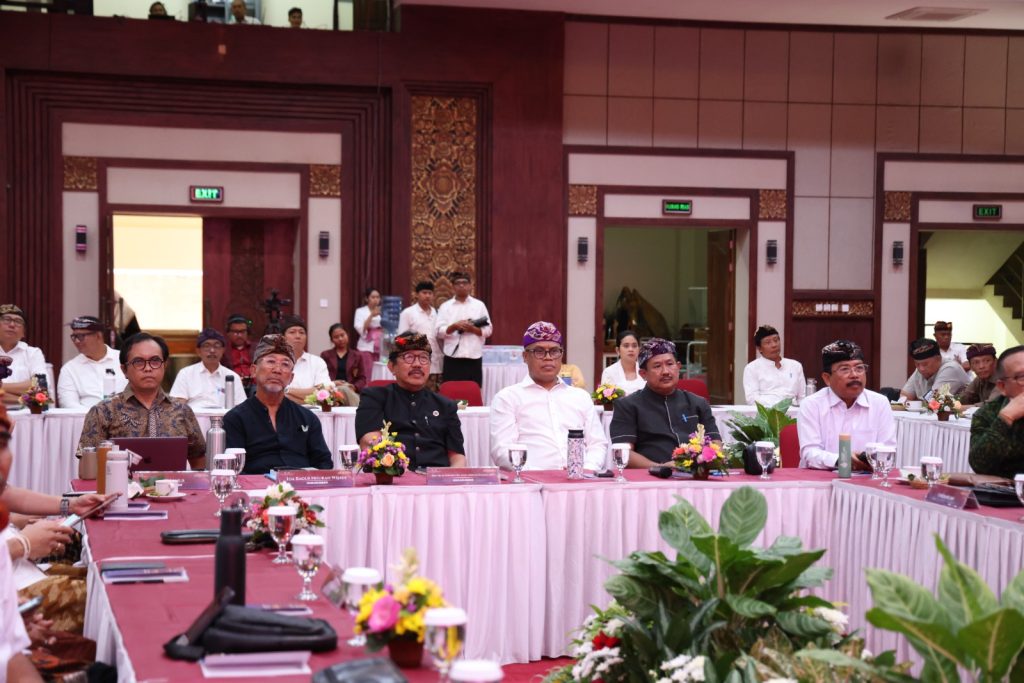
Photo: Focus Group Discussion (FGD) on One Hundred Years of Balinese Cultural Tourism, Monday (13 July), at the Kirtya Sabha Mahottama Auditorium, Citta Kelangen Building, Third Floor, ISI Bali.
In his opening remarks, Dr. Ketut Wica emphasized that the research seeks to establish a scientific foundation for future tourism policy in Bali. He stressed that Balinese culture should not be reduced to a mere economic commodity at the expense of its sacred and spiritual values.
“This study is intended to ensure that Balinese culture is not commercialized to the extent that it loses its sacredness and spirituality within society. Future government policies must safeguard local communities while preserving the cultural values of Bali.”
He further explained that tourism in Bali has evolved organically from the rhythms of community life rooted in taksu (spiritual charisma), artistic expression, and cultural traditions. Through the collaboration between ISI Bali and BRIDA, the research seeks to trace the historical trajectory of Balinese tourism by examining the interactions among artists, royal households (puri), researchers, and local communities that collectively laid the foundation for Bali’s tourism development.
As Bali approaches the centennial of its tourism history, he noted that this milestone provides an important opportunity to evaluate whether tourism development continues to uphold the authenticity of Balinese culture and to assess the resilience of cultural values amid globalization and contemporary societal change.
“The Bali Provincial Government, through BRIDA, aims to produce research that is academically rigorous while remaining socially and historically grounded. Meanwhile, Bali’s tourism stakeholders, including ASITA Bali, have initiated the Road to 100 Years of Bali Tourism campaign through the Bali Tourism Run 2026 event in Jatiluwih,” he added.
Meanwhile, the Rector of ISI Bali, Prof. Dr. Wayan Kun Adnyana, presented preliminary research findings indicating that the development of Balinese cultural tourism can be categorized into several significant phases: the pioneering period, the formative period, the first revival, the second revival, the third revival, and the fourth revival.
According to him, Balinese cultural tourism did not emerge instantaneously but developed organically through the strength of local communities and the cultural industries that had flourished since the early twentieth century.
“From a historical perspective, Balinese cultural tourism evolved organically through community-based cultural industries. The interactions and collaborations among local communities, artists, researchers, and international visitors fostered an artistic and cultural ecosystem that ultimately stimulated tourism and gained widespread international recognition by the late 1920s.”
Prof. Dr. Ir. Tjokorda Oka Artha Ardhana Sukawati, M.Si., former Deputy Governor of Bali (2018–2023) and Chairman of PHRI Bali, delivered a presentation entitled The Emergence of the Vision Toward 100 Years of Bali Tourism, discussing the origins of Bali’s tourism concept, which has long been anchored in the island’s cultural identity as its primary tourism asset.
Ida Bagus Ngurah Wijaya presented a paper entitled Sanur and Tourism: A Historical Reflection, highlighting the role of Sanur as one of the earliest centers in the development of Bali’s modern tourism industry.
Meanwhile, cultural observer and lontar scholar Sugi Lanus delivered a presentation entitled The Dawn of Balinese Tourism: Reconsidering the Physical and Cultural Foundations of Balinese Tourism Through the Lens of Rabindranath Tagore (1927). His presentation examined how the visit of prominent global figures such as Rabindranath Tagore contributed to strengthening Bali’s international reputation as a center of culture, thereby attracting growing global interest.
The discussion was moderated by Prof. Dr. I Komang Sudirga, M.Hum., Vice Rector for Student Affairs and Cooperation at ISI Bali. Through this forum, speakers, researchers, and participants explored the historical dynamics, contemporary challenges, and future directions of Balinese cultural tourism in anticipation of the commemoration of One Hundred Years of Balinese Cultural Tourism.
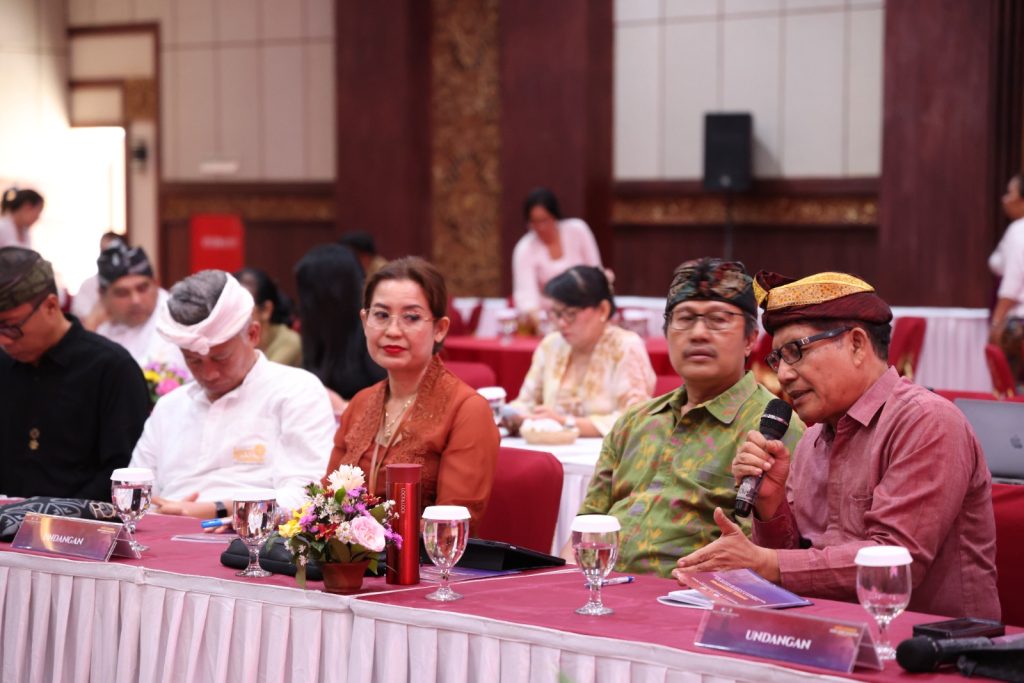
Photo: Focus Group Discussion (FGD) on One Hundred Years of Balinese Cultural Tourism, Monday (13 July), at the Kirtya Sabha Mahottama Auditorium, Citta Kelangen Building, Third Floor, ISI Bali.
The discussion was further enriched by insights from Prof. Ir. Made Supartha Utama, a member of the Research Quality Assurance Team, who encouraged participants to reconsider the role of Balinese culture in tourism development.
According to him, the greatest challenge today is not merely promoting Balinese culture as a tourism attraction but ensuring that its intrinsic values serve as the foundation values underpinning governance and development. He argued that Balinese cultural values should constitute the basis for tourism governance, legal systems, and social institutions in Bali, thereby ensuring that tourism extends beyond superficial cultural displays or ceremonial performances.
“What we need to reflect upon is the extent to which Balinese cultural values have become the foundation values of our tourism governance, legal system, and social system. Our attention should not be limited to outward cultural expressions or ceremonies, such as the Ngaben cremation ritual, without understanding the philosophical principles that constitute their underlying spirit.”
Through this collaborative research initiative, ISI Bali and BRIDA Bali Province aspire to produce evidence-based academic recommendations that will inform future tourism development policies. These recommendations are expected to ensure that tourism development remains firmly grounded in Balinese cultural values, preserves the sacredness of local traditions, and further strengthens Bali’s position as a globally recognized and sustainable cultural destination.
(Source: ISI Bali/Public Relations)


