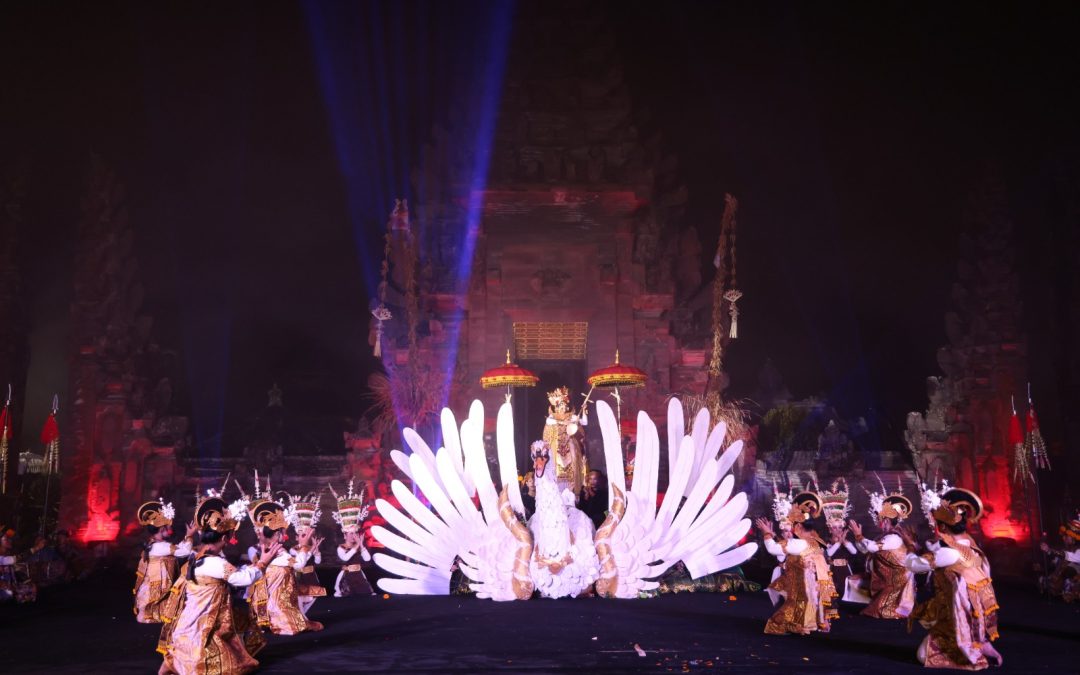
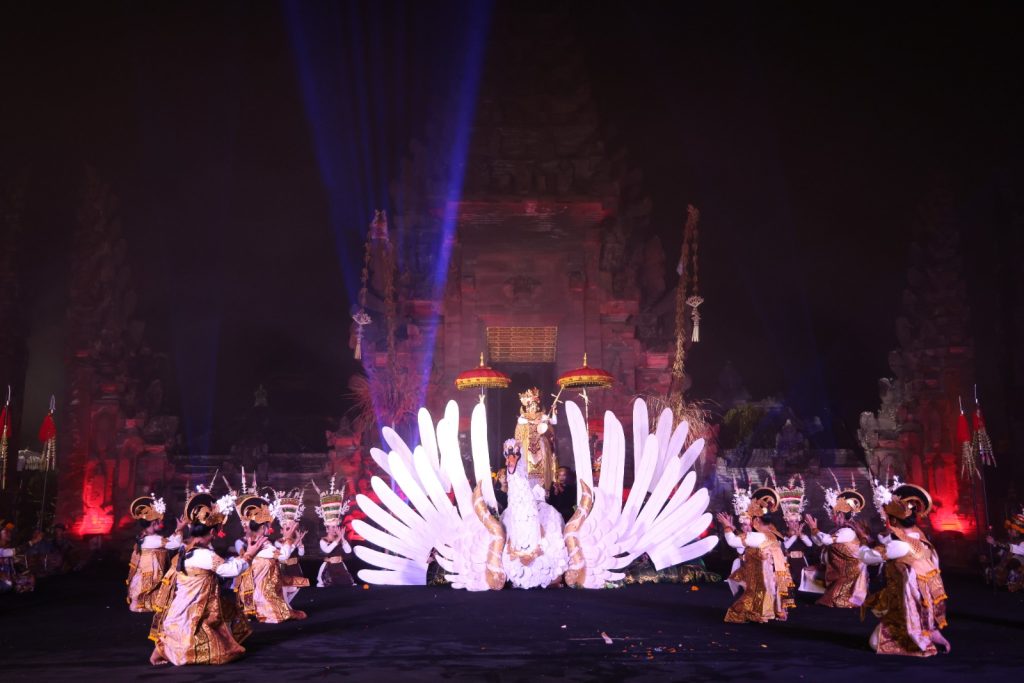
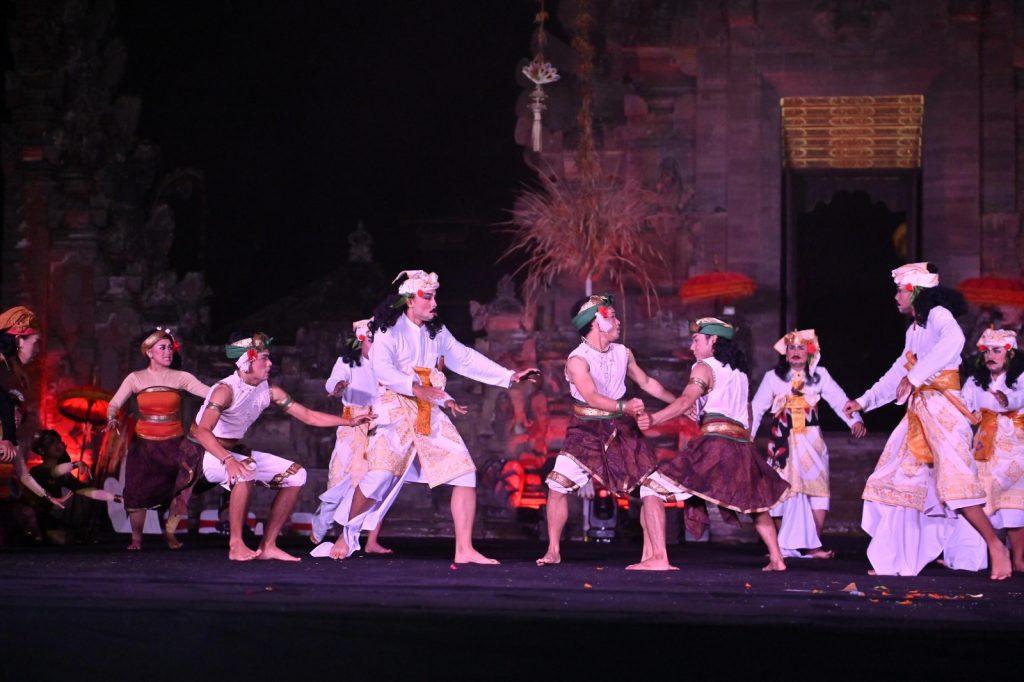
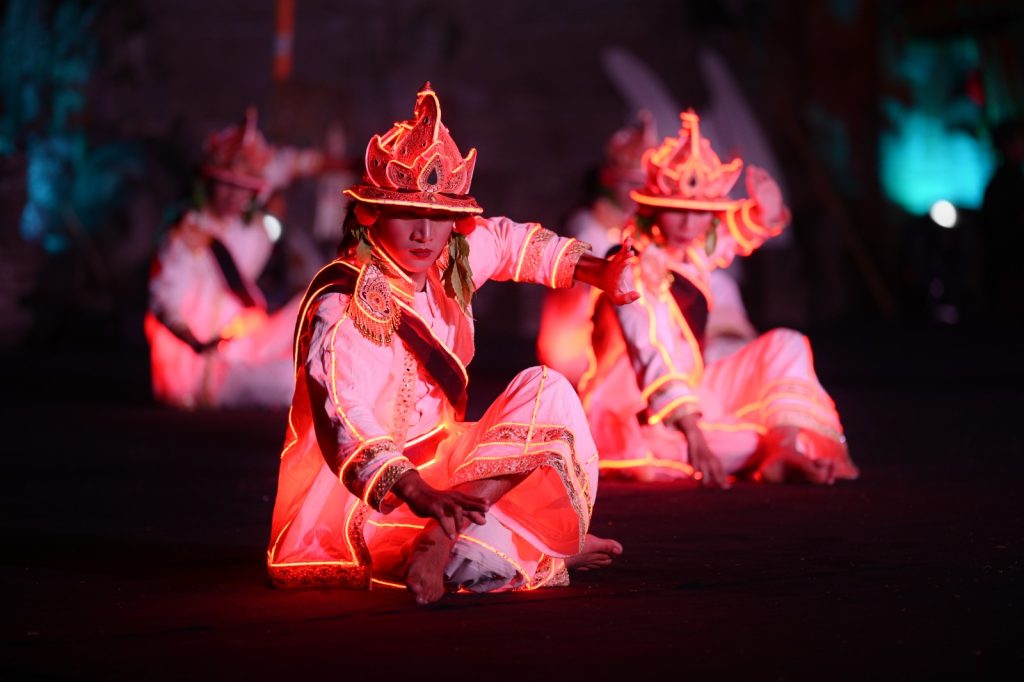
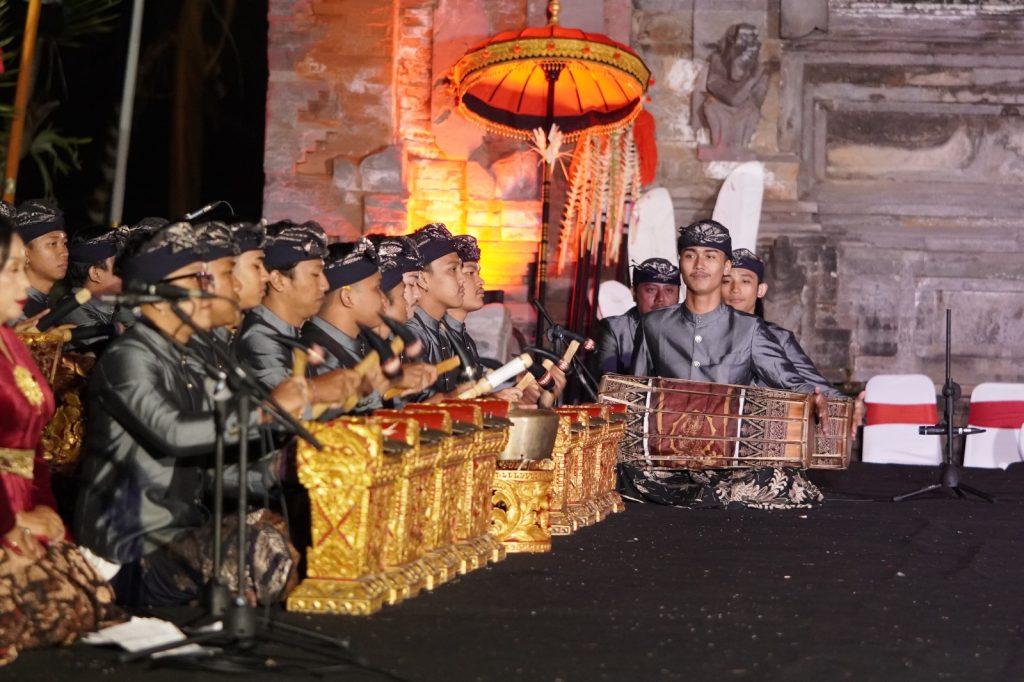
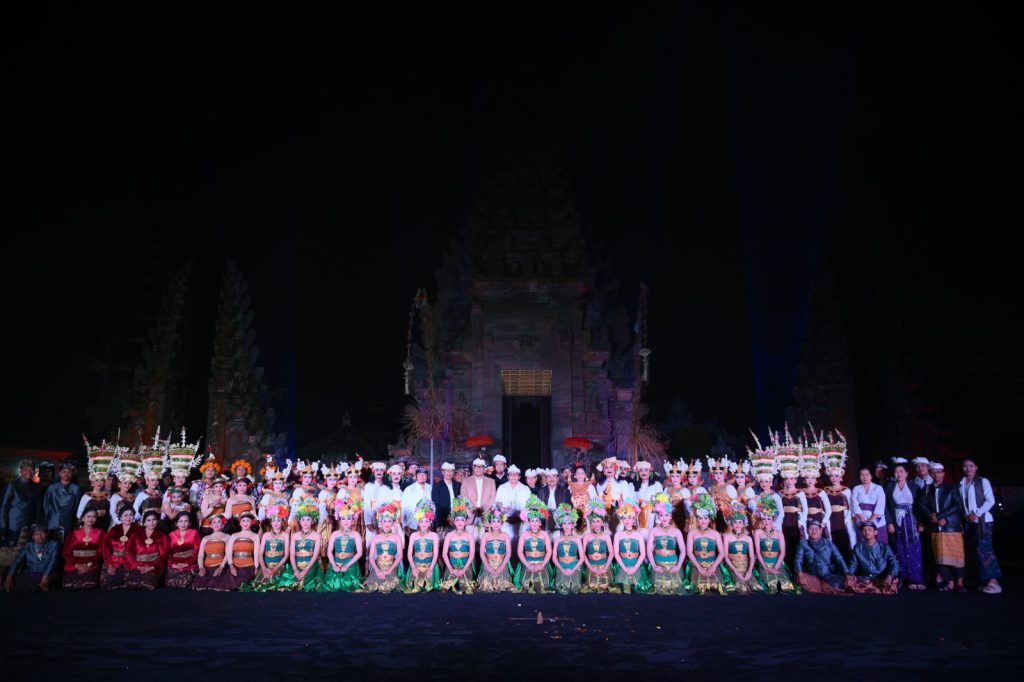
Photo: Dissemination of Research, Artistic Creation, and Art-Design Dissemination (P2DSD) 2026, Commemorating the Centennial of Rarud Batur, held at Pura Kahyangan Jagat Ulun Danu Batur, Batur Traditional Village, Kintamani, Bangli, Monday (3 August).
The Institut Seni Indonesia Bali (ISI Bali) once again demonstrated its commitment to advancing research-based artistic practices through the implementation of the 2026 Research, Artistic Creation, and Art-Design Dissemination (P2DSD) Program. Marking the centennial commemoration of Rarud Batur, ISI Bali presented three research-derived artistic works: the contemporary dance fragment Ranu Saraswati Rena, Tari Tengklung Kebah, and the musical composition Cipta Gamelan Saraswati. These performances were staged at Pura Kahyangan Jagat Ulun Danu Batur, Batur Traditional Village, Kintamani, Bangli, on Monday (3 August).
These three artistic productions represent both the dissemination of research outcomes and a tribute to the historical legacy, spirituality, and indigenous knowledge of the Batur community that have been preserved across generations. The performances formed part of the Centennial Commemoration of Rarud Batur, a historic occasion marking one hundred years since the relocation of the Batur Traditional Village community from Batur Let to Batur Karangan Anyar following the devastating eruption of Mount Batur in August 1926.
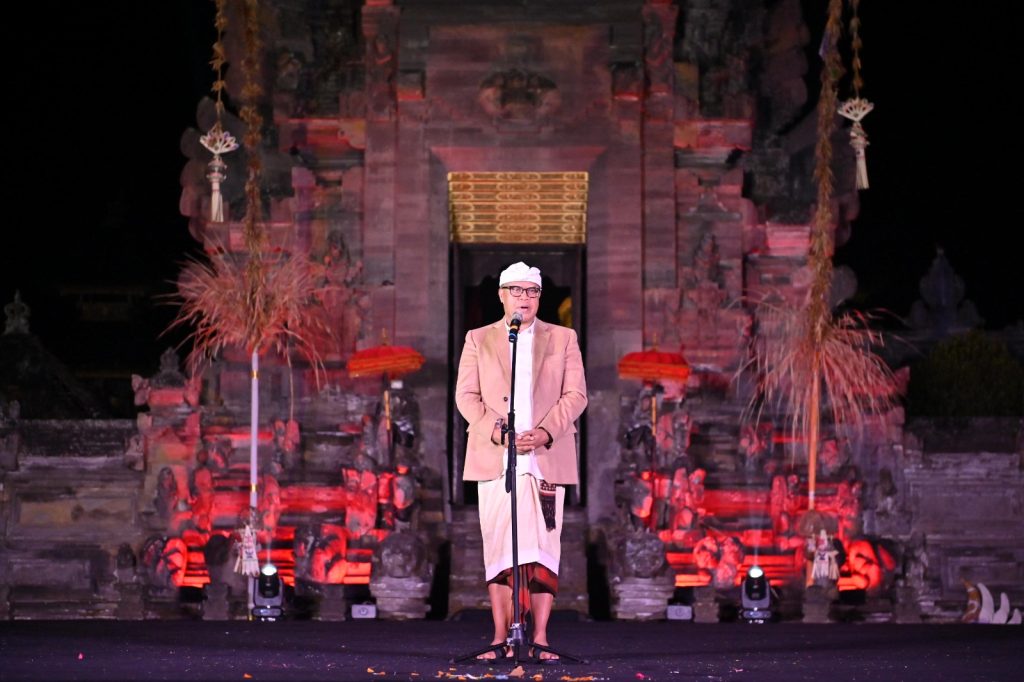
Photo: Rector of ISI Bali, Prof. Dr. Wayan “Kun” Adnyana, delivering his remarks during the 2026 P2DSD dissemination event commemorating the Centennial of Rarud Batur at Pura Kahyangan Jagat Ulun Danu Batur.
In his address, Rector Prof. Dr. Wayan “Kun” Adnyana described the Batur region as a center of knowledge that continuously flows like the waters of Lake Batur. He emphasized that this knowledge is not only embedded within the traditions of the local community but also serves as a vital source of inspiration for scientific inquiry, artistic research, and creative production at ISI Bali.
“ISI Bali honors the abundance of knowledge that flows endlessly like the waters of Lake Batur. This knowledge continues to spread and resonate across regions, inspiring the academic and artistic endeavors of our institution,” he stated.
According to Prof. Adnyana, through the 2026 P2DSD Program, ISI Bali conducted four research projects involving approximately 175 participants, including faculty members, educational staff, and students. These projects were led by Prof. Dr. Wayan Suardana, Dr. Made Kartawan, Wayan Diana Putra, M.Sn., and AA Ayu Mayun Artati, M.Sn.
Photo: The 2026 Research, Artistic Creation, and Art-Design Dissemination (P2DSD) Program, commemorating the Centennial of Rarud Batur, held at Pura Kahyangan Jagat Ulun Danu Batur, Batur Traditional Village, Kintamani, Bangli, on Monday, 3 August 2026.
He further emphasized that all artistic works presented constitute an interpretation of the emergence of a new civilization in Batur while remaining firmly connected to its historical origins in Batur Let, whose cultural foundations have existed for thousands of years. According to him, ISI Bali maintains both sekala (tangible) and niskala (intangible/spiritual) relationships with Batur, which continue to be nurtured through education, research, artistic creation, and community engagement.
Prof. Adnyana also explained that ISI Bali venerates the sacred effigy (sesuhunan) Ratu Ayu Mas Membah, a ceremonial mask created by the late Balinese master artist Cok Alit Artawan from wood originating from Pura Dalem Serongga, one of the sacred temples associated with Batur. The sacred effigy has been internalized by the university’s academic community as a symbol of inspiration for creative expression and continuous exploration of ancestral knowledge.
Photo: Dissemination of Research, Artistic Creation, and Art-Design Dissemination (P2DSD) 2026 at Pura Kahyangan Jagat Ulun Danu Batur.
Representing the Batur customary authority, Jro Penyarikan Duuran Batur expressed appreciation to ISI Bali for its active participation in commemorating the Centennial of Rarud Batur through research-based artistic productions. He noted that the relocation of the Batur Traditional Village following the 1926 eruption of Mount Batur was not merely a physical migration but also a profound historical event that tested the resilience of the community’s cultural identity, spirituality, and social solidarity.
He further emphasized that the centennial commemoration should not merely serve as a ceremonial remembrance of the past but should instead become a collective movement dedicated to preserving noble cultural values, strengthening cultural identity, and fostering a sustainable, harmonious, and resilient future for the Batur community.
One of the featured performances was the contemporary dance fragment Ranu Saraswati Rena, which narrates the relocation of the Batur Let community to Batur Karangan Anyar after the 1926 eruption of Mount Batur. Through the integration of dance, music, and dramatic performance, the work portrays the community’s determination to preserve sacred religious manuscripts, Raja Purana, pratima (sacred heirlooms), and ceremonial objects as enduring symbols of cultural continuity and spirituality. The centennial of Rarud Batur is interpreted as a heritage of knowledge and devotion to Hyang Dewi Danu, who serves as the principal spiritual inspiration for the work.
The dance was composed by Dr. Made Kartawan and Dr. I Nyoman Kariasa, with choral direction by Nyoman Nik Suasti, S.Sn., and choreography by AA Ayu Mayun Artati, M.Sn., I Gede Oka Surya Negara, S.ST., M.Sn., and Gede Radiana Putra, M.Sn.
ISI Bali also disseminated Tari Tengklung Kebah, a dance inspired by the movements of traditional Balinese martial arts (tengklung or pencak silat). The choreography illustrates the spirit of Balinese youth cultivating agility, strength, and resilience through dynamic martial movements characterized by firm stances, agile defensive techniques, and energetic footwork. The choreography was created by I Gede Oka Surya Negara, S.ST., M.Sn., with musical composition by I Wayan Diana Putra, S.Sn., M.Sn.
Photo: Dissemination of Research, Artistic Creation, and Art-Design Dissemination (P2DSD) 2026.
The event also featured the musical composition Cipta Gamelan Saraswati, developed from scholarly research on Tabuh Pat Parianom, a traditional musical heritage of the Batur Traditional Village. The composition draws upon the symbolism of Dewi Saraswati as the embodiment of knowledge and Betari Danu as the source of prosperity, expressing the idea that environmental conservation knowledge constitutes a fundamental pillar in the development of civilization.
Through the transformation of the musical formulation of Tabuh Pat Parianom into a contemporary musical grammar, Cipta Gamelan Saraswati demonstrates how local knowledge embedded within the ritual life of the Batur community continues to evolve while acquiring new academic dimensions through research and artistic creation at ISI Bali. The composition was created by I Wayan Diana Putra, S.Sn., M.Sn., Dr. I Nyoman Kariasa, S.Sn., M.Sn., and I Made Dwi Andika Putra, S.Sn., M.Sn., with choral arrangement by Ni Komang Sekar Marheni, S.S.P., M.Si.
Through these three artistic works, ISI Bali reaffirmed that research and artistic creation should not remain solely as academic outputs but should be disseminated to the broader community as instruments for education, cultural preservation, and the strengthening of collective memory concerning local history and indigenous knowledge. The Centennial of Rarud Batur thus became a collaborative platform connecting an arts higher education institution with the customary community in safeguarding the continuity of Bali’s cultural heritage through scholarly, artistic, and spiritual approaches.
(ISI Bali/Public Relations)
Photo: The 2026 Research, Artistic Creation, and Art-Design Dissemination (P2DSD) program, Commemorating the Centennial of Rarud Batur, held at Pura Kahyangan Jagat Ulun Danu Batur, Batur Traditional Village, Kintamani, Bangli, on Monday, 3 August 2026.
Recognition for Enhancing the Efficiency and Accountability of Financial Transactions
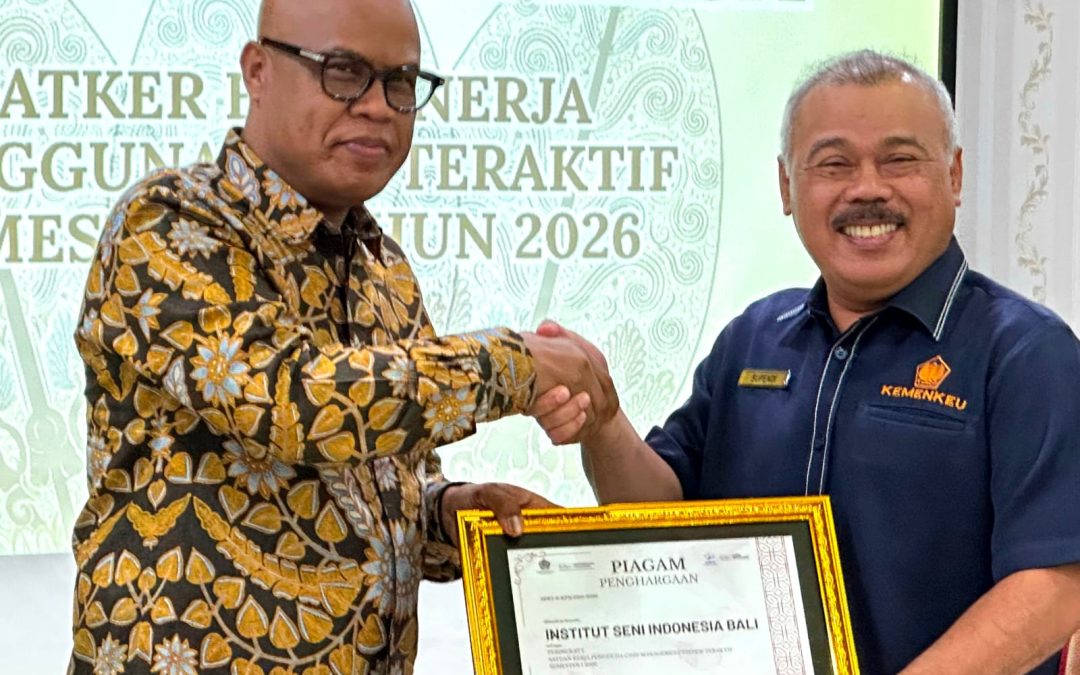
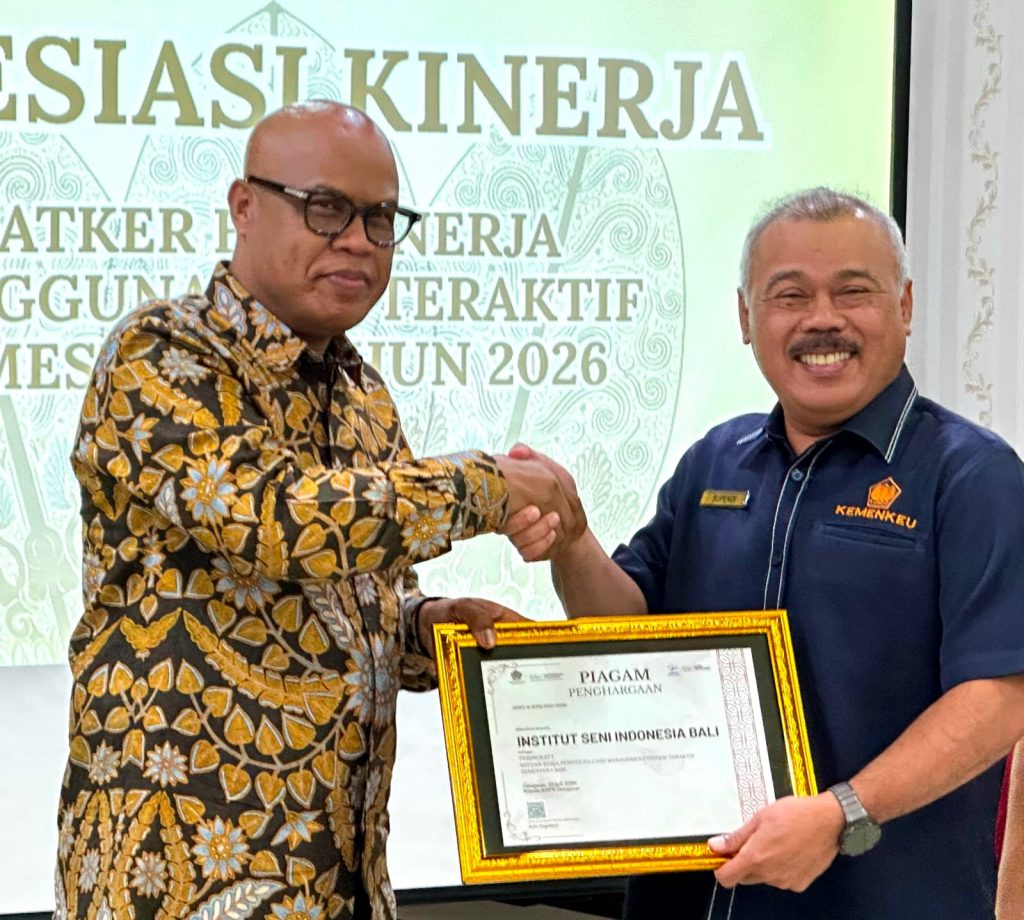
Photo: The Rector of the Indonesia Institute of the Arts Bali (ISI BALI), Prof. Dr. Wayan “Kun” Adnyana, receives the First-Rank Award for the Most Active Cash Management System (CMS) User Work Unit for the First Semester of 2026 at Hall A, State Finance Building (GKN) I, Denpasar, on Wednesday (22 July).
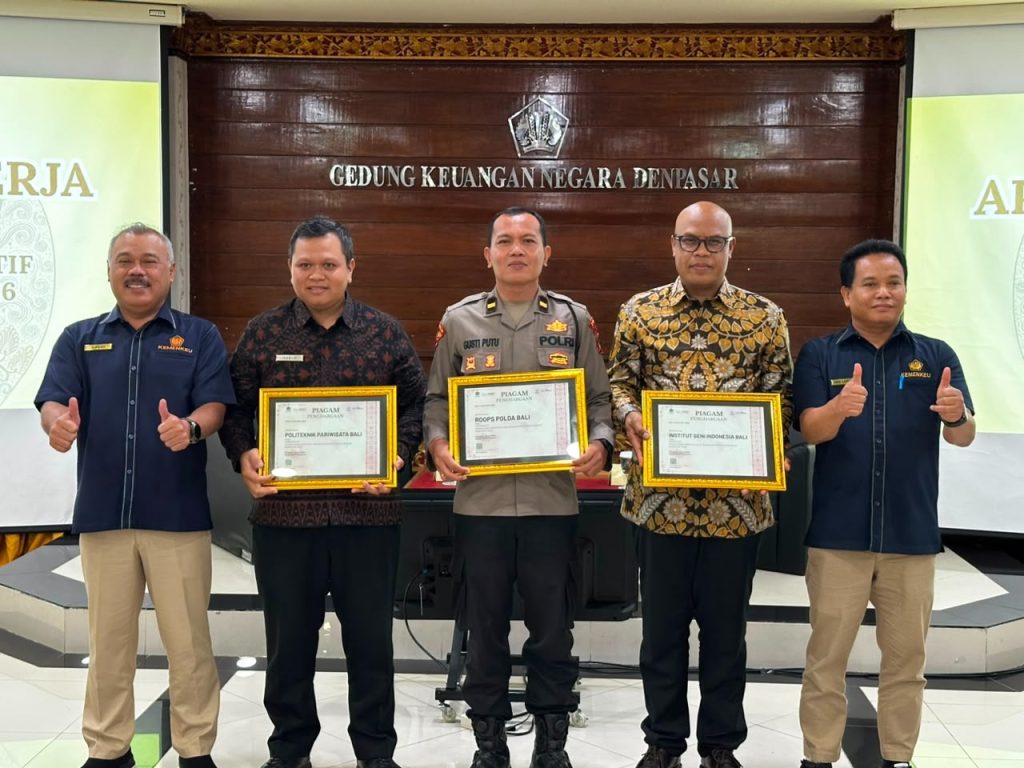
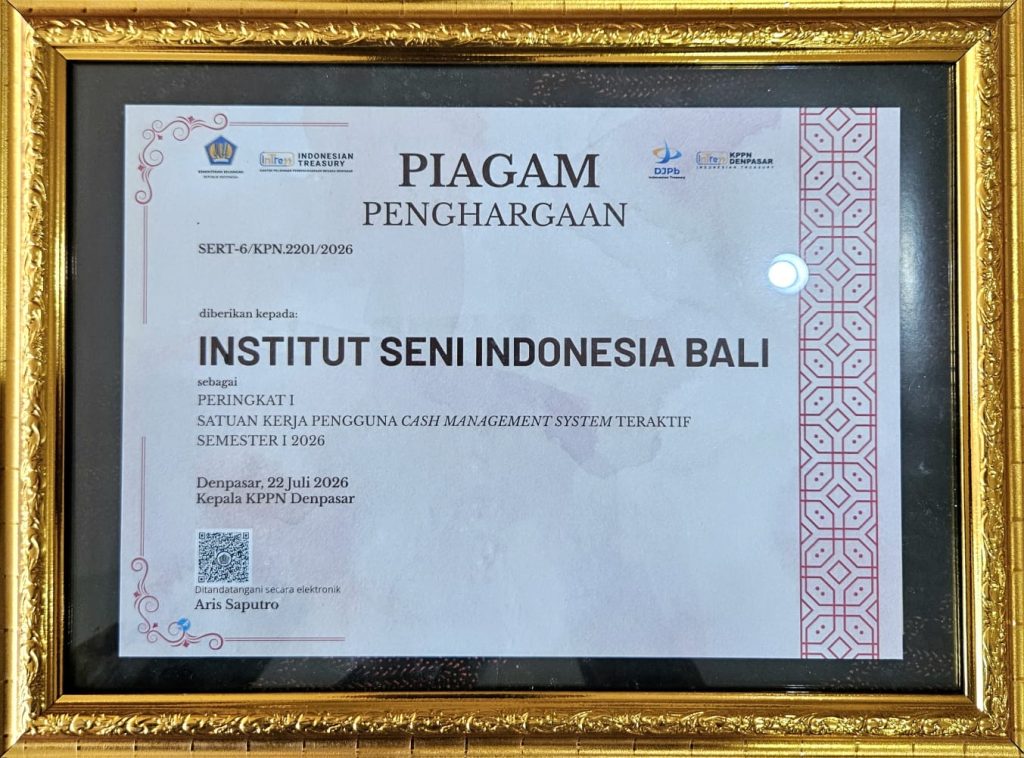
The Indonesia Institute of the Arts Bali (ISI BALI) was awarded First Rank as the Most Active Cash Management System (CMS) User Work Unit for the First Semester of 2026 by the Denpasar State Treasury Service Office (KPPN Denpasar). The award was presented by the Head of KPPN Denpasar, Aris Saputro, to the Rector of ISI BALI, Prof. Dr. Wayan “Kun” Adnyana, during the Public Consultation Forum held at Hall A of the State Finance Building (GKN) I, Denpasar, on Wednesday (22 July).
The award recognizes ISI BALI’s commitment to supporting modern, transparent, and accountable public financial management through the effective utilization of digital technology in government banking transactions.
ISI BALI was recognized for its active and optimal use of the Cash Management System (CMS) in supporting institutional financial management. Through this system, the university has consistently utilized a wide range of real-time online government banking services, including account balance inquiries, inter-account fund transfers, state revenue payments, utility payments, and other financial transaction facilities. The intensive implementation of CMS has significantly improved the efficiency, timeliness, and accountability of the institution’s financial management processes while contributing to the ongoing digital transformation of government treasury services toward greater transparency and modernization.
Photo: The Rector of ISI BALI, Prof. Dr. Wayan “Kun” Adnyana (second from the right), receives the First-Rank Award for the Most Active CMS User Work Unit for the First Semester of 2026 at Hall A, State Finance Building (GKN) I, Denpasar, on Wednesday (22 July).
The forum was officially opened by Supendi, Head of the Bali Provincial Office of the Directorate General of Treasury (DJPb). In his remarks, he emphasized that the Public Consultation Forum serves as a platform for gathering feedback from stakeholders to enhance the quality of public services, in accordance with the Regulation of the Minister of Administrative and Bureaucratic Reform (PANRB) No. 16 of 2017.
On this occasion, the Rector of ISI BALI stated that this achievement reflects the collective efforts of all financial management personnel within the university. He noted that the optimization of CMS utilization not only enhances the efficiency of financial administration but also strengthens institutional financial governance in accordance with the principles of good governance.
The Cash Management System (CMS) is an integrated banking application and information system that provides a variety of real-time online transaction services, including account balance information, inter-account transfers, state revenue payments, utility payments, and other transaction facilities that support the implementation of financial management within government work units.
During the forum, the Head of KPPN Denpasar, Aris Saputro, together with the Head of the Budget Implementation Development Division (PPA I) of the Bali Provincial Office of the Directorate General of Treasury, presented an evaluation of budget implementation and introduced the roles, functions, and service standards of KPPN to all forum participants.
Through this recognition, ISI BALI reaffirms its commitment to continuously strengthening digital-based financial governance while supporting the transformation of government financial services toward greater efficiency, transparency, and accountability.
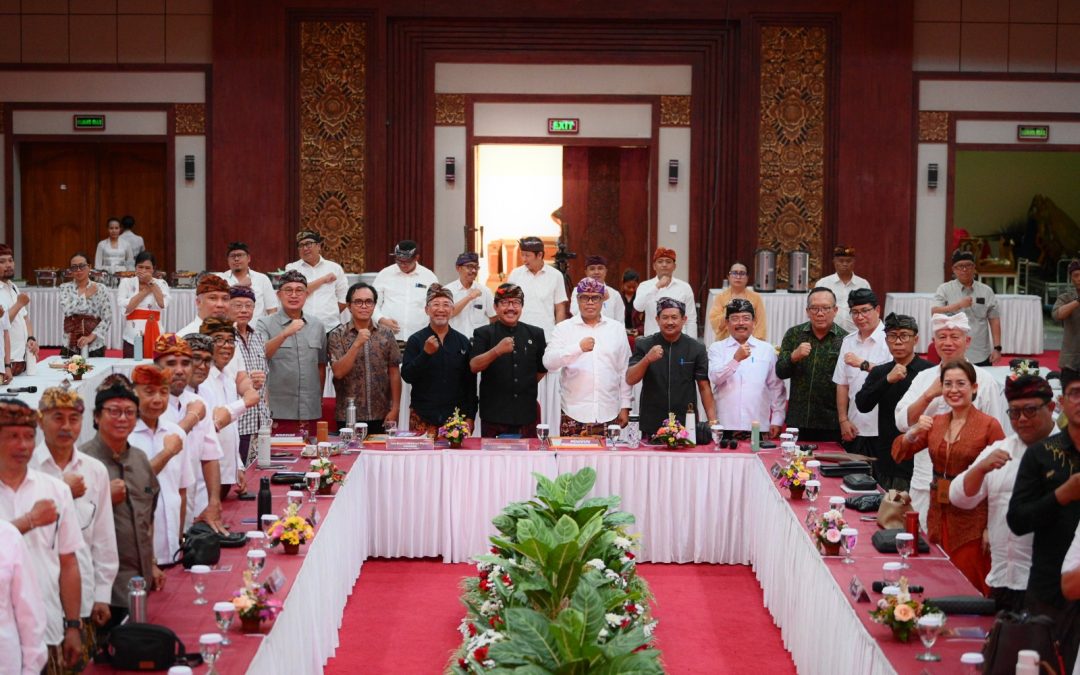
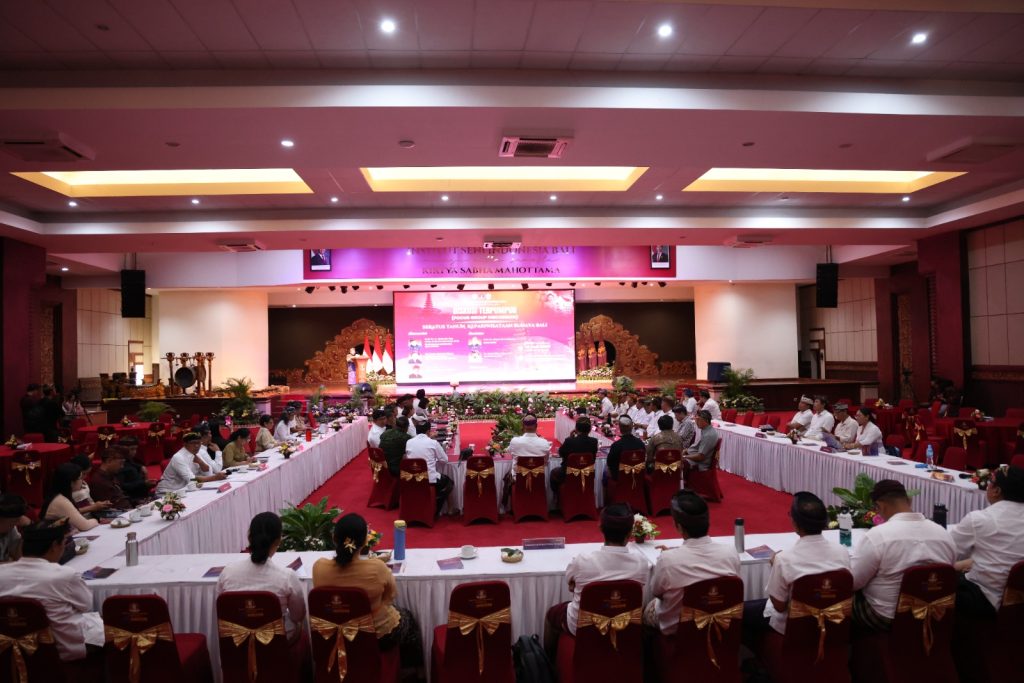
Photo:Focus Group Discussion (FGD) on One Hundred Years of Balinese Cultural Tourism, Monday (13 July), at the Kirtya Sabha Mahottama Auditorium, Citta Kelangen Building, Third Floor, ISI Bali.
The Indonesian Institute of the Arts Bali (ISI Bali), in collaboration with the Bali Provincial Research and Innovation Agency (BRIDA), organized a Focus Group Discussion (FGD) entitled One Hundred Years of Balinese Cultural Tourism on Monday (13 July) at the Kirtya Sabha Mahottama Auditorium, Citta Kelangen Building, Third Floor, ISI Bali. The event formed part of a collaborative research initiative between ISI Bali and BRIDA aimed at developing a comprehensive study reflecting on the century-long evolution of Balinese cultural tourism.
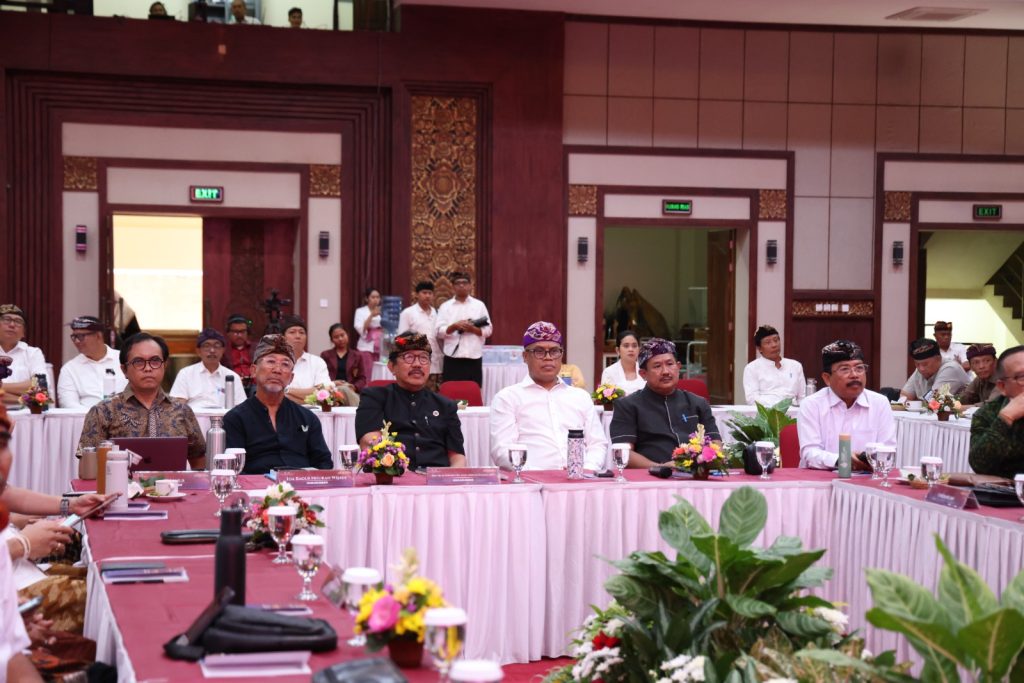
The FGD featured three distinguished speakers who examined the historical development of tourism in Bali from diverse perspectives. They included Prof. Dr. Ir. Tjokorda Oka Artha Ardhana Sukawati, M.Si., Deputy Governor of Bali (2018–2023) and Chairman of the Bali Chapter of the Indonesian Hotel and Restaurant Association (PHRI); Ida Bagus Ngurah Wijaya, a prominent Balinese tourism practitioner; and Sugi Lanus, a cultural observer and expert on Balinese lontar manuscripts.
The discussion was officially opened by the Head of BRIDA Bali Province, Dr. Ketut Wica, S.Sos., M.H., and attended by the Rector of ISI Bali, Prof. Dr. Wayan Kun Adnyana, alongside academics, tourism practitioners, cultural figures, and researchers who contributed historical and scholarly perspectives on the evolution of tourism in Bali.
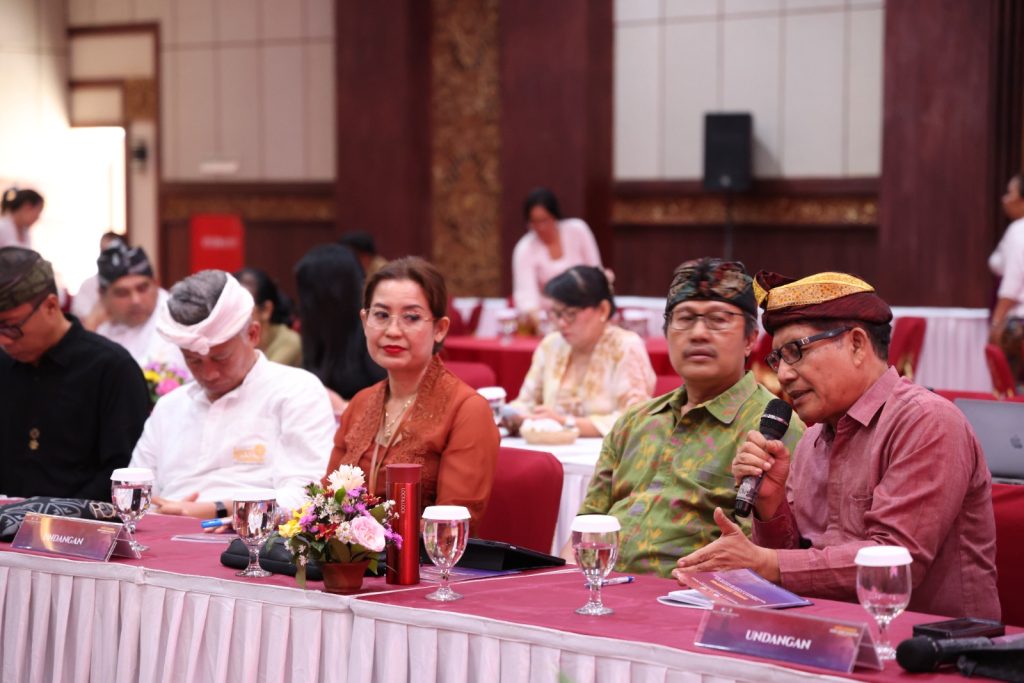
Photo:Focus Group Discussion (FGD) on One Hundred Years of Balinese Cultural Tourism, Monday (13 July), at the Kirtya Sabha Mahottama Auditorium, Citta Kelangen Building, Third Floor, ISI Bali.
In his opening remarks, Dr. Ketut Wica emphasized that the research seeks to establish a scientific foundation for future tourism policy in Bali. He stressed that Balinese culture should not be reduced to a mere economic commodity at the expense of its sacred and spiritual values.
“This study is intended to ensure that Balinese culture is not commercialized to the extent that it loses its sacredness and spirituality within society. Future government policies must safeguard local communities while preserving the cultural values of Bali.”
He further explained that tourism in Bali has evolved organically from the rhythms of community life rooted in taksu (spiritual charisma), artistic expression, and cultural traditions. Through the collaboration between ISI Bali and BRIDA, the research seeks to trace the historical trajectory of Balinese tourism by examining the interactions among artists, royal households (puri), researchers, and local communities that collectively laid the foundation for Bali’s tourism development.
As Bali approaches the centennial of its tourism history, he noted that this milestone provides an important opportunity to evaluate whether tourism development continues to uphold the authenticity of Balinese culture and to assess the resilience of cultural values amid globalization and contemporary societal change.
“The Bali Provincial Government, through BRIDA, aims to produce research that is academically rigorous while remaining socially and historically grounded. Meanwhile, Bali’s tourism stakeholders, including ASITA Bali, have initiated the Road to 100 Years of Bali Tourism campaign through the Bali Tourism Run 2026 event in Jatiluwih,” he added.
Meanwhile, the Rector of ISI Bali, Prof. Dr. Wayan Kun Adnyana, presented preliminary research findings indicating that the development of Balinese cultural tourism can be categorized into several significant phases: the pioneering period, the formative period, the first revival, the second revival, the third revival, and the fourth revival.
According to him, Balinese cultural tourism did not emerge instantaneously but developed organically through the strength of local communities and the cultural industries that had flourished since the early twentieth century.
“From a historical perspective, Balinese cultural tourism evolved organically through community-based cultural industries. The interactions and collaborations among local communities, artists, researchers, and international visitors fostered an artistic and cultural ecosystem that ultimately stimulated tourism and gained widespread international recognition by the late 1920s.”
Prof. Dr. Ir. Tjokorda Oka Artha Ardhana Sukawati, M.Si., former Deputy Governor of Bali (2018–2023) and Chairman of PHRI Bali, delivered a presentation entitled The Emergence of the Vision Toward 100 Years of Bali Tourism, discussing the origins of Bali’s tourism concept, which has long been anchored in the island’s cultural identity as its primary tourism asset.
Ida Bagus Ngurah Wijaya presented a paper entitled Sanur and Tourism: A Historical Reflection, highlighting the role of Sanur as one of the earliest centers in the development of Bali’s modern tourism industry.
Meanwhile, cultural observer and lontar scholar Sugi Lanus delivered a presentation entitled The Dawn of Balinese Tourism: Reconsidering the Physical and Cultural Foundations of Balinese Tourism Through the Lens of Rabindranath Tagore (1927). His presentation examined how the visit of prominent global figures such as Rabindranath Tagore contributed to strengthening Bali’s international reputation as a center of culture, thereby attracting growing global interest.
The discussion was moderated by Prof. Dr. I Komang Sudirga, M.Hum., Vice Rector for Student Affairs and Cooperation at ISI Bali. Through this forum, speakers, researchers, and participants explored the historical dynamics, contemporary challenges, and future directions of Balinese cultural tourism in anticipation of the commemoration of One Hundred Years of Balinese Cultural Tourism.
Photo:Focus Group Discussion (FGD) on One Hundred Years of Balinese Cultural Tourism, Monday (13 July), at the Kirtya Sabha Mahottama Auditorium, Citta Kelangen Building, Third Floor, ISI Bali.
The discussion was further enriched by insights from Prof. Ir. Made Supartha Utama, a member of the Research Quality Assurance Team, who encouraged participants to reconsider the role of Balinese culture in tourism development.
According to him, the greatest challenge today is not merely promoting Balinese culture as a tourism attraction but ensuring that its intrinsic values serve as the foundation values underpinning governance and development. He argued that Balinese cultural values should constitute the basis for tourism governance, legal systems, and social institutions in Bali, thereby ensuring that tourism extends beyond superficial cultural displays or ceremonial performances.
“What we need to reflect upon is the extent to which Balinese cultural values have become the foundation values of our tourism governance, legal system, and social system. Our attention should not be limited to outward cultural expressions or ceremonies, such as the Ngaben cremation ritual, without understanding the philosophical principles that constitute their underlying spirit.”
Through this collaborative research initiative, ISI Bali and BRIDA Bali Province aspire to produce evidence-based academic recommendations that will inform future tourism development policies. These recommendations are expected to ensure that tourism development remains firmly grounded in Balinese cultural values, preserves the sacredness of local traditions, and further strengthens Bali’s position as a globally recognized and sustainable cultural destination.
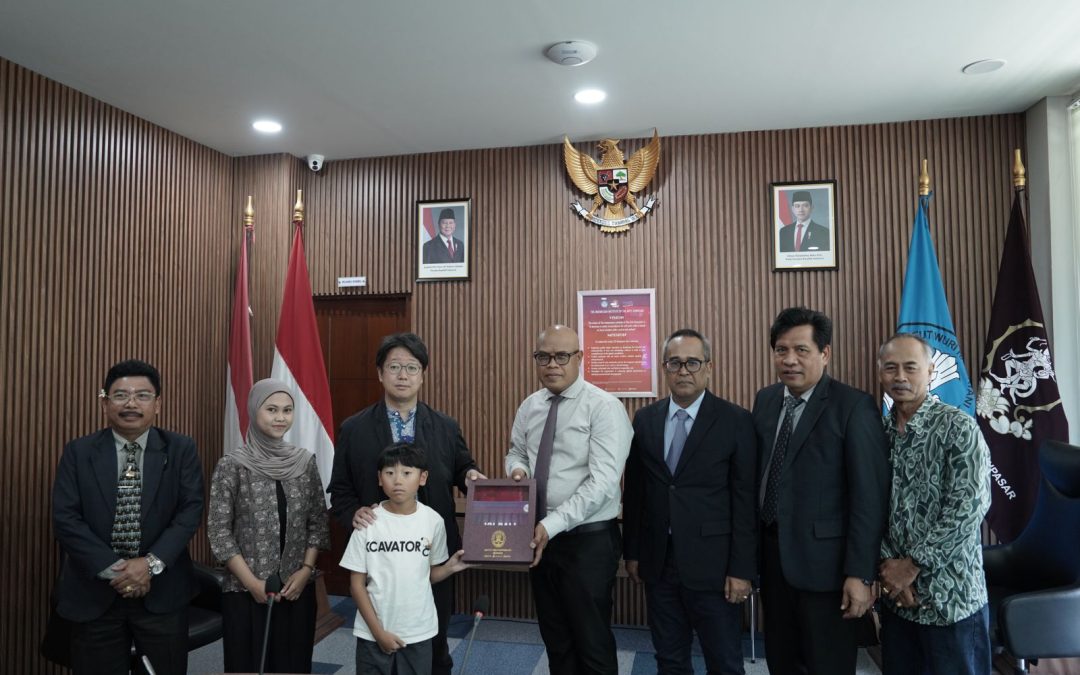
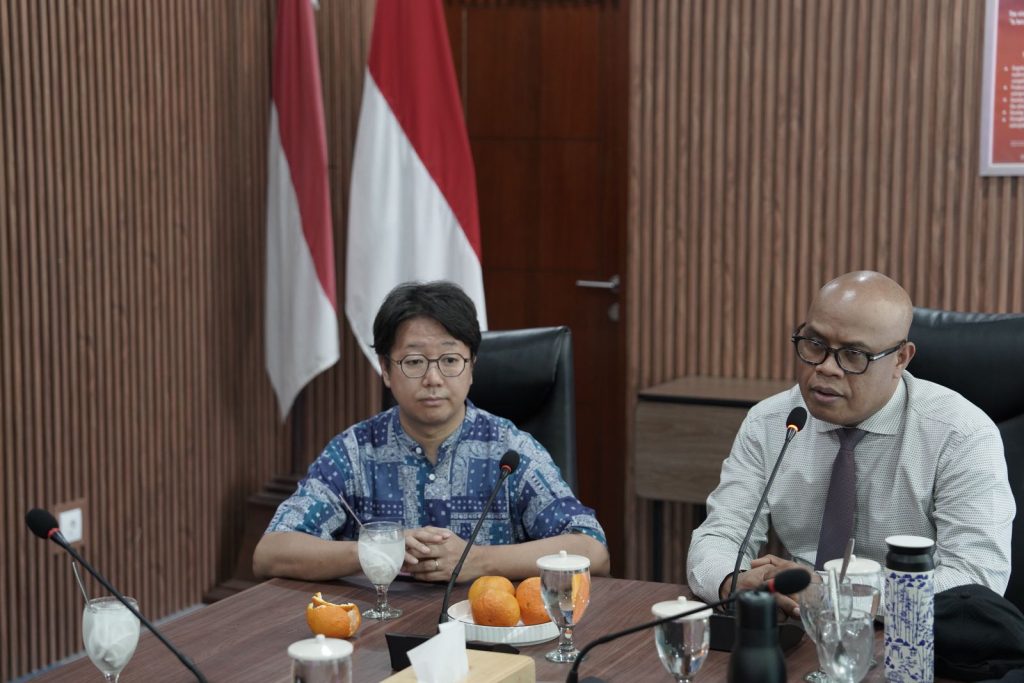
Photo: ISI BALI Rector, Prof. Dr. I Wayan “Kun” Adnyana (right), and the Chief Executive Officer of BESTie Co., Ltd., Mr. Matsumoto Yuki, during a meeting to discuss preparations for the international internship program at Sabha Citta Mahottama Hall, ISI BALI, on Wednesday (8/7).
The Indonesia Institute of the Arts Bali (ISI BALI) continues to advance the implementation of its international internship program in collaboration with the ceramic industry in Hasami, Japan. As a follow-up to the recently established partnership through the signing of a Memorandum of Understanding (MoU) and a Cooperation Agreement with Japanese partners, the Chief Executive Officer (CEO) of BESTie Co., Ltd., Mr. Matsumoto Yuki, visited ISI BALI on Wednesday (8/7) to discuss preparations for the program with the institute’s executive leadership.
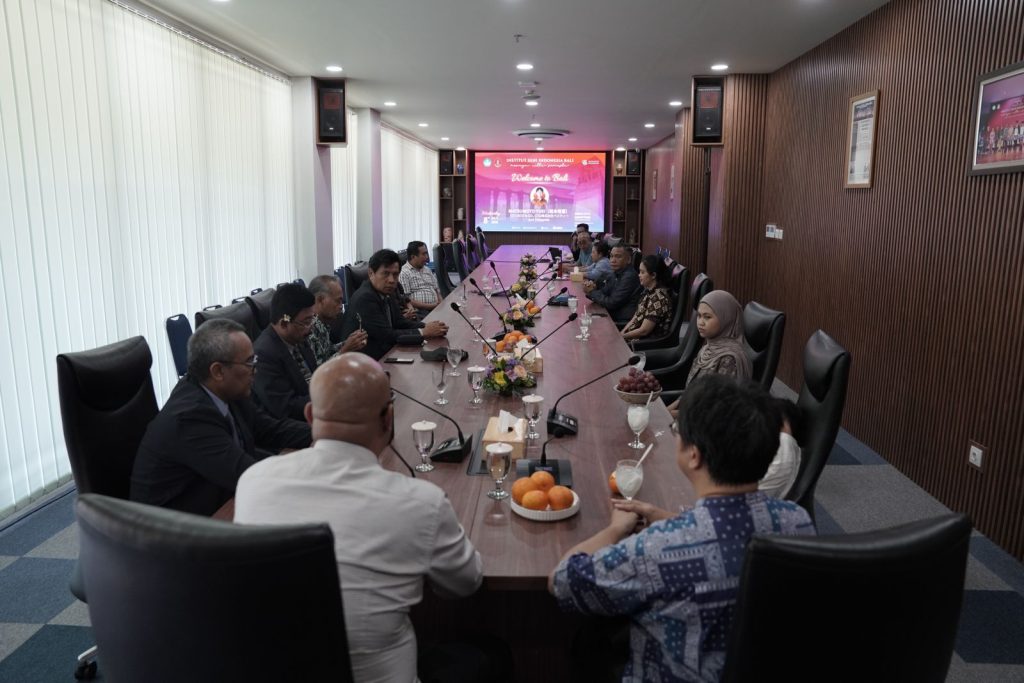
The meeting, held at the ISI BALI Teleconference Room, was hosted by ISI BALI Rector, Prof. Dr. I Wayan “Kun” Adnyana, accompanied by the Vice Rectors, the Dean of the Faculty of Fine Arts and Design (FSRD), the Vice Dean for Academic Affairs of FSRD, the Director of the Graduate School, the Head of the Bureau of Academic Affairs, Student Affairs, and Cooperation, and the Head of the Bureau of Planning, General Affairs, and Finance. Mr. Matsumoto was accompanied by Ms. Alja, a Japanese language instructor who will provide language training for students participating in the internship preparation program.
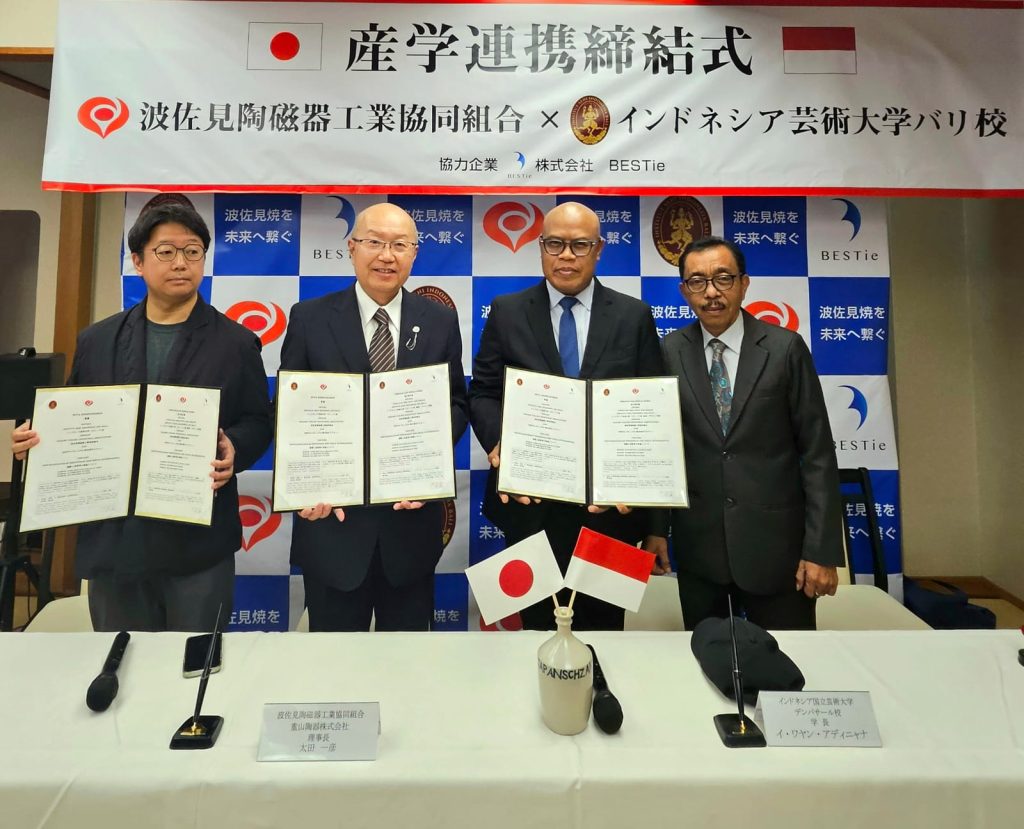
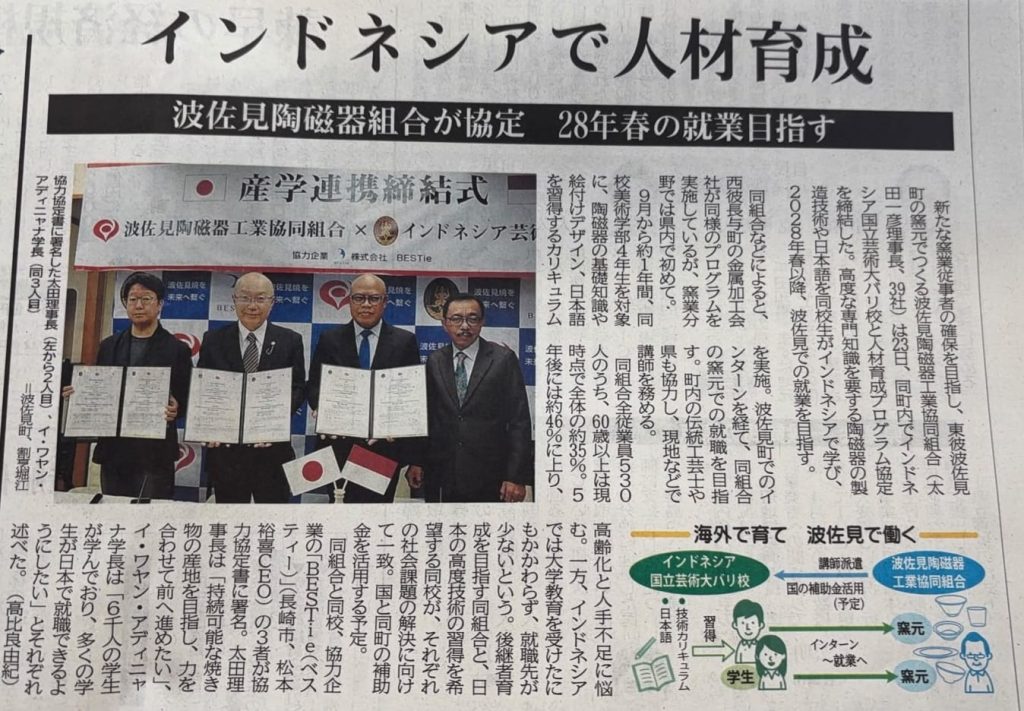
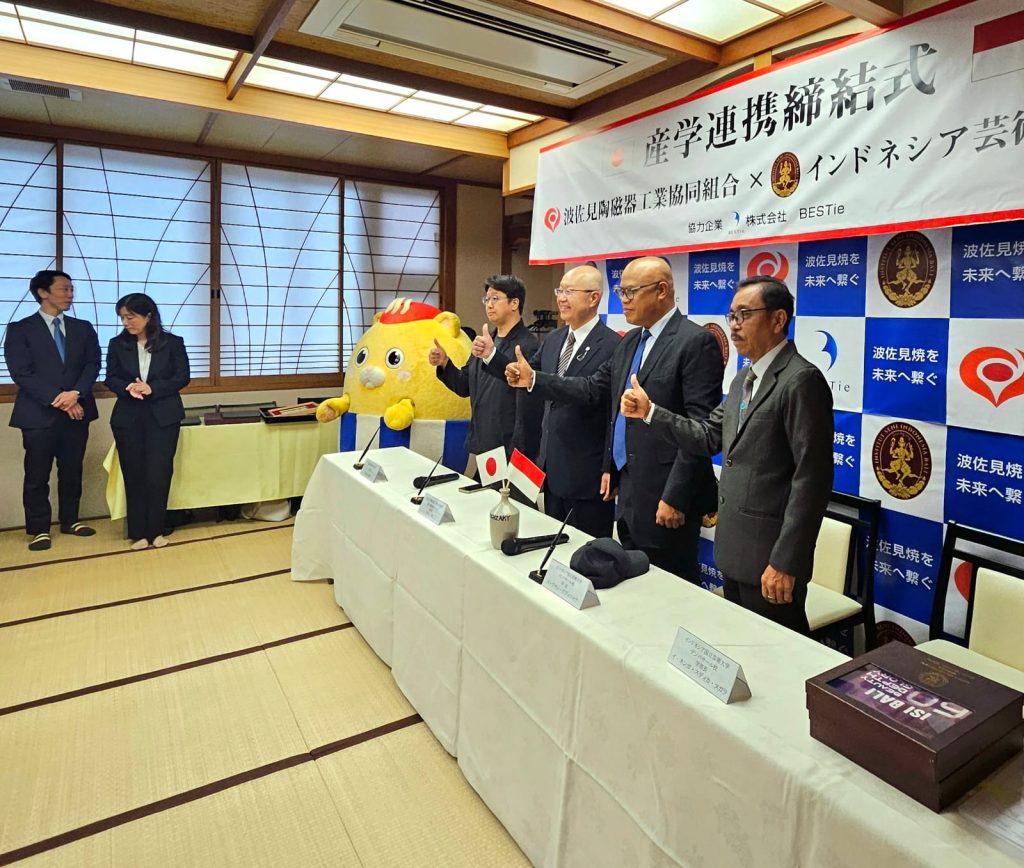
Previously, on Tuesday (23/6), ISI BALI signed a Memorandum of Understanding (MoU) with the Hasami Tohjiki Industrial Association and BESTie Co., Ltd. in Hasami, Nagasaki Prefecture, Japan. The MoU was signed by ISI BALI Rector, Prof. Dr. I Wayan “Kun” Adnyana, together with Mr. Kazuhiko Ota, Chairman of the Hasami Tohjiki Industrial Association, and Mr. Matsumoto Yuki, CEO of BESTie Co., Ltd. On the same occasion, a Cooperation Agreement was also signed between the Faculty of Fine Arts and Design (FSRD) of ISI BALI and the two Japanese partners by the Dean of FSRD, Drs. I Nengah Sudika Negara, M.Erg.
Photo: ISI BALI and BESTie Co., Ltd. discuss preparations for the international internship program in Hasami, Japan, at Sabha Citta Mahottama Hall, ISI BALI, on Wednesday (8/7).
ISI BALI Rector, Prof. I Wayan “Kun” Adnyana, expressed his appreciation for the visit, describing it as an important step toward realizing the international internship program agreed upon by both parties. He noted that technical discussions concerning the training curriculum would be further coordinated with the leadership of the Faculty of Fine Arts and Design to ensure that the program aligns with the needs of Japan’s ceramic industry.
“Thank you, Mr. Matsumoto, for your visit. Discussions regarding the training curriculum can be further coordinated with the Dean and the Vice Dean for Academic Affairs of FSRD. In the near future, ISI BALI will also begin disseminating information regarding the recruitment of participants for the training program,” he said.
In the initial phase, ISI BALI will recruit 25 seventh-semester students from the Study Programs of Craft Arts, Fine Arts, and Product Design. The selected participants will undertake an intensive training program, including Japanese language instruction, scheduled to commence on 1 September 2026 as preparation for entering the professional industry. Upon completion of the training, the eight highest-performing participants will be selected to undertake the international internship program in Hasami, Nagasaki Prefecture, Japan. The remaining 17 participants will be placed in internship programs with reputable craft industry partners in Indonesia, ensuring that all trainees gain meaningful professional experience relevant to their respective fields of study.
Meanwhile, the CEO of BESTie Co., Ltd., Mr. Matsumoto Yuki, affirmed his company’s readiness to begin the interview process as part of the participant selection for the training program. He also introduced Ms. Alja as one of the Japanese language instructors who will mentor the students throughout the preparation period.
Mr. Matsumoto emphasized that the partnership would not only provide ISI BALI students with the opportunity to deepen their knowledge and skills in ceramic arts in Japan but would also serve as a mutually beneficial platform for cultural exchange. According to him, the interest of Japanese students in studying ceramic arts and Balinese culture continues to grow.
“I have observed that many Japanese students are interested in studying ceramics in Bali. After visiting several temples, I have also experienced the richness of Bali’s spiritual and cultural heritage. Experiences like these will undoubtedly become a unique attraction for Japanese students wishing to study here,” he remarked.
He further expressed his hope that the close coordination and collaboration among BESTie Co., Ltd., the Hasami Tohjiki Industrial Association, and ISI BALI would continue to strengthen, ensuring the successful implementation of the training program and international internship while delivering meaningful benefits for all parties involved.
The international internship program in Hasami represents the initial implementation of the Memorandum of Understanding and Cooperation Agreement established between ISI BALI and its Japanese partners. Through this initiative, students will not only gain learning experiences in one of Japan’s leading ceramic production centers but will also broaden their international perspectives, enhance their professional competencies, and strengthen collaborative networks in the fields of arts and the creative industries between Indonesia and Japan.
Collaborating to Advance International Craft Arts Education
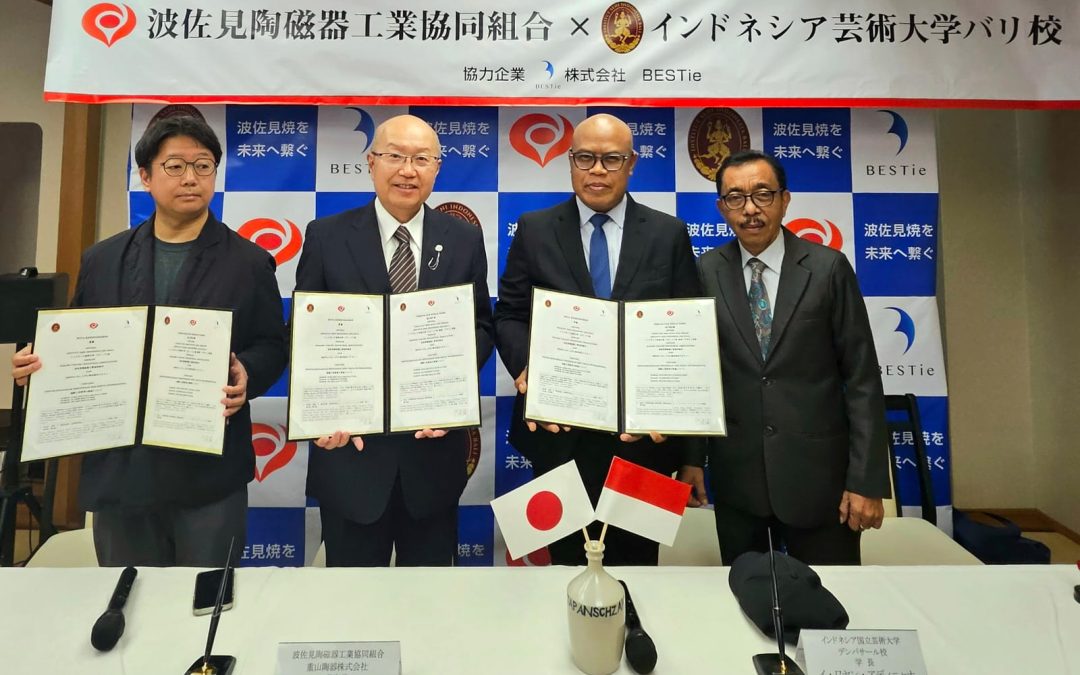
Photo: ISI BALI Rector Prof. Dr. I Wayan ‘Kun’ Adnyana (second from left), accompanied by the Dean of the Faculty of Fine Arts and Design (FSRD), Drs. I Nengah Sudika Negara, M.Erg., signs the MoU with Kazuhiko Ota, Chairman of the Hasami Tohjiki Industrial Association (second from right), and Matsumoto Yuki, CEO of BESTie Co., Ltd. (left).
The Indonesian Institute of the Arts Bali (ISI BALI) continues to expand its international partnerships to enhance the quality of higher education and strengthen the global competitiveness of its graduates. Demonstrating this commitment, ISI BALI signed a Memorandum of Understanding (MoU) with the Hasami Tohjiki Industrial Association and BESTie Co., Ltd., Japan, on Tuesday (23 June) in Hasami Town, Nagasaki Prefecture, Japan.
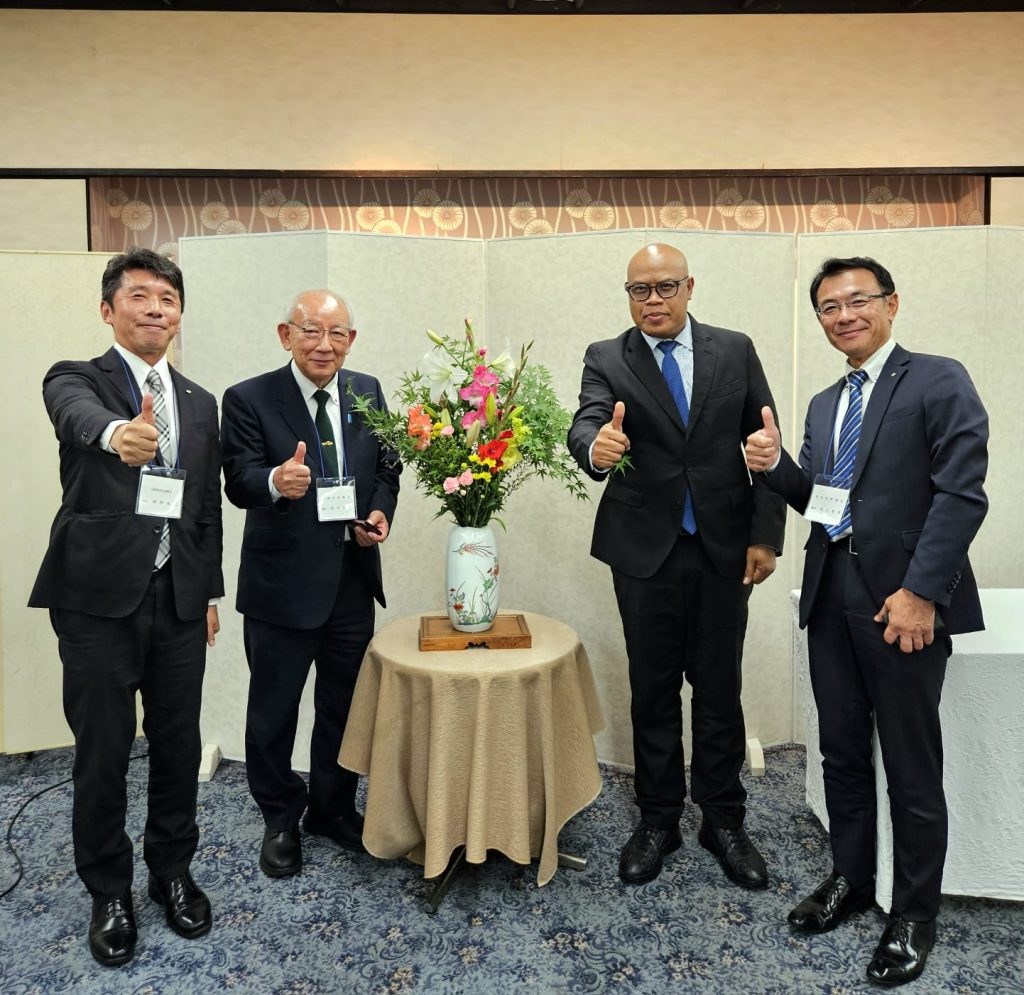
The MoU was signed by Prof. Dr. I Wayan ‘Kun’ Adnyana, Rector of ISI BALI, together with Kazuhiko Ota, Chairman of the Hasami Tohjiki Industrial Association, and Matsumoto Yuki, CEO of BESTie Co., Ltd. On the same occasion, the Faculty of Fine Arts and Design (FSRD) ISI BALI also signed an Implementation Agreement (IA) with the two Japanese partners. The agreement was signed by Drs. I Nengah Sudika Negara, M.Erg., Dean of FSRD ISI BALI.
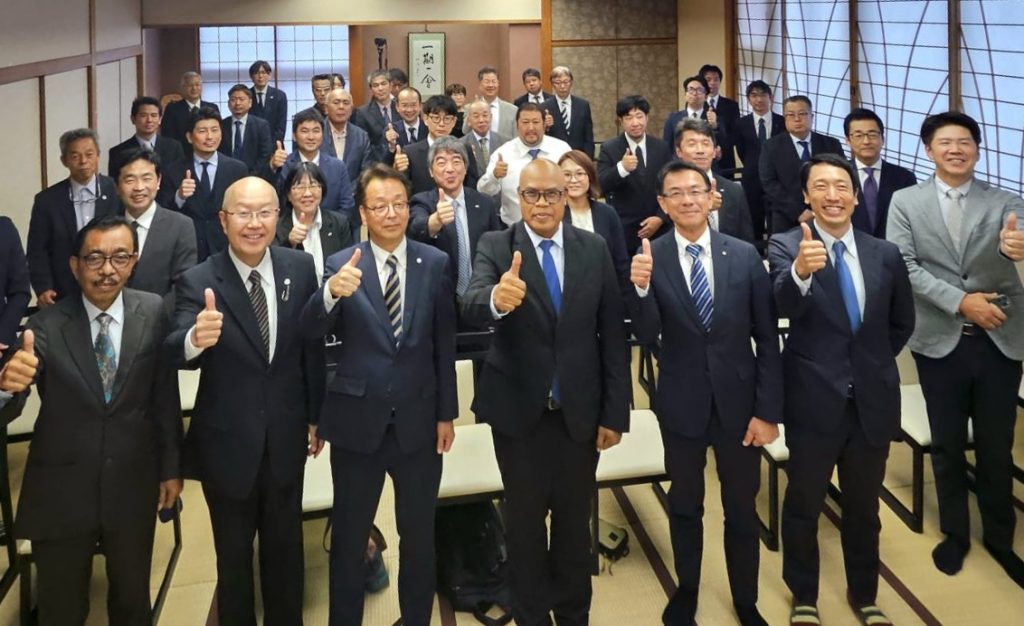
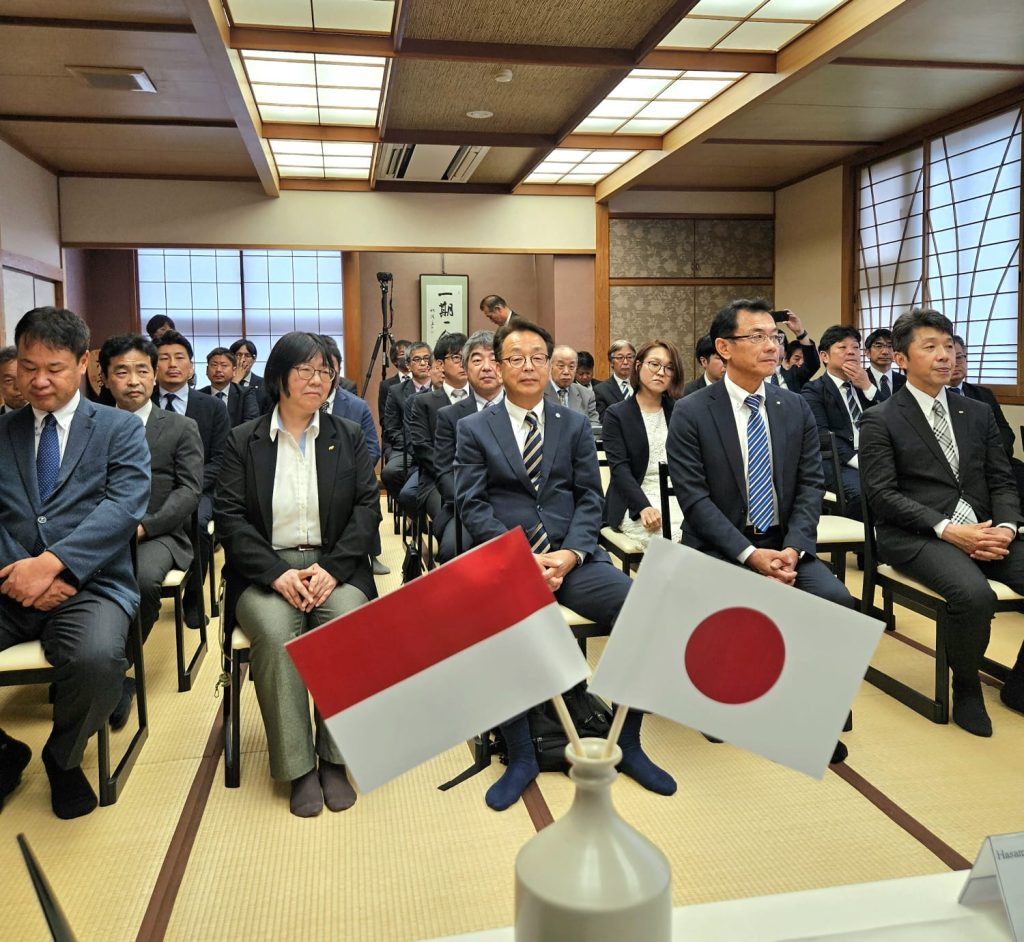
Photo: MoU Signing Ceremony between ISI BALI, the Hasami Tohjiki Industrial Association, and BESTie Co., Ltd., held on Tuesday (23 June) in Hasami Town, Nagasaki Prefecture, Japan.
The signing ceremony was conducted in a warm and distinguished atmosphere, attended by approximately 40 invited guests representing the ceramic industry, ceramic research institutions, members of parliament, and government officials from Hasami Town and Nagasaki Prefecture, including Murayama Hiroshi, Vice Mayor of Hasami. Prior to the signing ceremony, the national anthems of Indonesia (Indonesia Raya) and Japan (Kimigayo) were performed.
This collaboration represents a strategic initiative to develop internationally oriented ceramic arts education through a strong partnership between higher education and Japan’s globally recognized ceramic industry.
The agreement follows the visit of Yoshinori Maekawa, Mayor of Hasami, and Kazuhiko Ota, Chairman of the Hasami Tohjiki Industrial Association, to the ISI BALI campus on 18 February 2026. During that visit, both parties explored potential areas of collaboration, which subsequently led to an official invitation for the Rector of ISI BALI and the Dean of FSRD to attend the signing ceremony in Japan.
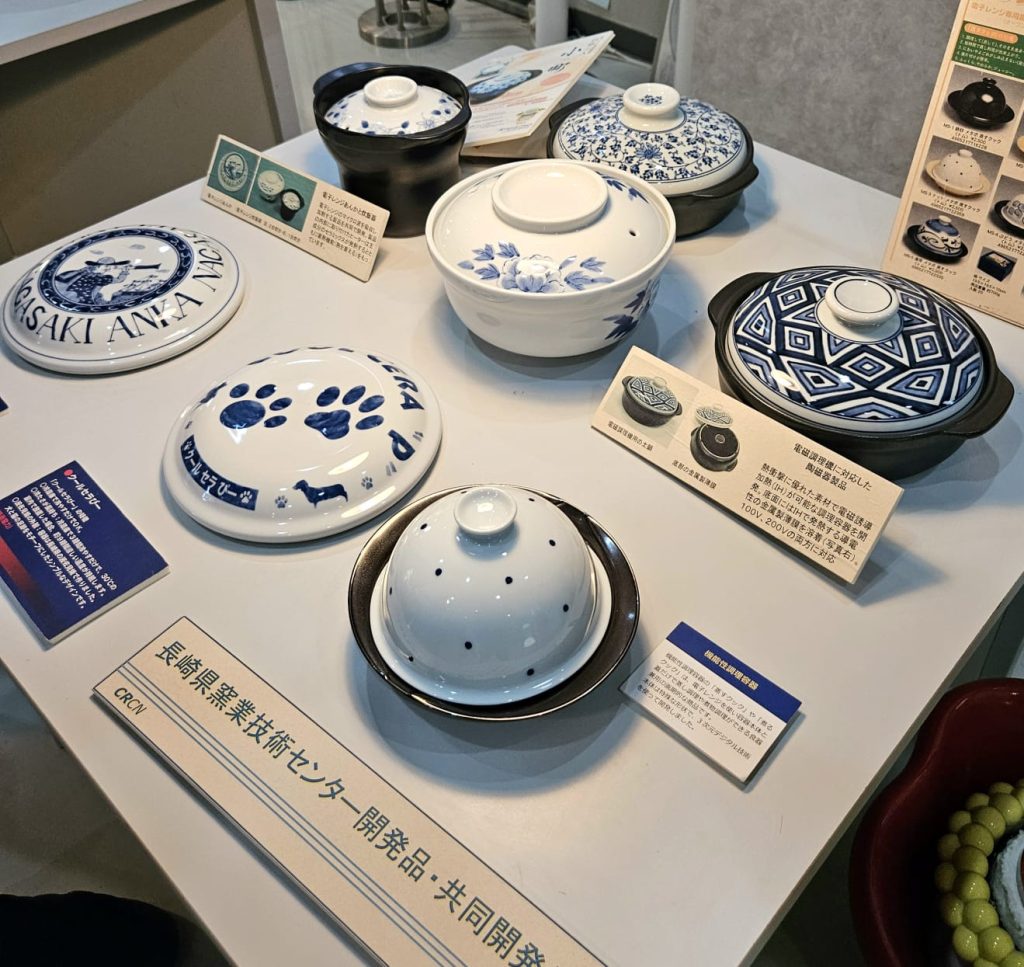
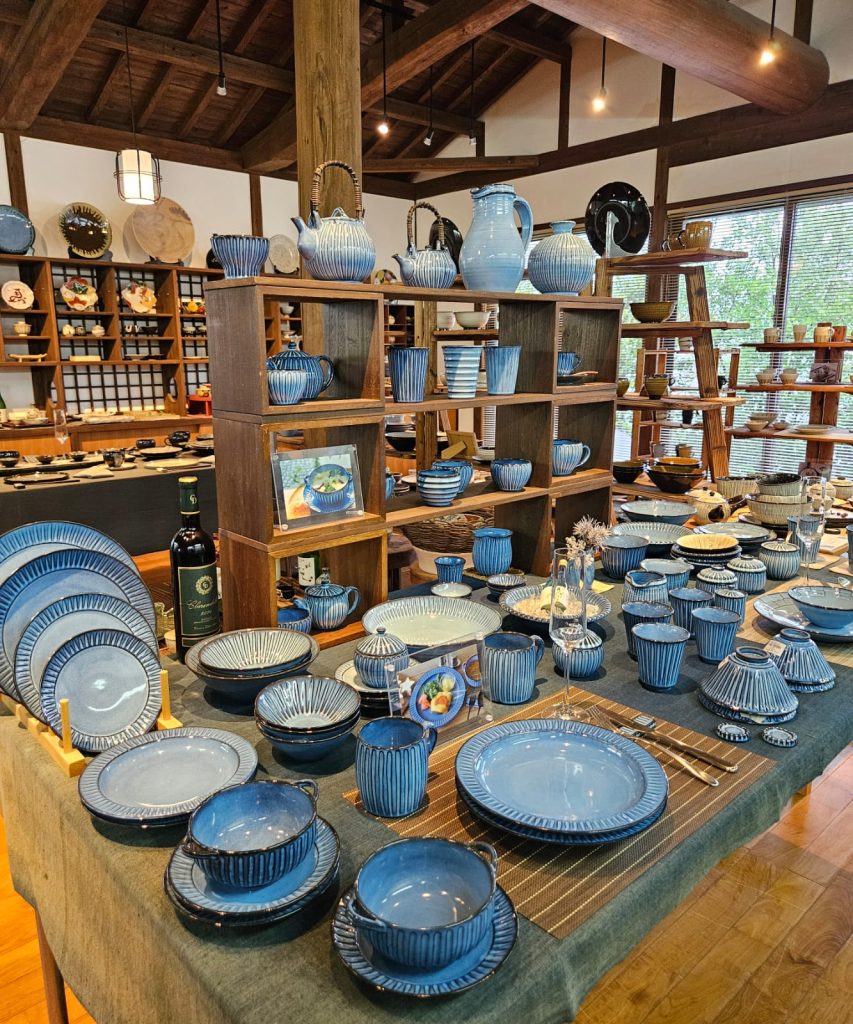
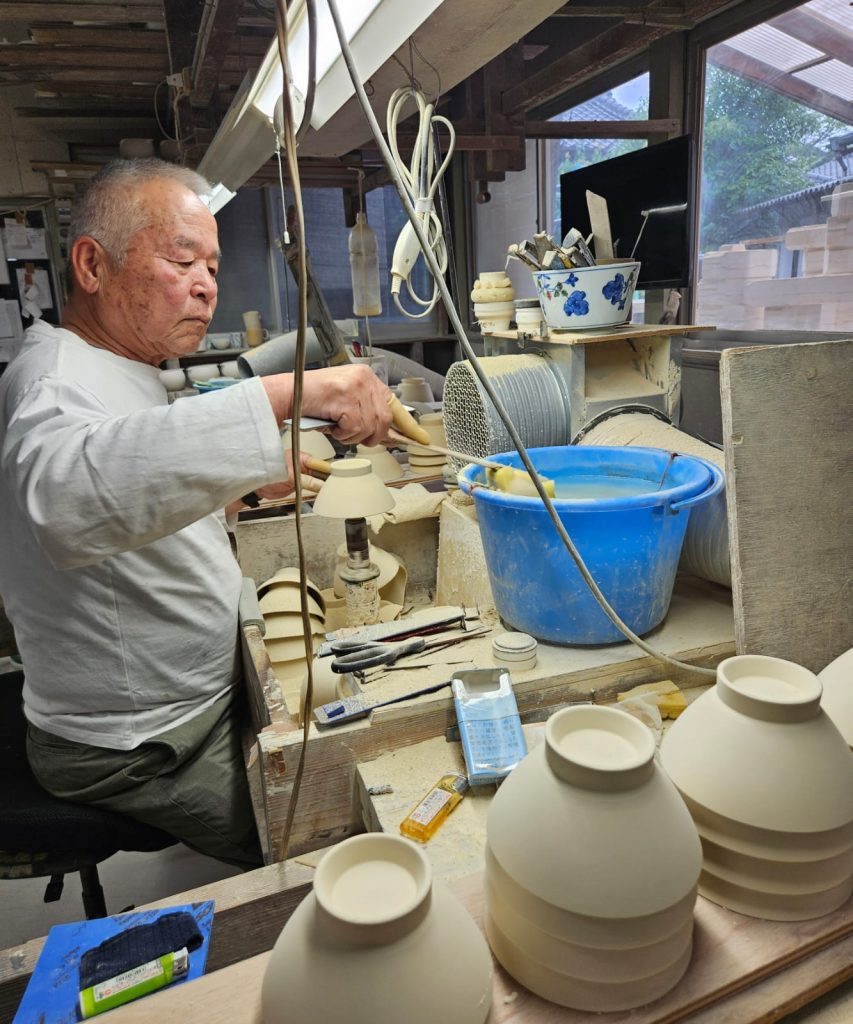
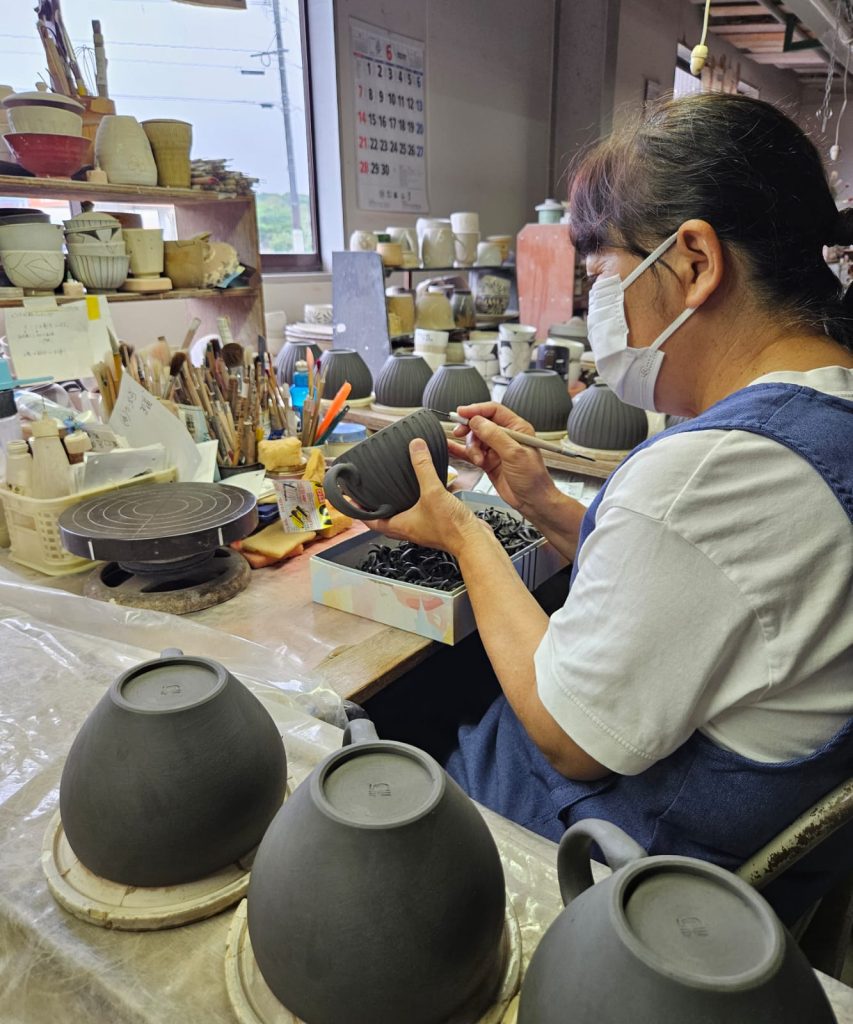
Photo: Ceramic products manufactured in Hasami Town, Nagasaki Prefecture, Japan.
Hasami is widely recognized as one of Japan’s most renowned ceramic production centers, with a history of producing high-quality ceramics spanning several centuries. Through this partnership, Hasami aims to establish a collaborative project that bridges people, education, and technology between Indonesia and Japan while strengthening connections between academia and the creative industries.
ISI BALI Rector Prof. Dr. I Wayan Adnyana, S.Sn., M.Sn., welcomed the partnership, describing it as a significant opportunity to advance craft arts education at ISI BALI while providing students with access to international learning experiences and industry-based professional training.
“The Craft, Product Design, and Fine Arts Study Programs at ISI BALI have demonstrated outstanding excellence in producing innovative ceramic works. Our students create not only artistic ceramic pieces but also functional ceramic products with strong commercial potential. This collaboration with Japan’s ceramic industry will further strengthen students’ competencies while preparing them to enter the global workforce,” he stated.
Representatives of the Hasami partners also expressed their commitment to supporting human resource development through industry-based education and training. In addition to providing ISI BALI students with opportunities to gain firsthand experience in Japan’s traditional ceramic industry, the collaboration will create career pathways for qualified graduates to pursue professional employment in Hasami.
Under the MoU and the Implementation Agreement, the parties agreed to collaborate in various areas, including academic program development, international curriculum design, internship implementation, employment placement for students and alumni, educational infrastructure development, and other mutually agreed initiatives.
One of the priority programs to be implemented is the development and adoption of a Japanese-standard curriculum for international craft arts education at ISI BALI. The curriculum will be jointly designed with Japanese industry partners to ensure alignment with global workforce demands and developments in the international ceramic industry.
In addition, students will have the opportunity to participate in internship programs at ceramic companies and industries in Hasami with full facilitation from the Japanese partners. The program is intended for seventh-semester students from the Fine Arts, Craft, and Product Design Study Programs and is scheduled to commence in September 2026.
Through immersive learning experiences at one of Japan’s leading ceramic industry centers, students are expected to develop not only advanced technical expertise in ceramic production and material innovation but also a comprehensive understanding of industrial management, professional work culture, and international quality standards. These experiences will equip ISI BALI graduates with the competencies required to compete successfully in the global creative industry. (ISI BALI Public Relations Office)
ISI Bali’s Presence at ArtMoments Jakarta 2026 Draws Attention from Government Officials, Collectors, and Art Figures
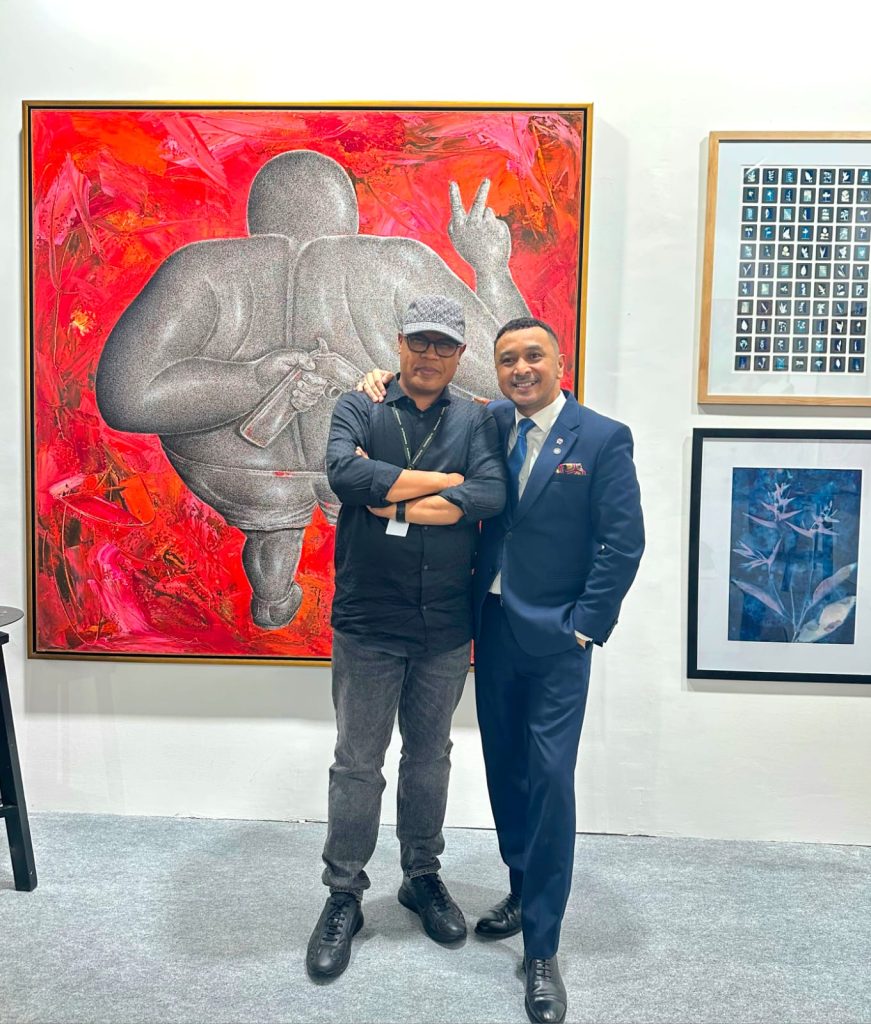
Photo: ISI Bali Rector Prof. Dr. Wayan “Kun” Adnyana with Vice Minister of Higher Education, Science, and Technology Prof. Stella Christie at ArtMoments Jakarta.
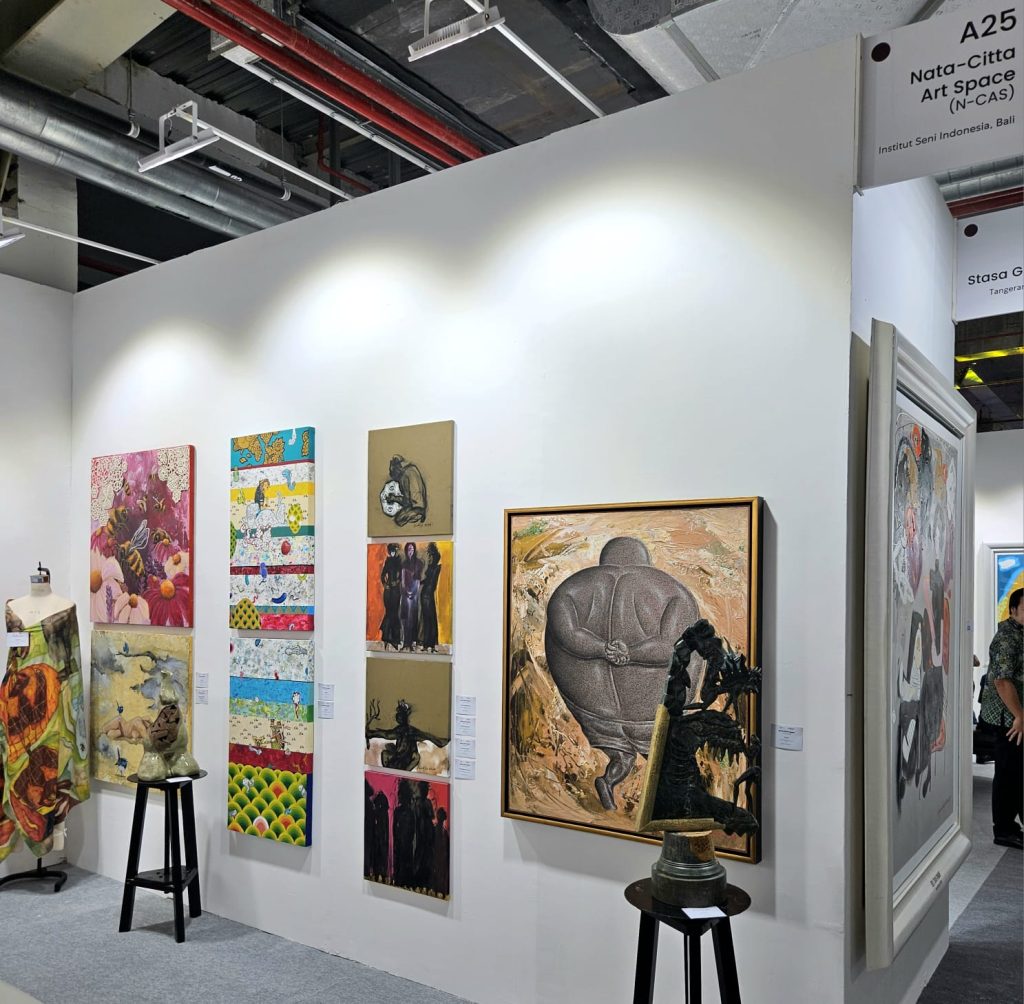
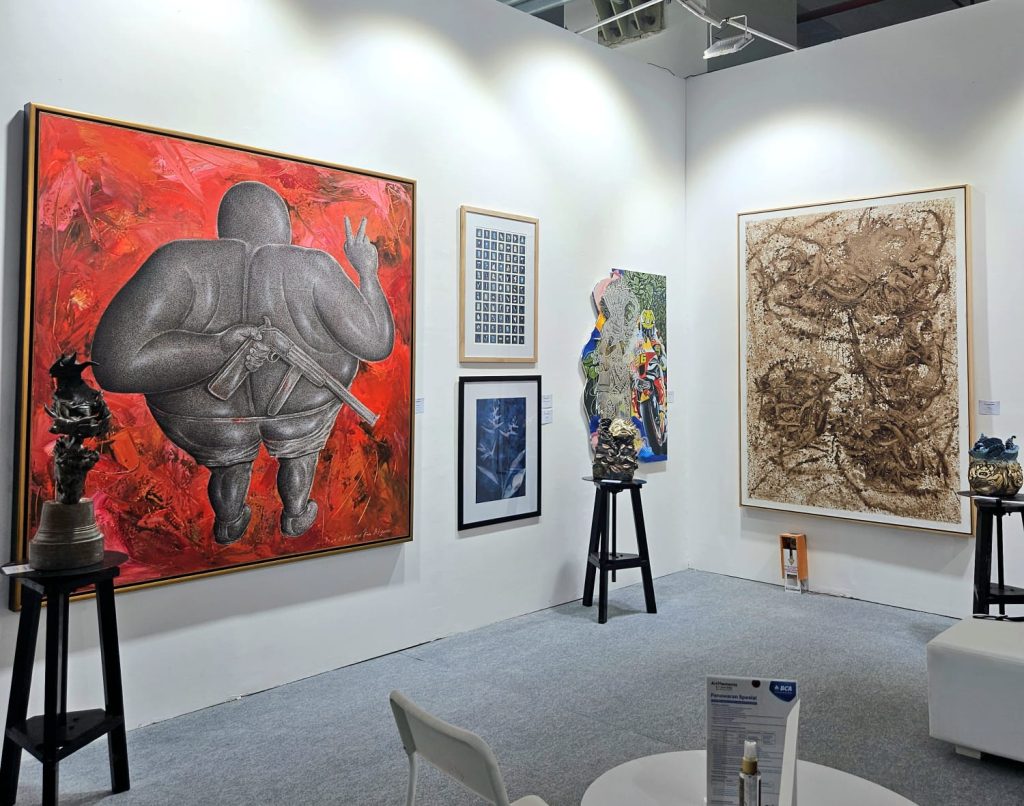
The participation of the Indonesian Institute of the Arts Bali (ISI Bali) in the international contemporary and modern art fair ArtMoments Jakarta 2026 attracted significant attention from a wide range of audiences. Through its Nata-Citta Art Space (N-CAS) booth, themed RAYA-CITTA-RUPA (The Light of Creative Imagination), artworks created by ISI Bali faculty members and students were visited by government officials, collectors, journalists, and prominent figures in the Indonesian art world throughout the exhibition, which was held at the Agora Ballroom Jakarta from June 4–7, 2026.
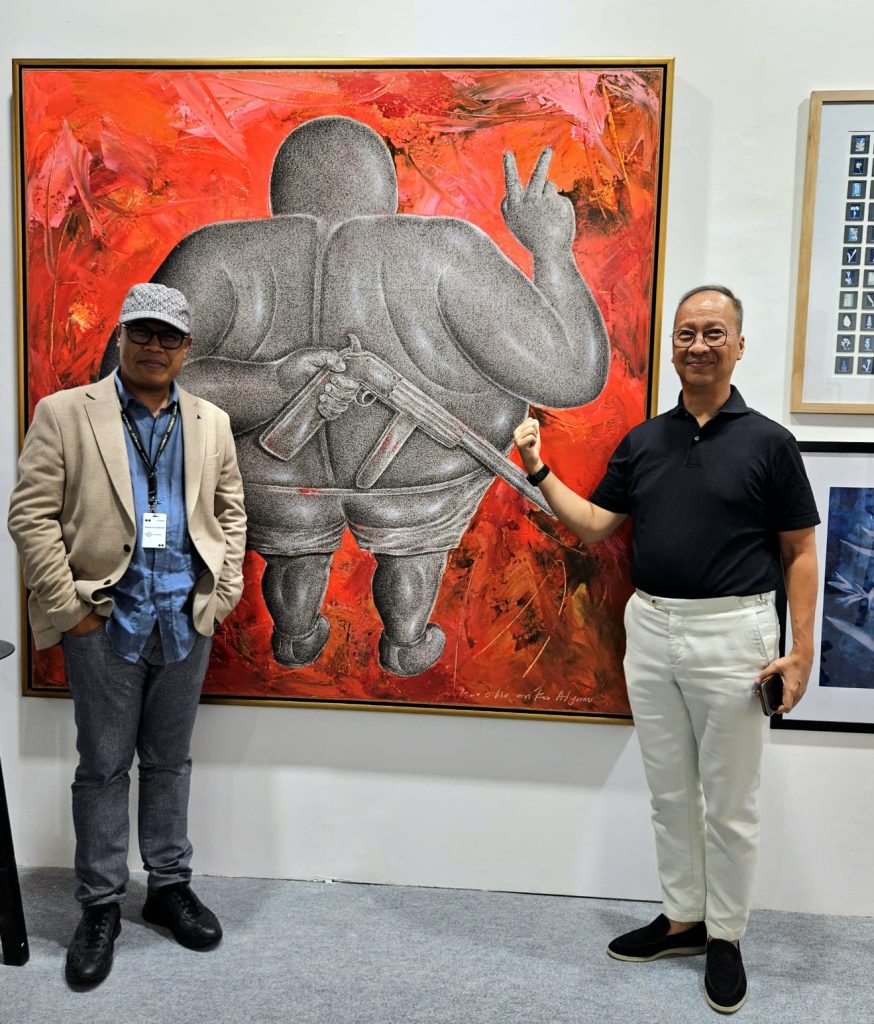
One of the notable visits came from the Vice Minister of Higher Education, Science, and Technology, Prof. Stella Christie. During her visit, she expressed appreciation for ISI Bali’s participation in presenting diverse expressions of contemporary Balinese art within this international platform. In addition to Stella Christie, the N-CAS booth was also visited by Minister of Industry Agus Gumiwang Kartasasmita and Vice Minister of Culture Giring Ganesha.
Photo: ISI Bali Rector Prof. Dr. Wayan “Kun” Adnyana with Vice Minister of Culture Giring Ganesha at ArtMoments Jakarta.
Beyond attracting attention from government representatives, the ISI Bali booth also became a meeting point for notable figures from the arts and media sectors. Among those recorded visiting the exhibition were Kompas journalist Hilmi Faiq, Nawa Tunggal founder, Prestige Magazine publisher Ronald Liem, writer and art critic Agus Dermawan T., and Bambang Bujono. The exhibition also welcomed prominent collectors, including Tossin Himawan, Wiyu Wahono, and Sendy Widjaya. Public figures such as Anjasmara and Chef Juna Rorimpandey were likewise seen visiting the ISI Bali booth.
According to ISI Bali Rector Prof. Dr. Wayan “Kun” Adnyana, the Nata-Citta Art Space (N-CAS) presentation at this year’s ArtMoments Jakarta featured paintings, photography, sculpture, ceramic crafts, and textile design works that collectively represent the latest developments in contemporary Balinese visual arts.
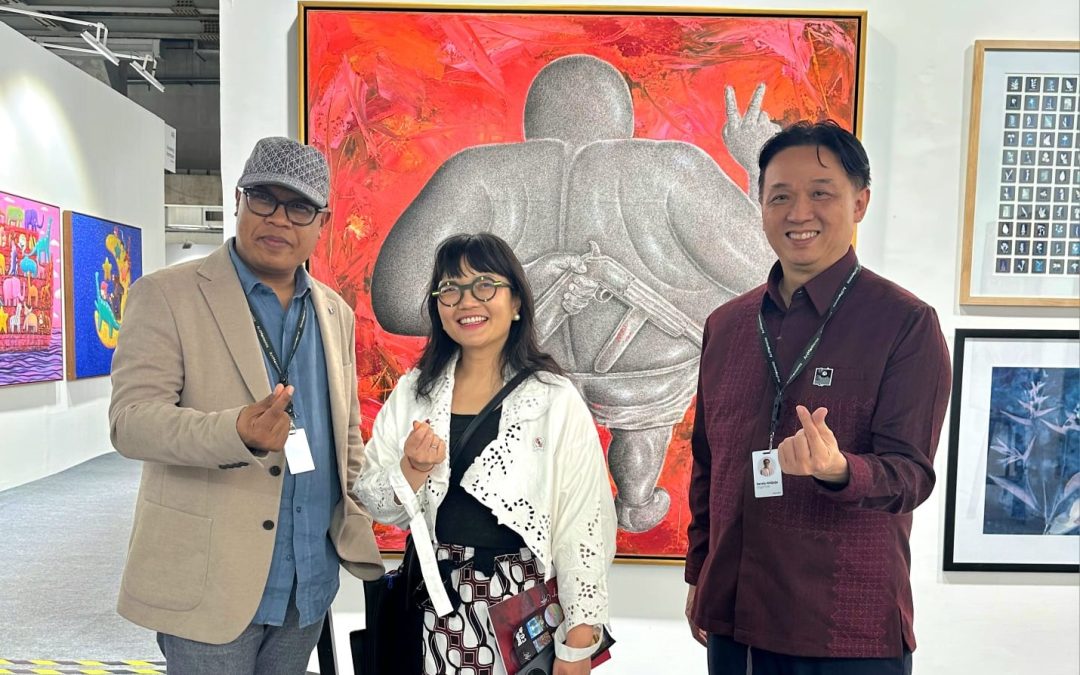
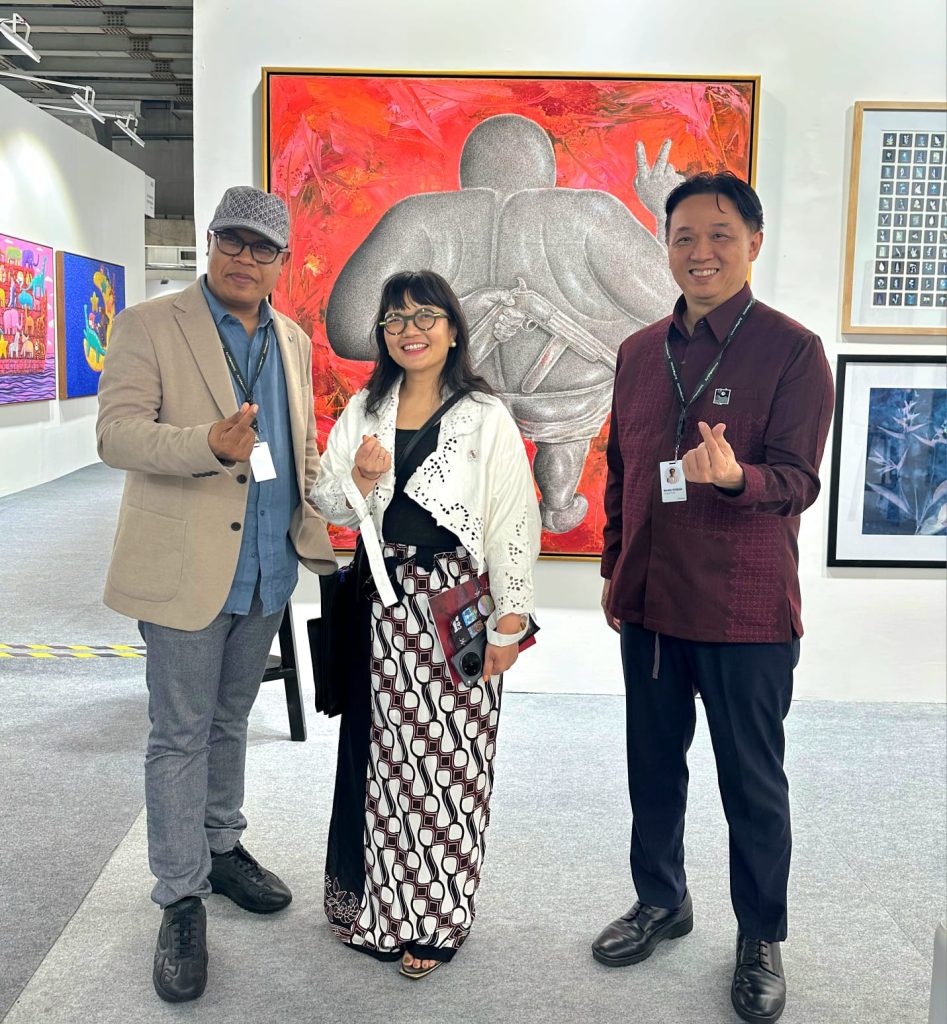
Photo: Nata-Citta Art Space (N-CAS) Booth of ISI Bali at ArtMoments Jakarta.
The exhibition was curated by Prof. Dr. A.A. Rai Remawa, Warih Wisatsana, and Alaida Niwaya. A total of sixteen artists from different generations participated in the exhibition, consisting of thirteen faculty members and three selected students from ISI Bali. The participating artists included I Wayan “Kun” Adnyana, I Ketut Muka Pendet, I Nengah Wira Kesuma, Wayan Sujana Suklu, I Made Jodog, I Made Suparta, Ida Ayu Gede Artayani, Tjok Istri Ratna C.S., Ida Bagus Candra Yana, Ni Made Tiartini Mudarahayu, I Made Hendra Mahajaya P., I Gede Jaya Putra, I Wayan Adi Sucipta, I Gede Ari Widia Utama Pucangan, Tebuana Istri Mahisarani, and Desak Putu Agnis.
Prof. Kun Adnyana further explained that the exhibited works emerged from extensive creative processes that integrate personal experiences, artistic research, empirical observations, and critical reinterpretations of the cultural traces that continue to shape life in Bali.
“The diverse media and artistic approaches presented in this exhibition demonstrate how contemporary Balinese art continues to evolve while maintaining the cultural roots that serve as its foundation,” stated the Professor of Art History.
ISI Bali’s participation in ArtMoments Jakarta 2026 provided a strategic platform for introducing the creative achievements of its academic community to both national and international audiences. The presence of government officials, collectors, creative industry practitioners, and art figures at the N-CAS booth reflects the growing recognition and appreciation of contemporary artistic practices emerging from the academic environment of ISI Bali.