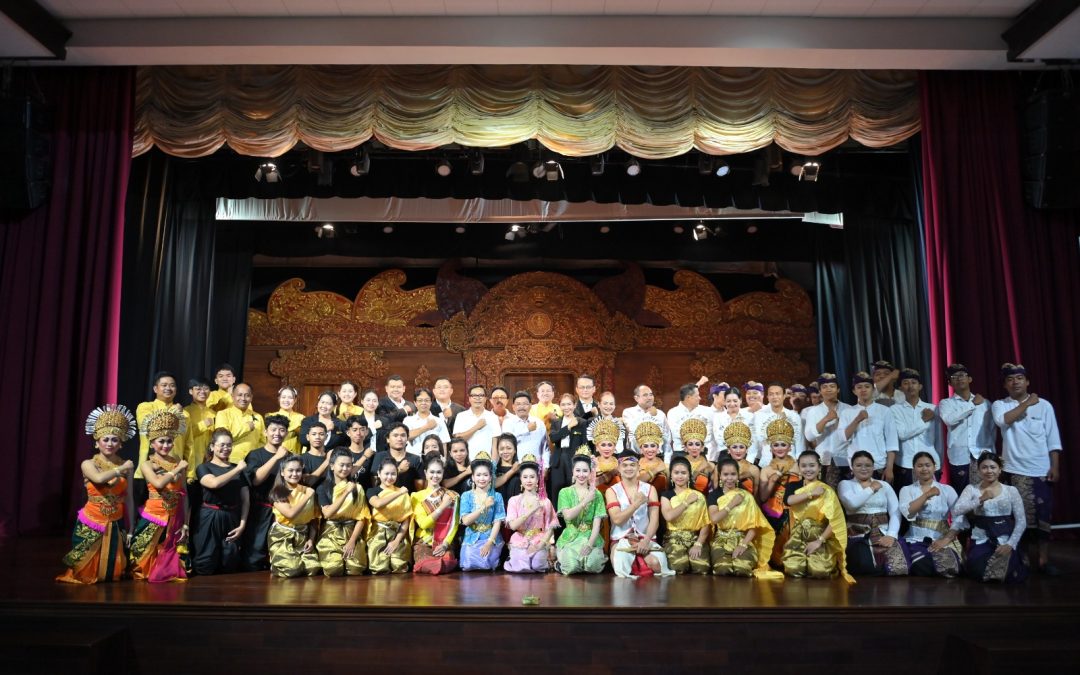
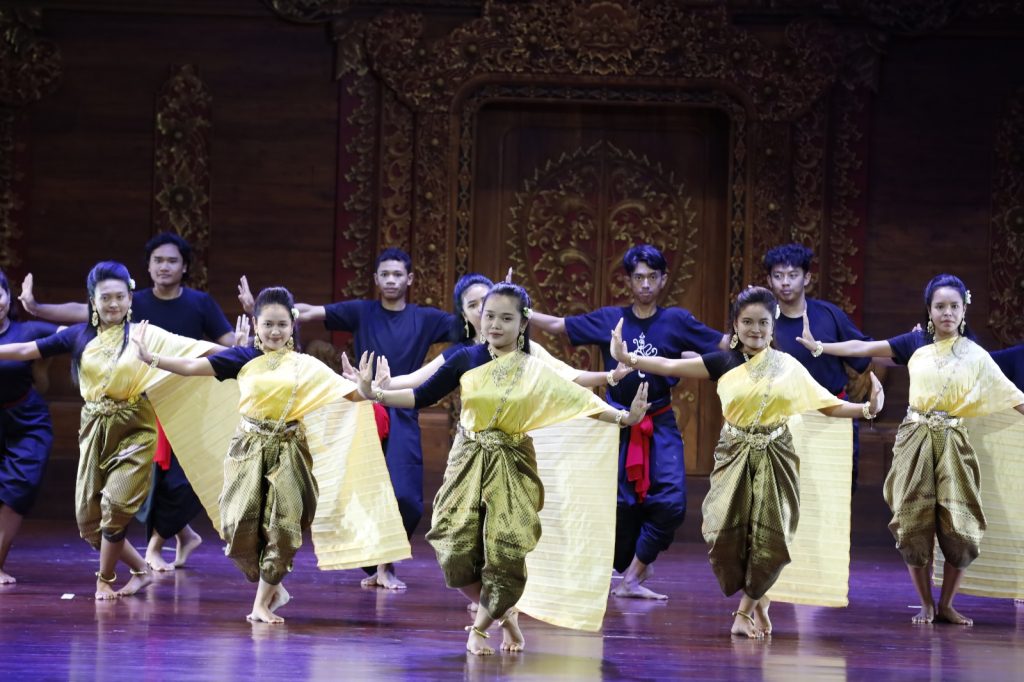
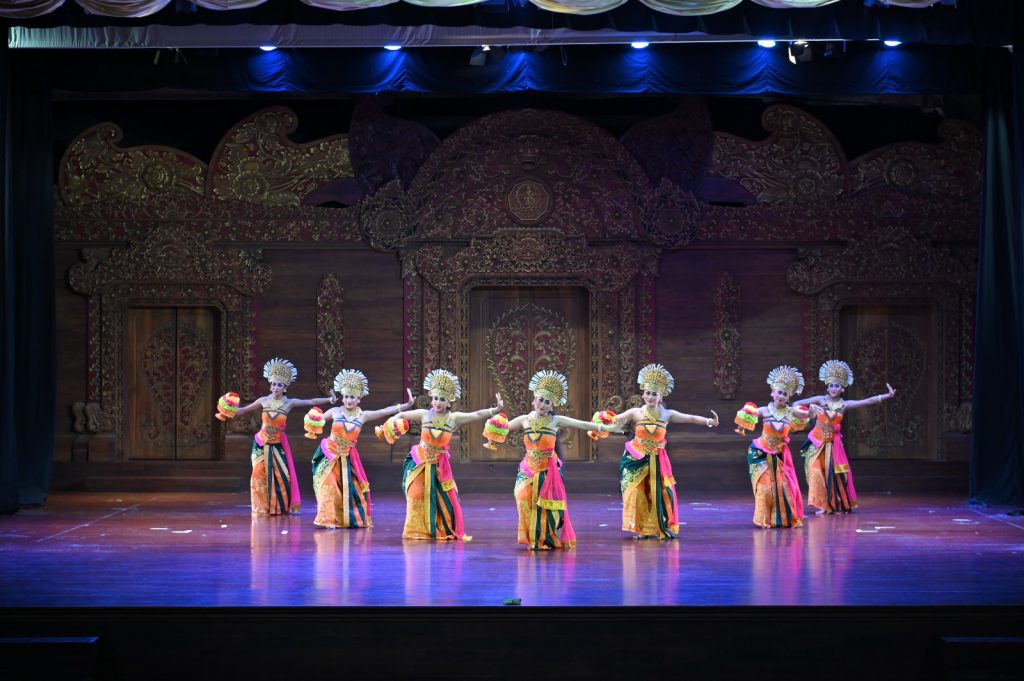
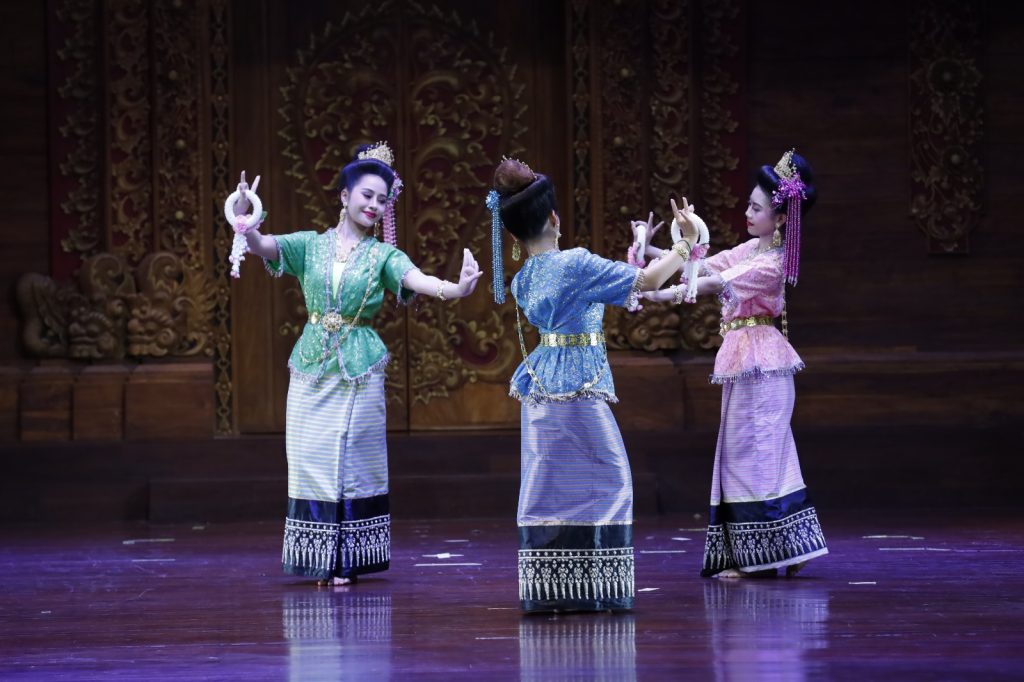
Photo: Performance of Serng Kratip Dance by students of Angthong College of Dramatic Arts and Roi Et College of Dramatic Arts, Thailand, together with students of ISI BALI, Monday (23/2) at Natya Mandala Hall, ISI BALI.
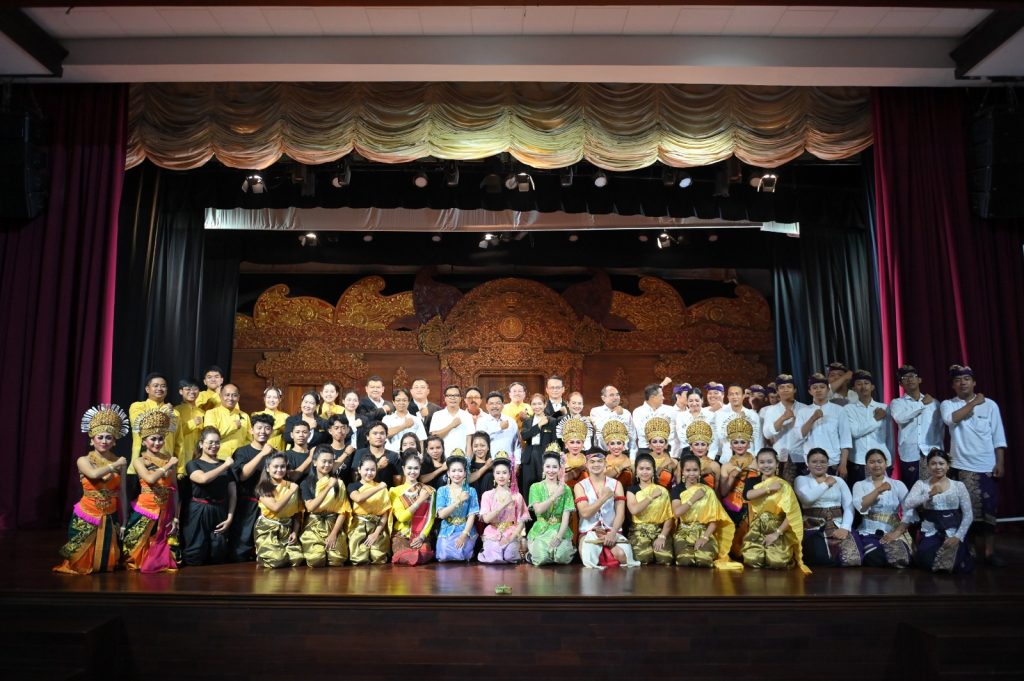
The Indonesian Institute of the Arts Bali (ISI BALI) held an art performance featuring a cultural collaboration between Angthong College of Dramatic Arts and Roi Et College of Dramatic Arts, Thailand, and the academic community of ISI BALI on Monday (23/2) at Natya Mandala Hall, ISI BALI. This performance served as a continuation of the art workshop previously conducted with the Thai delegation, as well as a platform for appreciating the outcomes of the learning process and cultural exchange that had taken place.
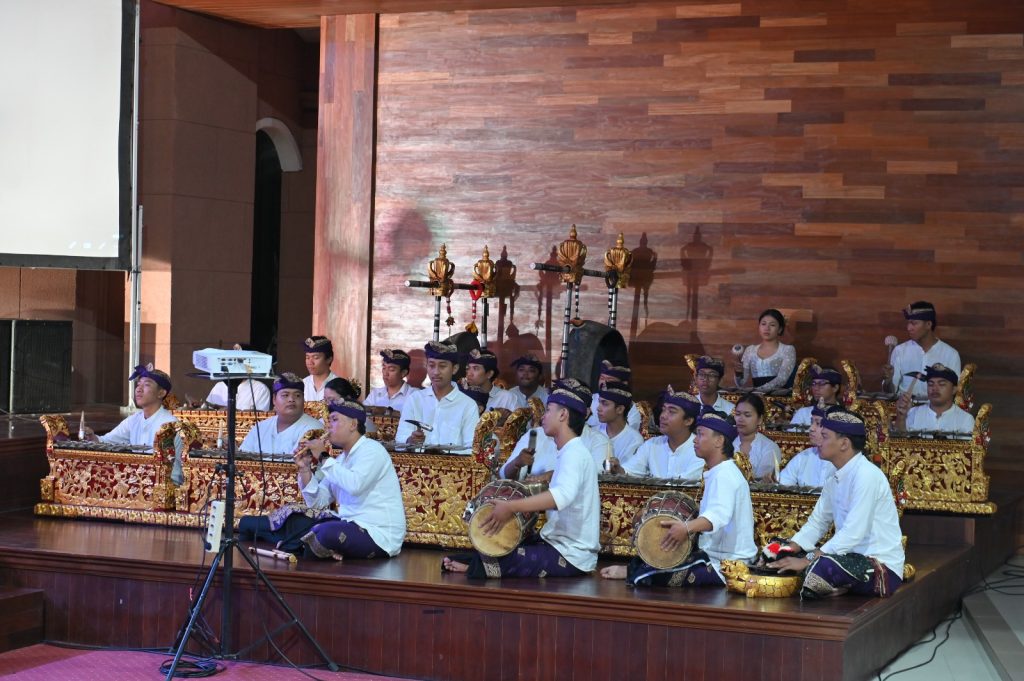
The event commenced with the performance of Selat Segara Dance presented by students of the Performing Arts Education Study Program (PSP) at ISI BALI, accompanied by gamelan music performed by PSP students. This opening performance created a dynamic atmosphere while introducing the richness of Balinese performing arts to the guests from Thailand.
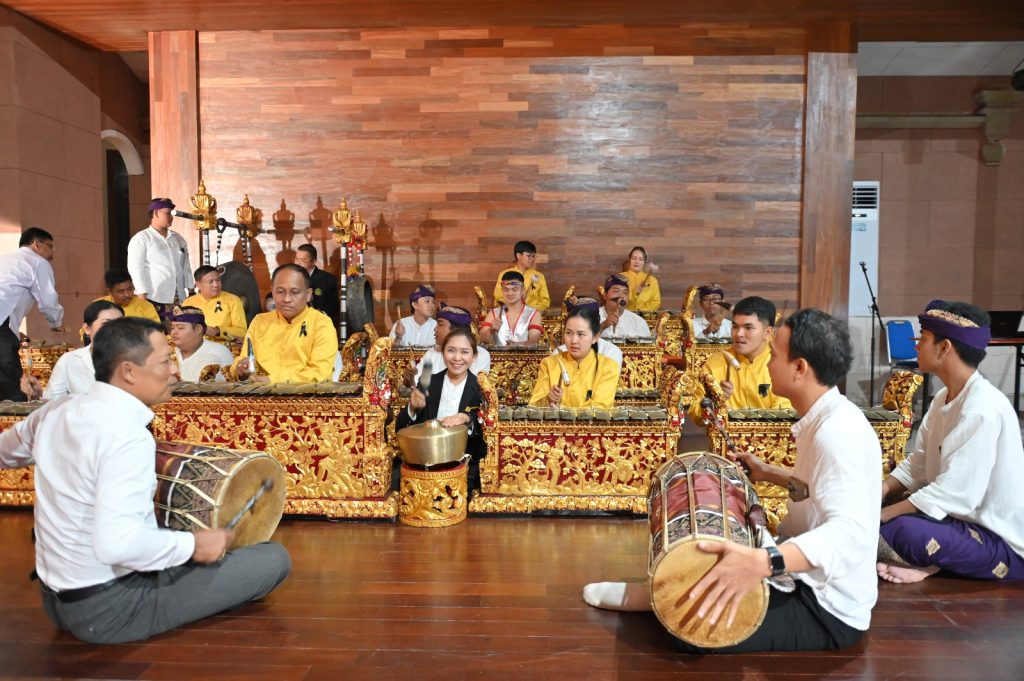
Photo: Karawitan performance by lecturers from Angthong College of Dramatic Arts and Roi Et College of Dramatic Arts, Thailand, together with lecturers and students of ISI BALI, Monday (23/2) at Natya Mandala Hall, ISI BALI.
Subsequently, the Thai delegation presented three traditional Thai dances representing the cultural diversity of various regions of Thailand. The first performance was Fon Dok Mai or Dance of Flowers, a traditional dance characterized by graceful hand movements and the use of flower props symbolizing beauty and harmony.
The second dance was Serng Kratip, a folk dance from the Isan region distinguished by dynamic movements and the use of pleated cloth that forms a wing-like silhouette as the dancers move. This dance was performed collaboratively by Thai students together with ISI BALI students who had previously participated in the Thai traditional dance workshop.
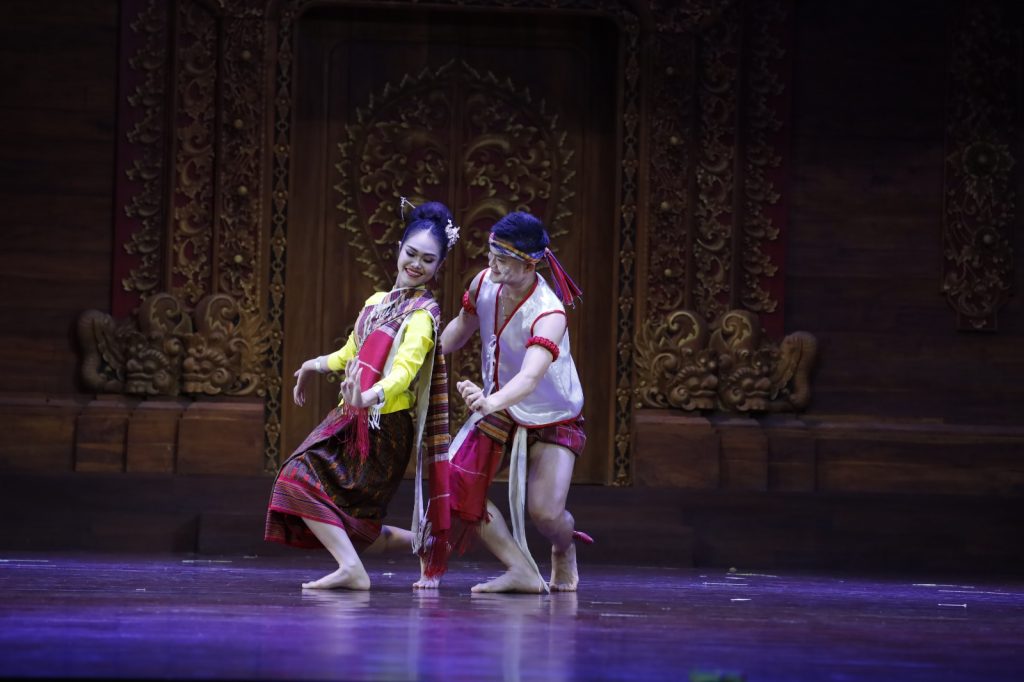
The performance concluded with an Isan folk dance performed in pairs by male and female dancers. The dance portrays the joyful and communal life of rural society, expressed through energetic and expressive movements.
In addition to the dance performances, the event also showcased the results of the karawitan workshop previously conducted with ISI BALI students. The performance was presented by lecturers from Thailand together with the Vice Rector for Student Affairs and Cooperation of ISI BALI, Prof. Dr. Komang Sudirga; the Head of the Institute for Research and Community Service (LPPM), Dr. Ketut Garwa; the Coordinator of the Performing Arts Education Study Program (PSP), Putu Hartini, M.Sn; the Coordinator of the Karawitan Study Program, Made Dwi Andika Putra, M.Sn; and several PSP students of ISI BALI. This collaboration demonstrated the exchange of knowledge and artistic practices between both parties throughout the workshop activities.
This performance became an important momentum in strengthening academic and cultural relations between ISI BALI and arts institutions from Thailand. Through collaborative artistic presentations, the event enriched the artistic experiences of students while fostering cultural dialogue among artists and academics from both countries.
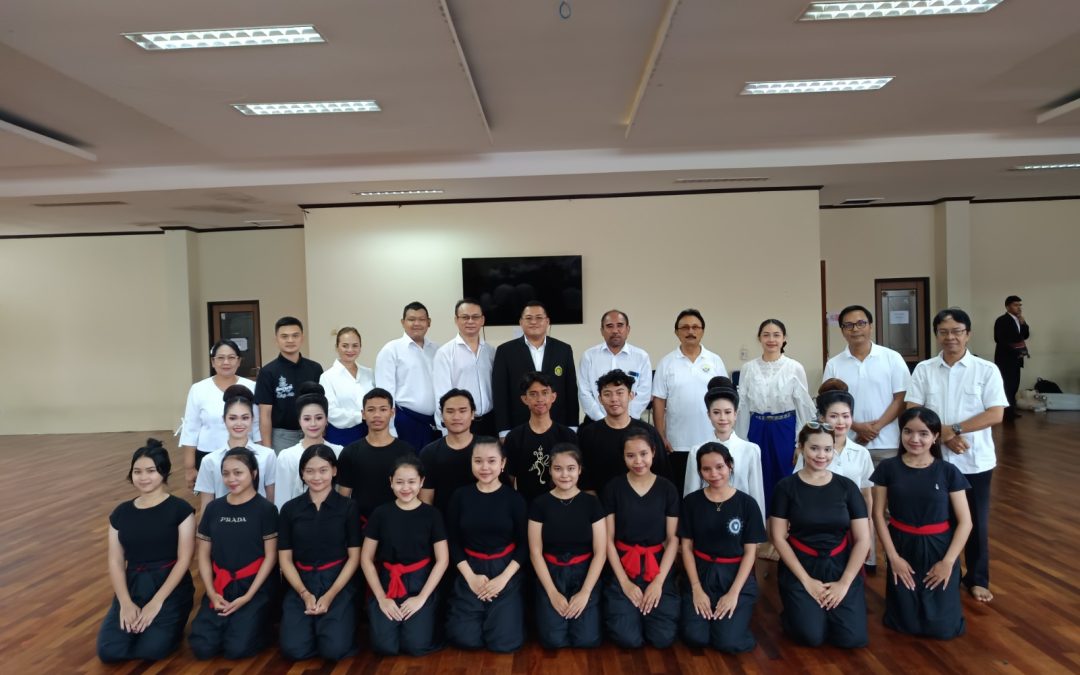
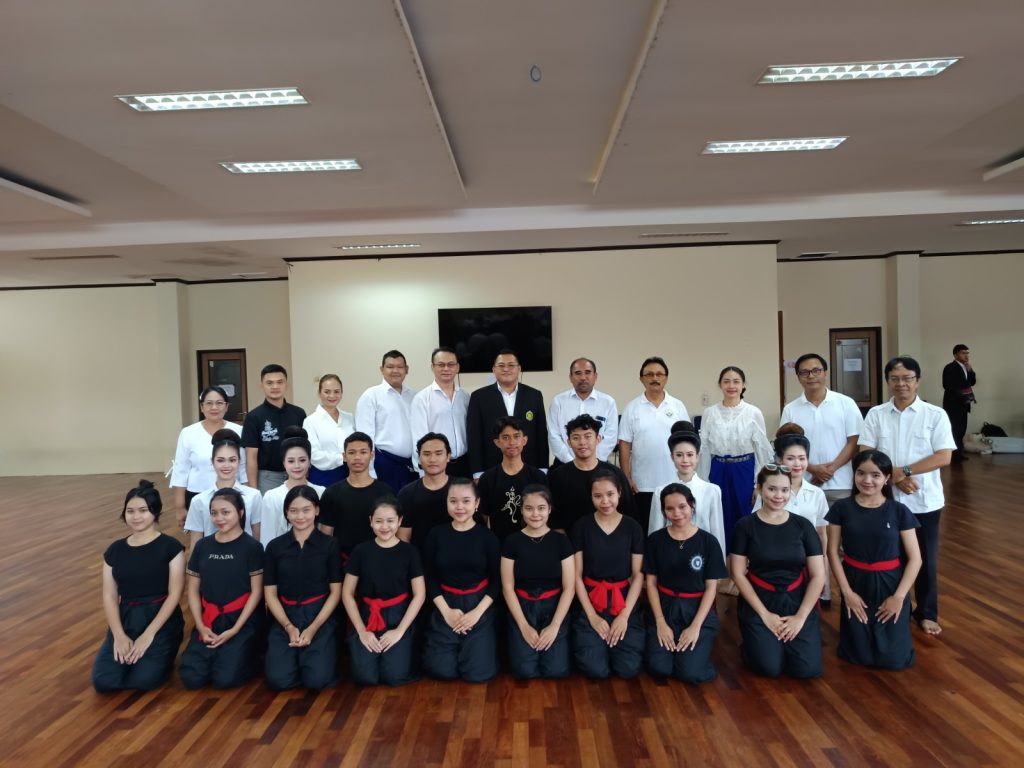
Photo: Institut Seni Indonesia Bali (ISI Bali) organized a traditional Thai dance workshop with delegations from Angthong College of Dramatic Arts and Roi Et College of Dramatic Arts, Monday (23/2) at the Dance Studio of ISI Bali.
Institut Seni Indonesia Bali welcomed a delegation from Angthong College of Dramatic Arts and Roi Et College of Dramatic Arts, Thailand, as part of an initiative to explore institutional cooperation in the fields of performing arts and collaborative workshops. The activity took place on Monday (23/2) at the Natya Mandala Building, ISI Bali.
The Thai delegation consisted of institutional leaders, lecturers, and students from both colleges. The delegation from Angthong College of Dramatic Arts was led by its Director, Etsawat Paksin, accompanied by faculty members Channar Kaeosawang, Chalermchai Pimonrak, Ratchanewan Srinsakrat, Suchanya Kongsin, Thitima Ongthong, and Atitak Rukdee, along with students Vongathorn Timnoee, Nattanan Chumsuwan, and Kanyarat Kumsin.
Meanwhile, the delegation from Roi Et College of Dramatic Arts was led by its Director, Benjita Petchsom, together with Deputy Director Kemika Wongamrin. The delegation also included lecturers Achariya Wongsi, Nattawan Pimonket, Phailin Sarnkam, Chaimongkhon Sriphaet, Runset Sritham, and Pongsakda Padkeoplon, as well as students Jariya Chosakao and Chanantida Luaksiase.
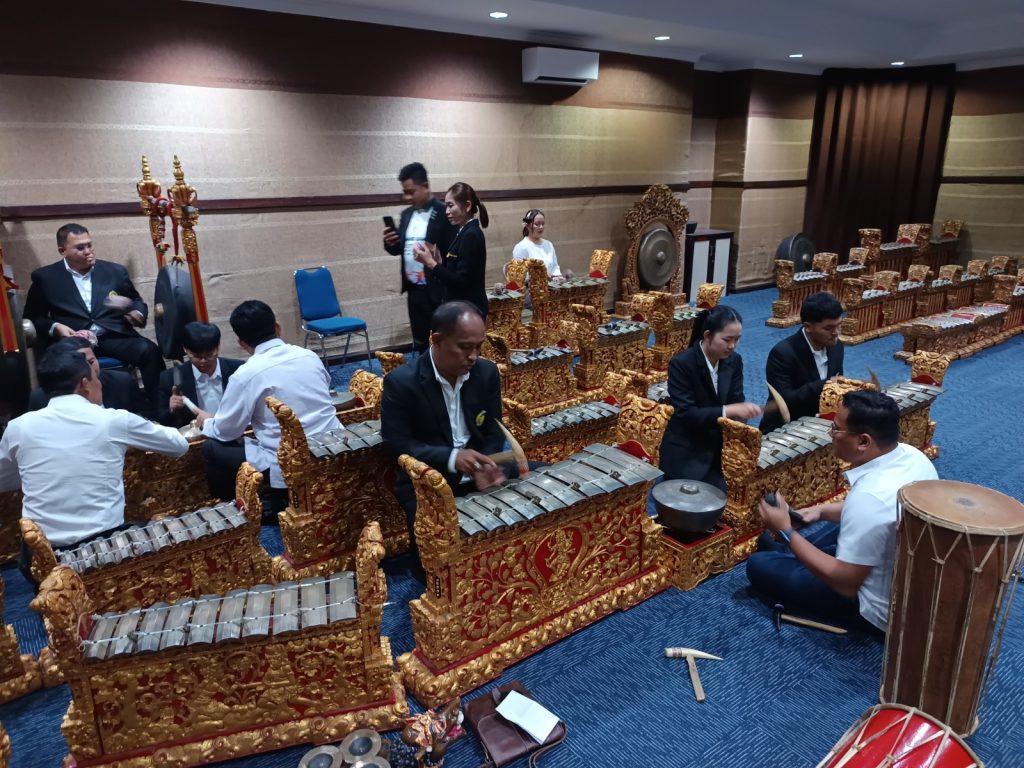
Photo: A Balinese gamelan (karawitan) workshop attended by lecturers from Angthong College of Dramatic Arts and Roi Et College of Dramatic Arts, Thailand, Monday (23/2) at the Karawitan Studio of ISI Bali.
In addition to discussions on potential institutional cooperation, the visit was also marked by a series of arts workshops as a form of knowledge exchange and artistic experience between the participating institutions. The Thai delegation conducted a traditional Thai dance workshop at the Dance Studio of ISI Bali, attended by students of the Dance Study Program. The activity provided students with the opportunity to learn about the techniques, aesthetics, and movement characteristics of Thai dance traditions.
As a reciprocal initiative, ISI Bali organized a karawitan (Balinese traditional gamelan music) workshop at the Karawitan Studio. The session was delivered by the Vice Rector for Student Affairs and Cooperation of ISI Bali, Komang Sudirga, together with the Head of the Institute for Research and Community Service (LPPM) of ISI Bali, Ketut Garwa. The workshop was attended by lecturers and students from the Thai delegation, who were introduced to the fundamentals of Balinese traditional music, particularly through practical engagement with karawitan performance.
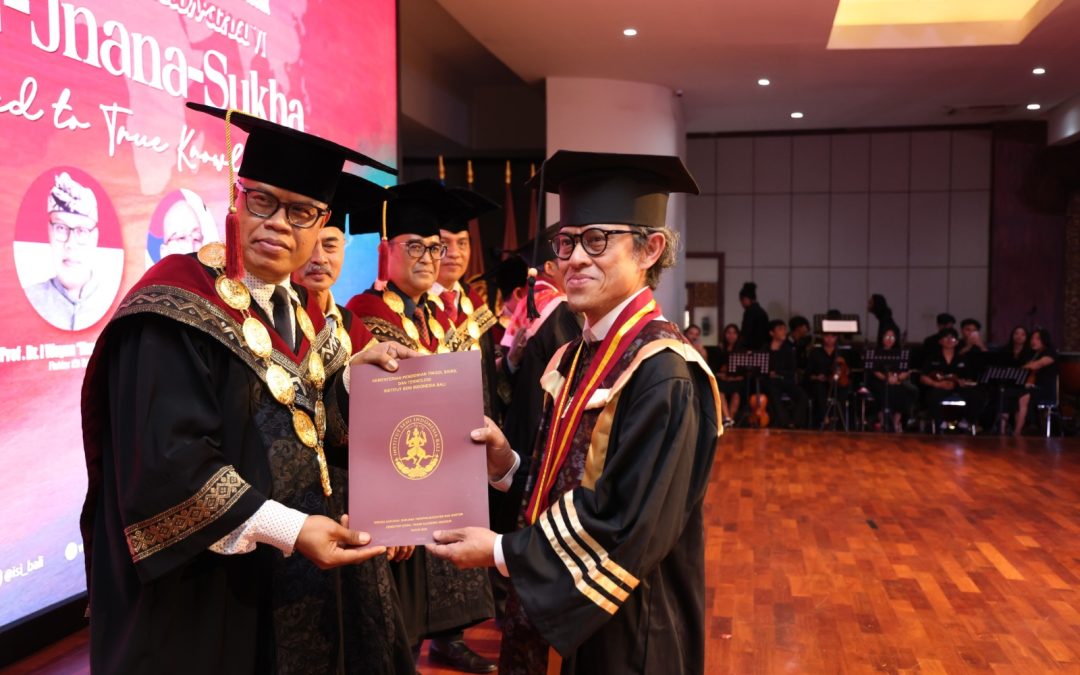
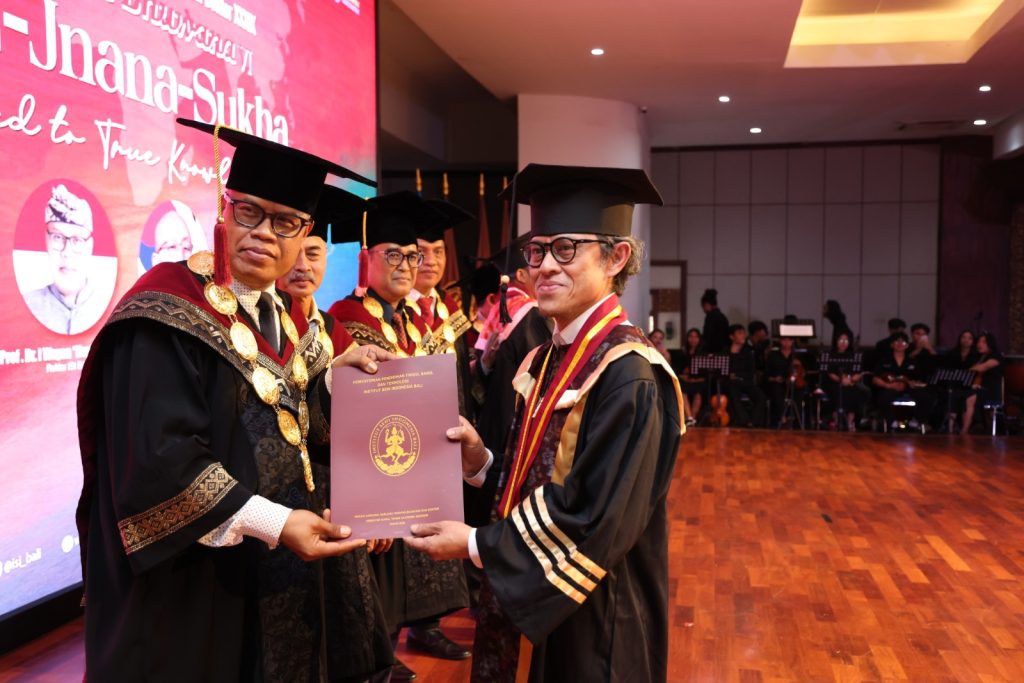
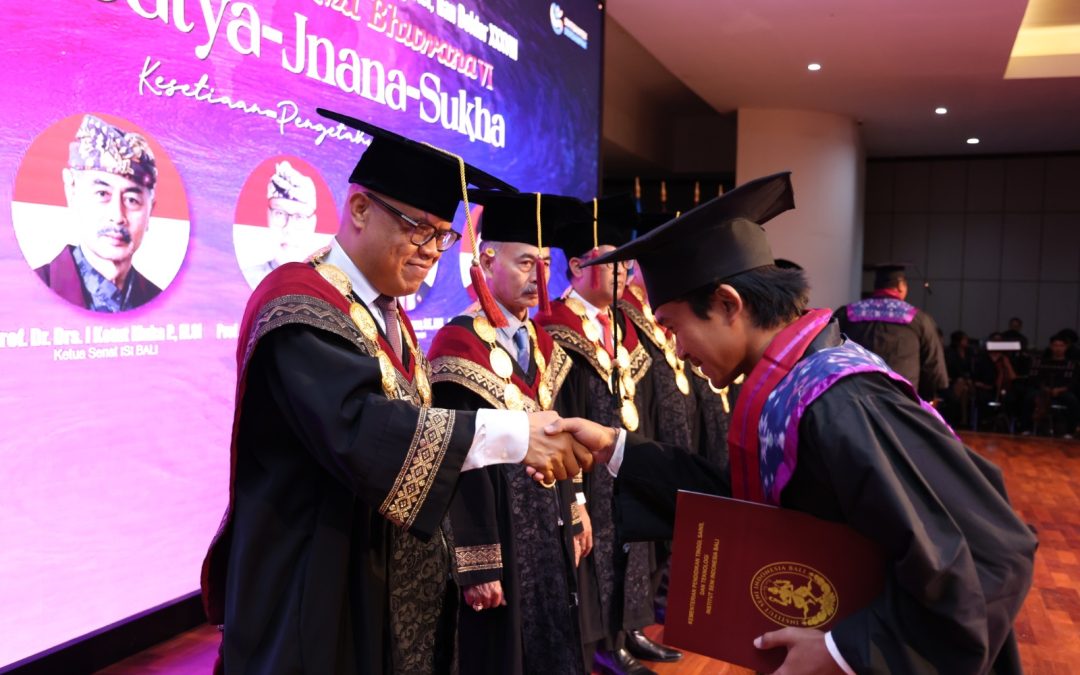
Photo: Riri Riza (right) during the 39th Undergraduate, Applied Undergraduate, Master’s, and Doctoral Graduation Ceremony held on Friday (27/2) at the Kirtya Sabha Mahottama Auditorium, Institut Seni Indonesia Bali.
The Doctoral Program in Arts under the Postgraduate Program of Institut Seni Indonesia Bali (ISI Bali), which has received an “Excellent” accreditation from the Badan Akreditasi Nasional Perguruan Tinggi (BAN-PT), once again reaffirmed its reputation as an academic sphere that cultivates research-based thinkers and art practitioners. Its alumni track record demonstrates tangible contributions across various sectors of arts and culture, including artistic creation, scholarly inquiry, and cultural policy.
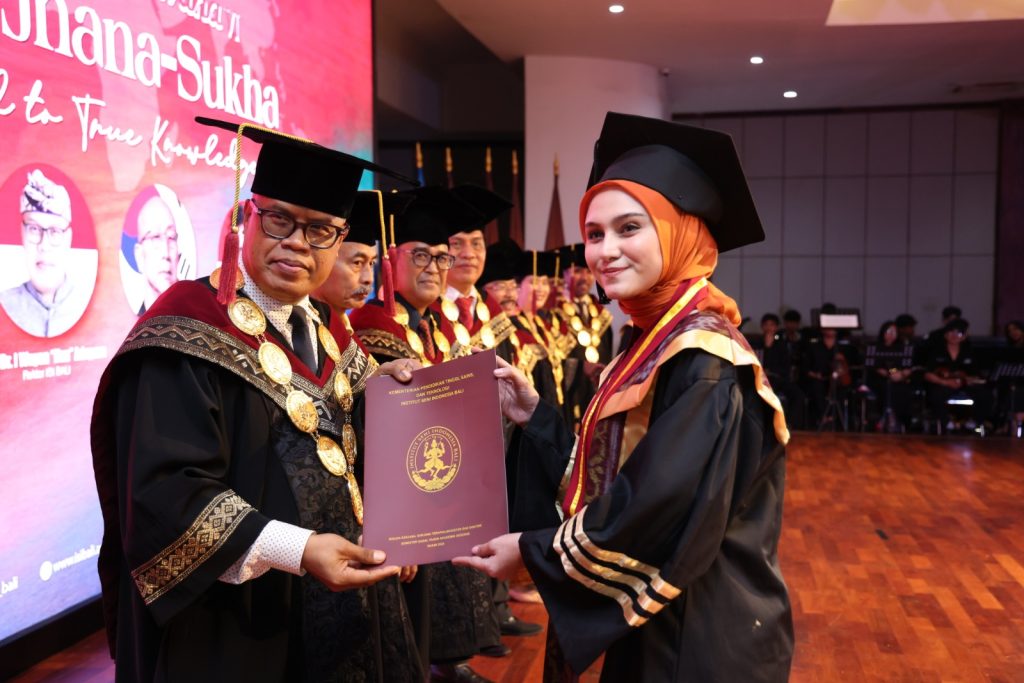
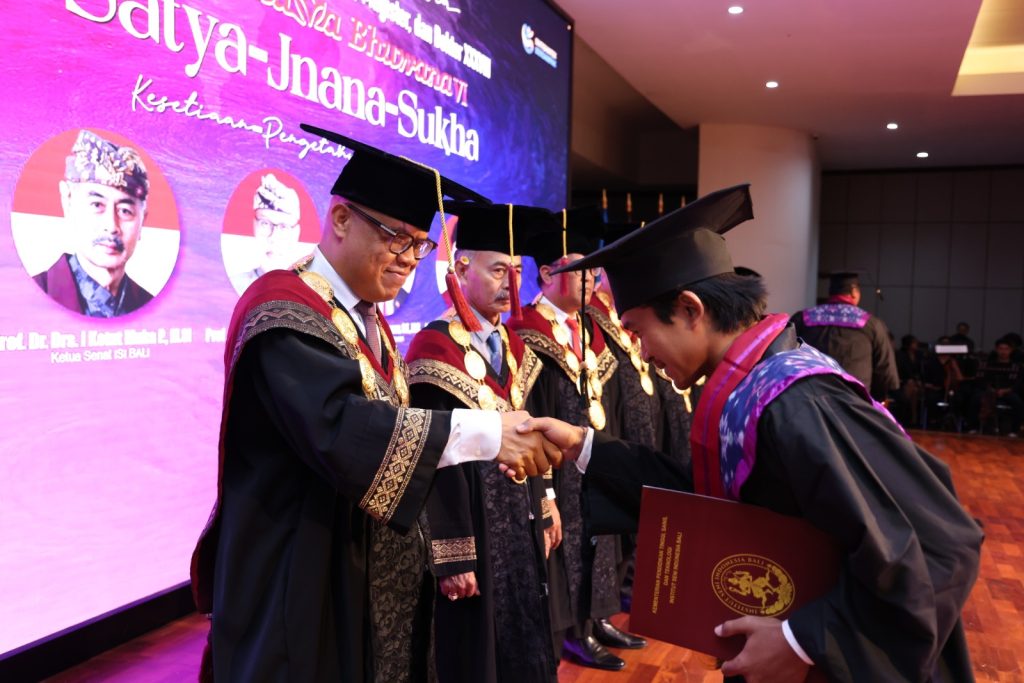
At the 39th Undergraduate, Applied Undergraduate, Master’s, and Doctoral Graduation Ceremony held on Friday (27/2) at the Kirtya Sabha Mahottama Auditorium, ISI Bali, two prominent national public figures were formally conferred the degree of Doctor of Arts: filmmaker Riri Riza and actress Zeezee Shahab. They graduated alongside fellow candidates in a solemn and dignified ceremony.
Riri Riza, born Mohammad Rivai Riza, is widely recognized as a director and producer whose works have played a significant role in shaping modern Indonesian cinema. Through his films, he has presented reflective and contextually grounded cinematic perspectives in interpreting social and cultural realities. His doctoral studies at ISI Bali provided an academic platform for deepening and critically examining his longstanding creative practice, while simultaneously enriching the discourse of arts scholarship grounded in professional experience.
Photo: Zeezee Shahab (right) during the 39th Undergraduate, Applied Undergraduate, Master’s, and Doctoral Graduation Ceremony held on Friday (27/2) at the Kirtya Sabha Mahottama Auditorium, ISI Bali.
Meanwhile, Zeezee Shahab, whose full name is Fauziah Shahab, was likewise officially awarded the Doctor of Arts degree on the same occasion. Her career in the performing arts and the national creative industry is now further strengthened by a solid academic and research foundation. Doctoral education provided her with a critical reflective space to elaborate on acting practices and the dynamics of the creative industry from a scholarly perspective.
The presence of graduates with diverse professional backgrounds affirms that the Doctoral Program in Arts at ISI Bali is not merely a center for academic advancement, but also a dialogical space bridging theory and practice, creation and critical thought. The program continues to position itself as a platform for strengthening ideas, articulating research-based artistic praxis, and advancing arts scholarship that remains responsive to the dynamics of contemporary culture.
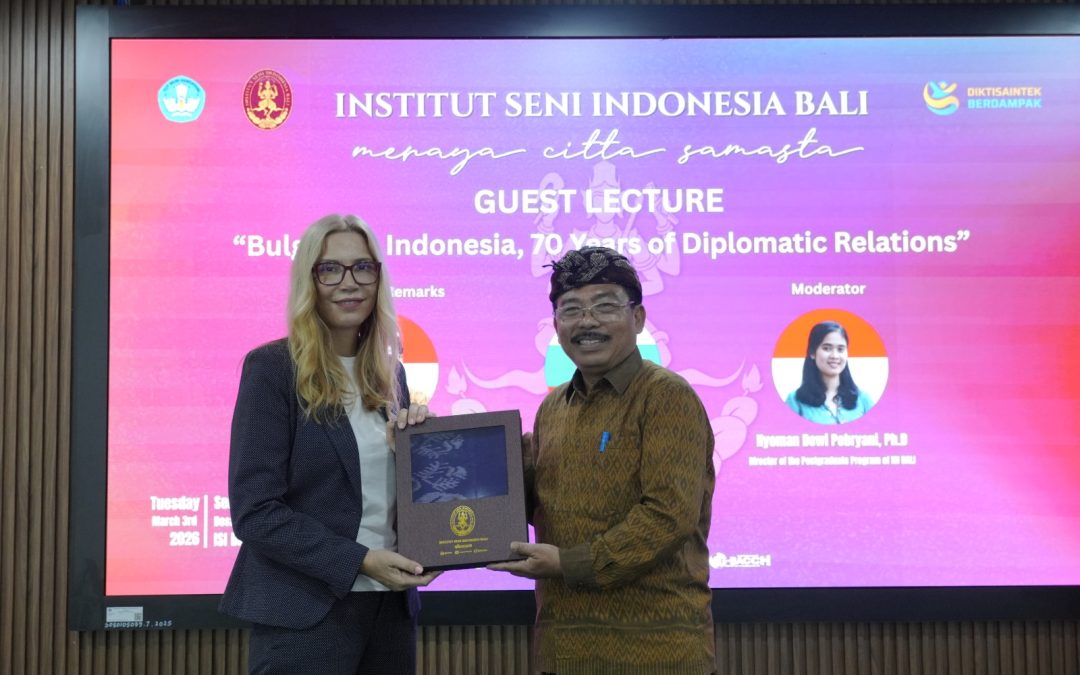
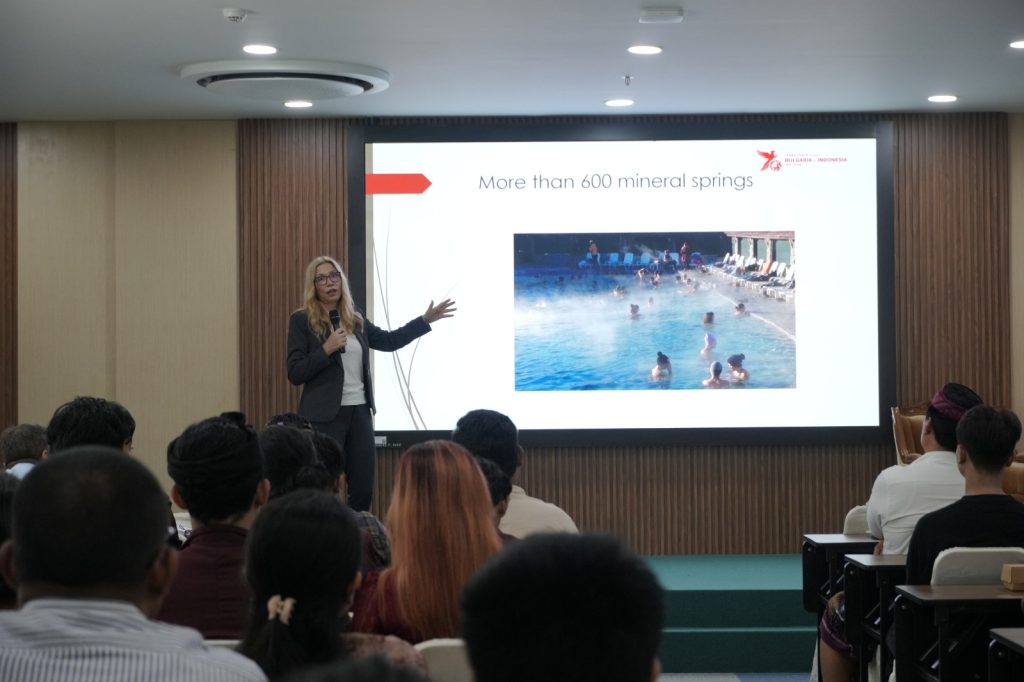
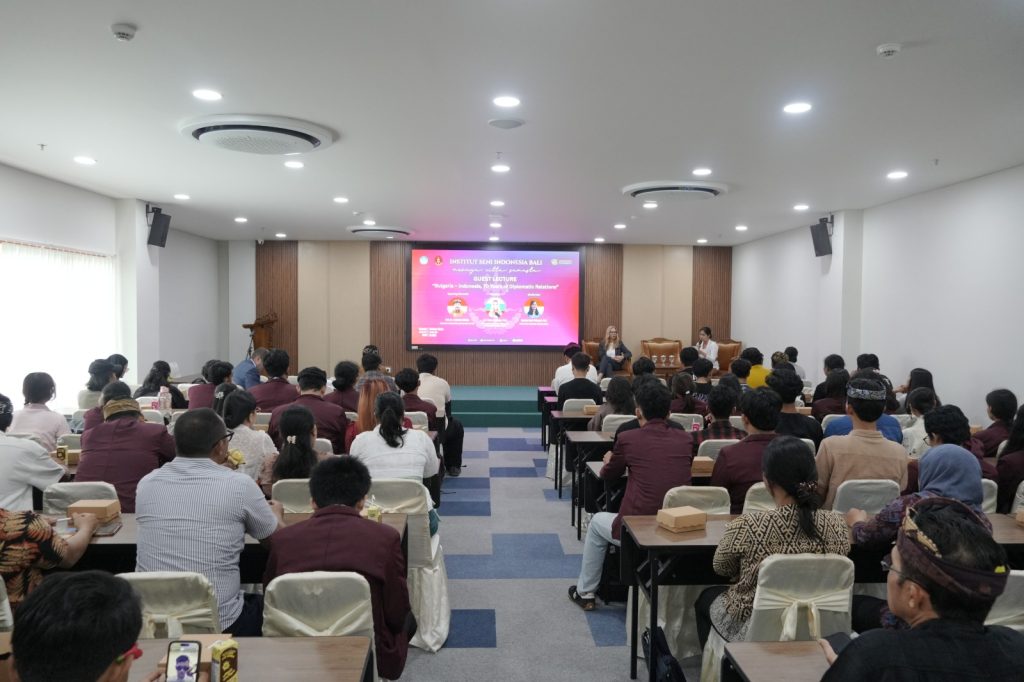
Photo: The Ambassador Extraordinary and Plenipotentiary of the Republic of Bulgaria to the Republic of Indonesia, Tanya Dimitrova, Ph.D., delivered a guest lecture at the General Lecture Hall, Design Hub, Institut Seni Indonesia Bali, Tuesday (3/3).
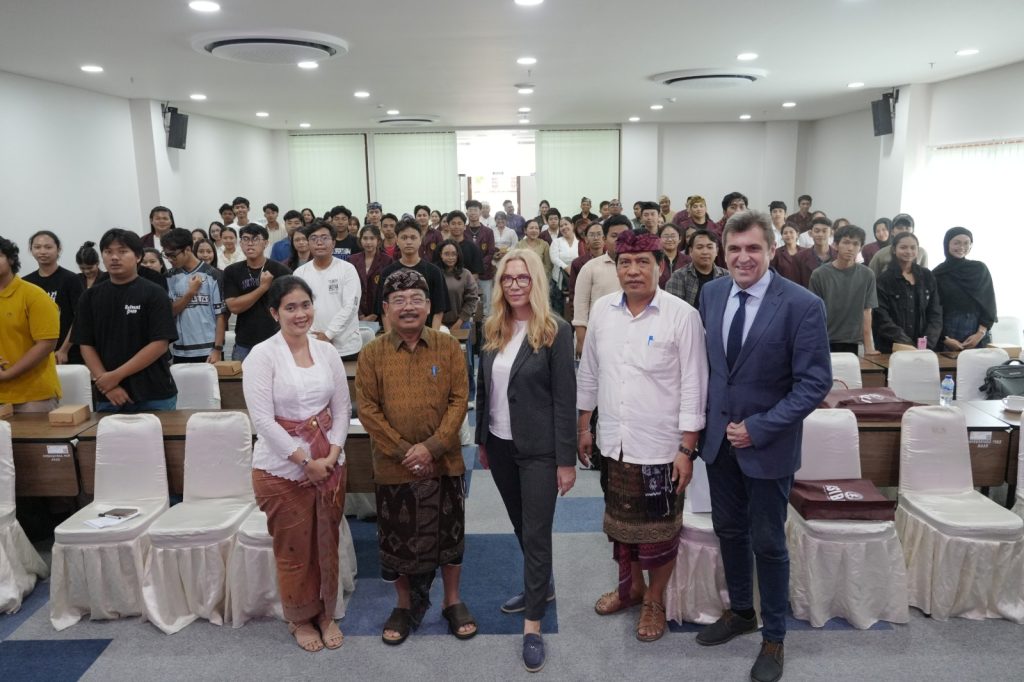
Institut Seni Indonesia Bali (ISI Bali) further strengthened its international network through a guest lecture featuring the Ambassador Extraordinary and Plenipotentiary of the Republic of Bulgaria to the Republic of Indonesia, Tanya Dimitrova, Ph.D., held at the General Lecture Hall, Design Hub, ISI Bali, on Tuesday (3/3). The Ambassador was accompanied by the Bulgarian Trade Commissioner to Indonesia, Daniel Dobrev.
In her presentation, Ambassador Tanya Dimitrova addressed the theme, “70 Years of Diplomatic Relations between Bulgaria and Indonesia.” She traced the historical trajectory of bilateral relations established in 1956, encompassing cooperation in the political, economic, educational, and cultural spheres. According to her, Bulgaria and Indonesia share a strong foundation of friendship grounded in mutual respect and a shared commitment to international collaboration.
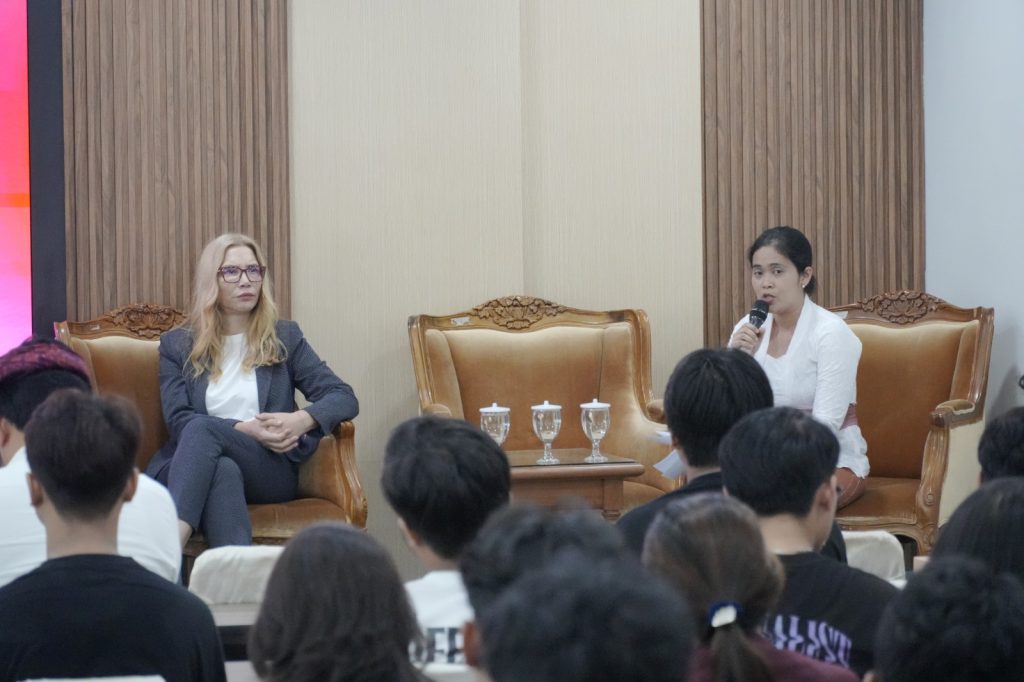
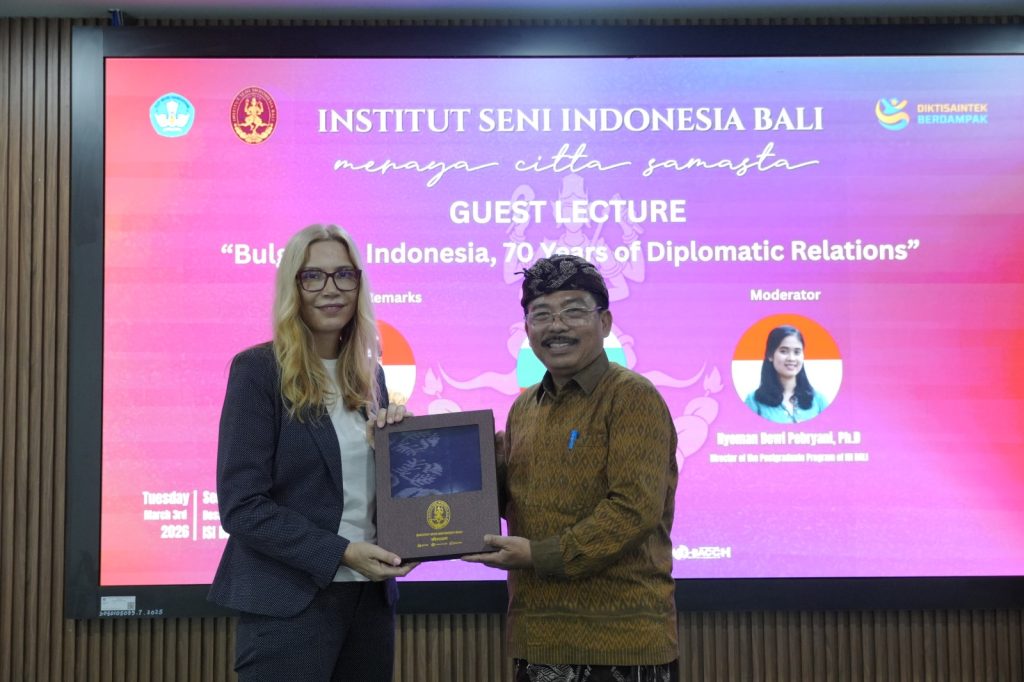
Photo: The Ambassador Extraordinary and Plenipotentiary of the Republic of Bulgaria to the Republic of Indonesia, Tanya Dimitrova, Ph.D., and moderator Nyoman Dewi Pebryani, Ph.D., during the guest lecture at the General Lecture Hall, Design Hub, ISI Bali, Tuesday (3/3).
She particularly underscored the significance of cultural and educational diplomacy as pivotal bridges for strengthening bilateral relations. In this context, the arts were framed as a strategic medium for fostering intercultural dialogue, enhancing mutual understanding, and generating creative collaboration opportunities between the younger generations of Bulgaria and Indonesia.
The guest lecture, moderated by Nyoman Dewi Pebryani, Ph.D., was attended by approximately one hundred students from both undergraduate and postgraduate programs. Participants demonstrated strong engagement throughout the session, particularly during the discussion segment, which explored opportunities for international study and academic mobility.
One of the most compelling highlights was the introduction of the Erasmus+ scholarship program, offering Indonesian students the opportunity to undertake one year of study in Bulgaria. The program provides access to academic and cultural experiences at various Bulgarian universities through exchange schemes or advanced study pathways.
In his welcoming remarks, the Vice Rector for Student Affairs and Cooperation of ISI Bali, Komang Sudirga, expressed his appreciation for the Ambassador’s visit and the accompanying delegation. He emphasized that the visit represents a strategic momentum for expanding ISI Bali’s international cooperation, particularly in the fields of education and culture.
He further noted that the Erasmus+ scholarship constitutes a valuable opportunity for ISI Bali students to broaden their global perspectives while simultaneously presenting Indonesian artistic and cultural identity on the international stage. He expressed hope that the meeting would be followed by concrete initiatives to establish institutional partnerships between universities in Bulgaria and ISI Bali.
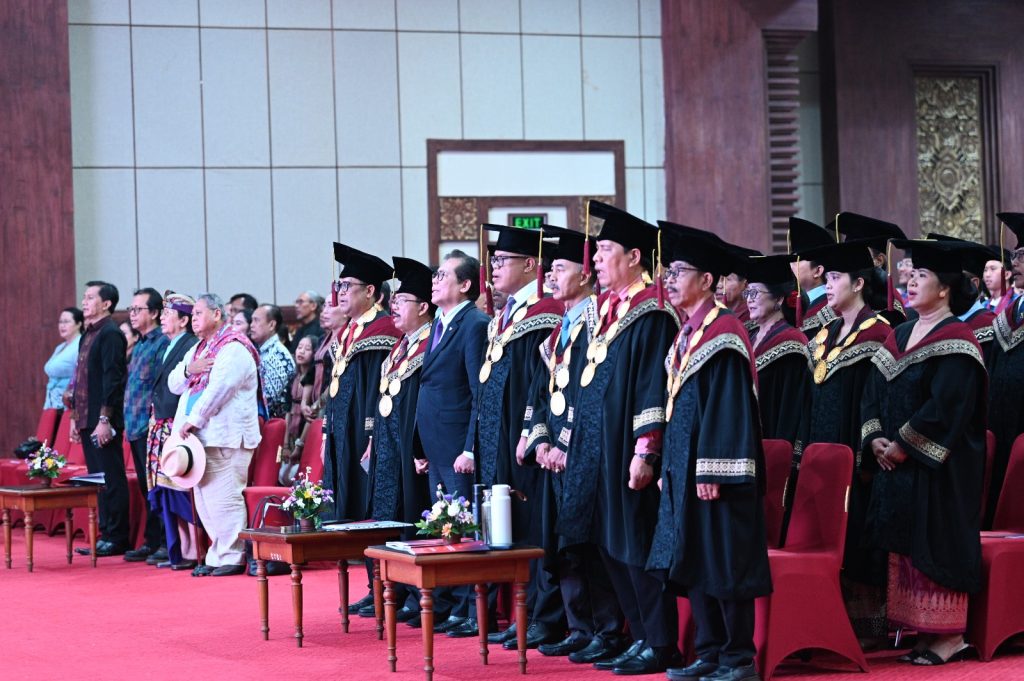
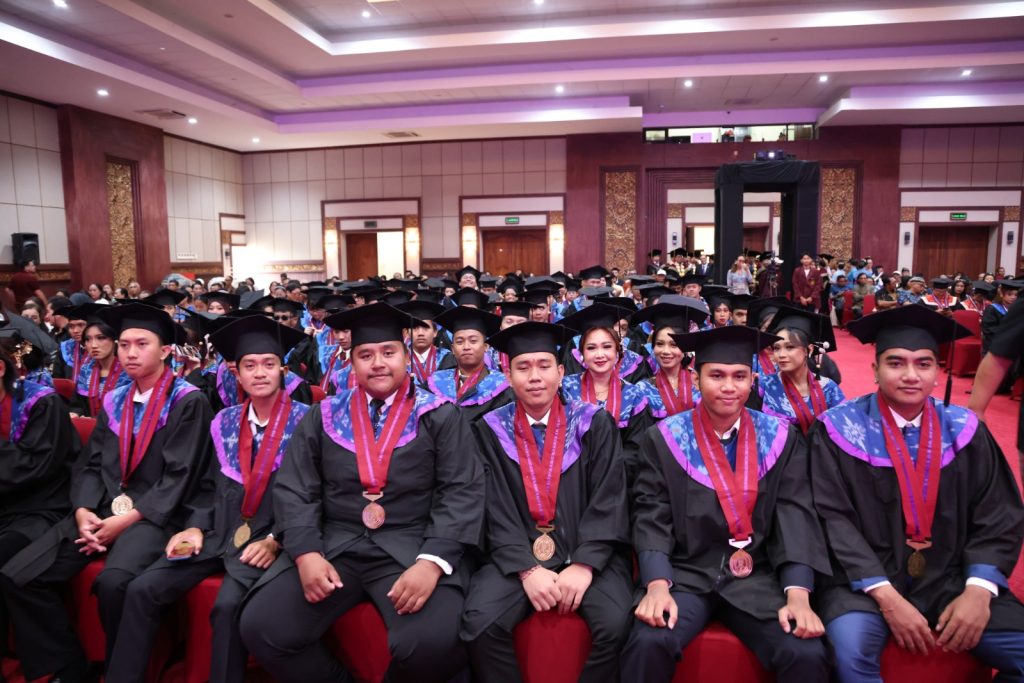
Photo: Day Three of the Undergraduate, Applied Undergraduate, Master’s, and Doctoral Commencement Ceremony, Odd Semester of Academic Year 2025/2026, at the Auditorium Kirtya Sabha Mahottama, Institut Seni Indonesia Bali, Friday (27/2).
Institut Seni Indonesia Bali (ISI BALI) inaugurated 607 graduates at the XXXVII Undergraduate and Applied Undergraduate Commencement, the XXXVII Master’s Commencement, and the XXXIX Doctoral Commencement for the Odd Semester of Academic Year 2025/2026. The ceremony was held over three days, Wednesday–Friday, 25–27 February 2026, at the Auditorium Kirtya Sabha Mahottama, ISI BALI.
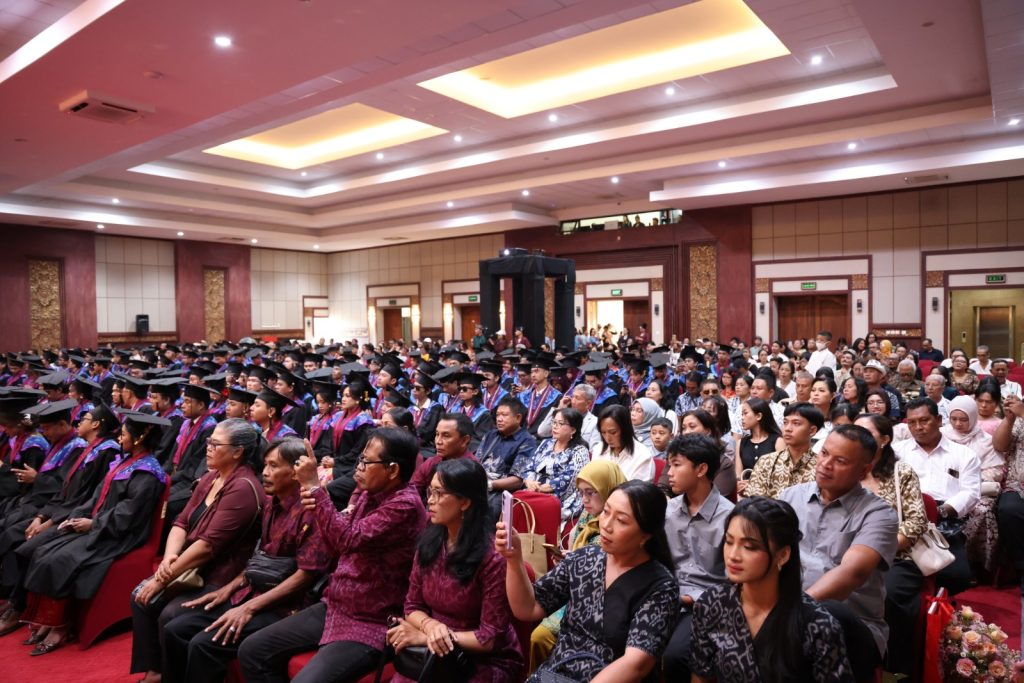
The three-day format reflected the institution’s commitment to creating an inclusive and warm commencement atmosphere, providing space for parents and families to share in a collective celebration. Amid common graduation practices that limit family attendance inside the venue, ISI BALI deliberately opened the ceremonial space as a shared stage of gratitude for the graduates’ academic achievements.
Photo: Undergraduate, Applied Undergraduate, Master’s, and Doctoral Commencement Ceremony, Odd Semester of Academic Year 2025/2026, at the Auditorium Kirtya Sabha Mahottama, ISI BALI.
Under the theme “Satya–Jnana–Sukha” (Loyalty–Knowledge–Happiness), the ceremony proclaimed a pledge to pursue the authenticity of knowledge in the service of holistic well-being. Knowledge, in this context, is understood not merely as intellectual attainment, but as an embodied truth manifested in art and design, grounded in contemporary digital innovation, and crowned with the noble values of the past.
In his address, the Rector of ISI BALI, Prof. Dr. Wayan “Kun” Adnyana, announced that 607 graduates completed their studies this semester, comprising 558 graduates from the Undergraduate and Applied Undergraduate programs, 30 Master’s graduates, and 19 Doctoral graduates. The commencement moment was dedicated as an altar of recognition for students’ responsible completion of their academic journeys. For Master’s and Doctoral graduates, the conferment of degrees represented a culminating forum affirming their expertise in art, design, and culture, as well as their steadfast commitment to upholding the essential values of life.
This semester’s academic achievements were also inscribed within an expanding network of institutional partnerships. A total of 479 reputable partners, integrated within the ISI BALI Berdampak ecosystem—ranging from industry and business sectors to professional artist–designer studios and globally networked institutions—have collaborated in advancing the university. In recognition of their commitment to authentic knowledge-sharing and shared advancement, ISI BALI conferred the Sewaka Kerthi Mahawidya Nugraha Award during the Pasamuan Widya Mahardika on Friday, 20 February 2026.
Photo: Undergraduate, Applied Undergraduate, Master’s, and Doctoral Commencement Ceremony, Odd Semester of Academic Year 2025/2026, at the Auditorium Kirtya Sabha Mahottama, ISI BALI.
To reinforce relevance, quality assurance, and competitiveness in contributing to the nation’s social, cultural, and economic transformation, ISI BALI established the ISI BALI Berdampak Curriculum. This curriculum was enacted through Rector Regulation No. 3 of 2026 for Undergraduate Programs and Rector Regulation No. 4 of 2026 for Applied Undergraduate Programs, under the auspices of Ministerial Regulation of Higher Education, Science, and Technology No. 39 of 2025 on Quality Assurance in Higher Education. The curriculum serves as a strategic compass for students to emerge as artists, designers, entrepreneurs, researcher–critics, and art educators imbued with the spirit of Pancasila—creative, innovative, critically minded, and committed to humanity, environmental stewardship, and Indonesia’s noble wisdom.
Alongside academic and collaborative achievements, the ISI BALI academic community introduced renewed institutional spaces and symbols through the construction of new icons, including Tugu Batu, Gerbang Bancingah, Panggung Candi, and Jineng Keluhuran. As part of the Commencement and the university’s 23rd Anniversary celebration, ISI BALI also presented the book Artistika Rupa Paraga as a scholarly contribution to the wider public.
Institutional accomplishments further strengthened this trajectory. At the close of 2025, ISI BALI was awarded Gold Winner of the Diktisaintek Cooperation Award in the Best Industrial Partnership category, Silver Winner of the Diktisaintek Public Relations Award, Bronze Winner in the Best International Cooperation category, and third nationally in the 2025 Budget Performance Score among Public Service Agency Higher Education Institutions.
Concluding his remarks, Prof. Kun Adnyana extended congratulations to all graduates and their parents for successfully completing their studies. “With pride, we release you as Brilliant Academics of the World. May your intellectual capacity bring enduring honor, now and in the years to come. From the moment the tassel is moved to the right, you officially become part of ISI BALI’s distinguished alumni family—ready to serve, to create, and to ennoble life through art, design, and culture,” he affirmed. (ISIBALI/Public Relations)
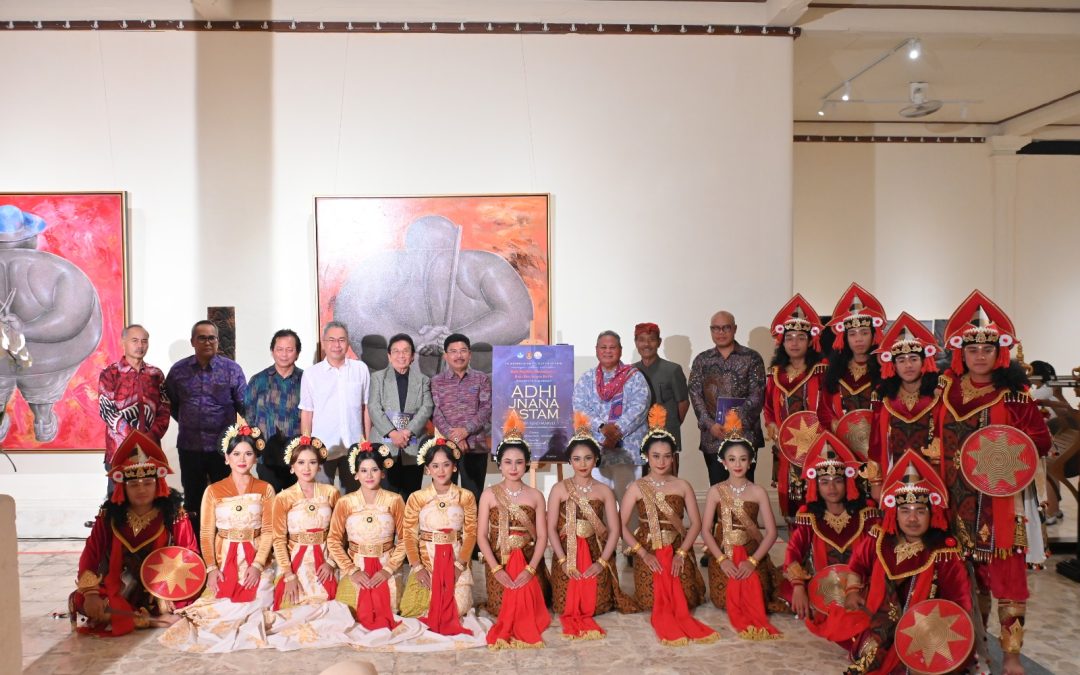
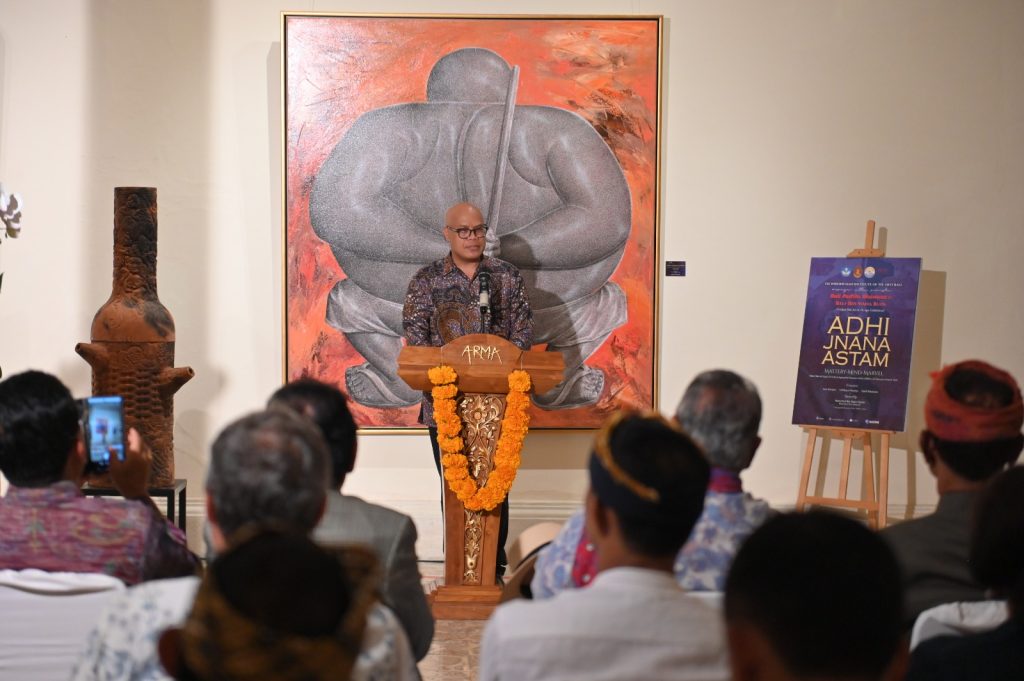
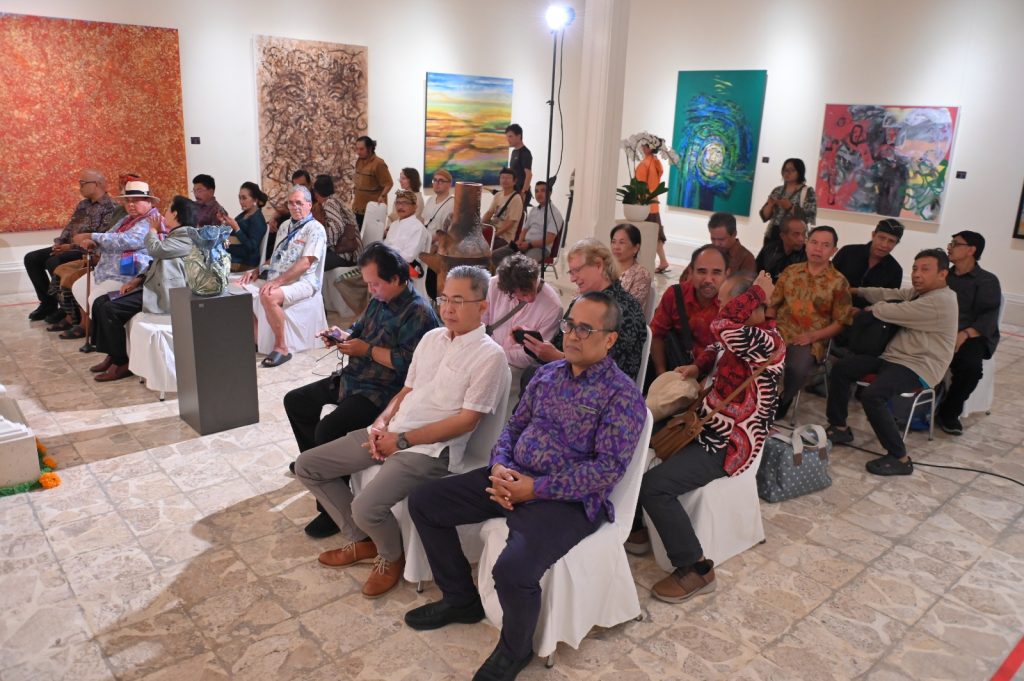
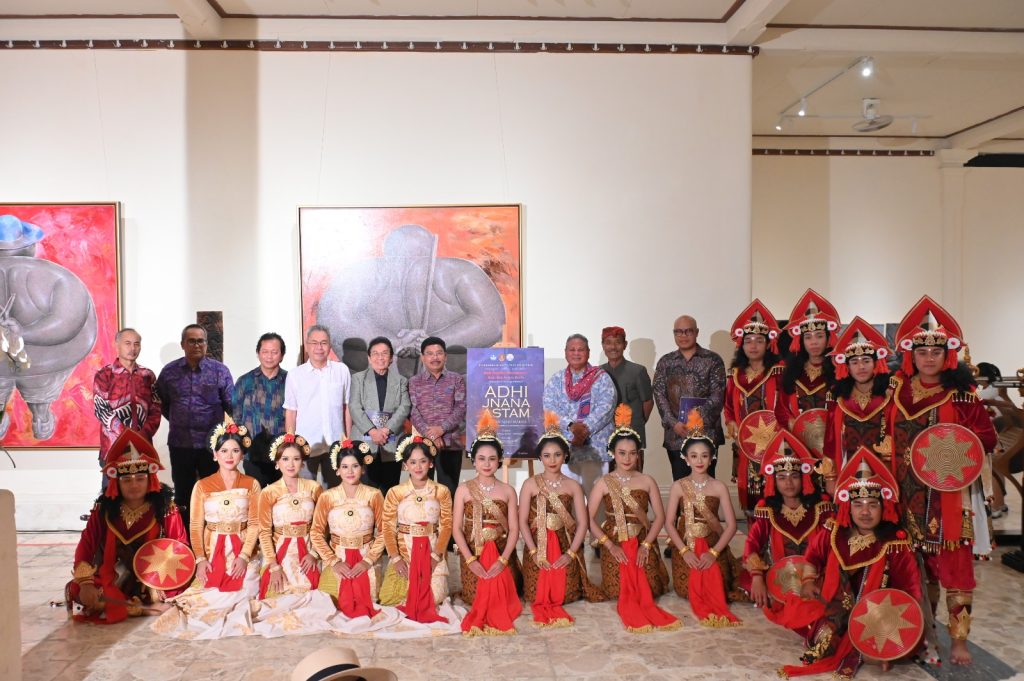
Photo: Opening of the International Bali-Bhuwana Rupa Exhibition at Agung Rai Museum of Art (ARMA), Ubud, Monday (23/2).
Institut Seni Indonesia Bali (ISI BALI) once again reaffirmed its role as a nodal point for global dialogue in fine arts and design through the organization of Bali-Bhuwana Rupa (Global–Bali Art and Design Exhibition) under the theme “Adhi-Jnana-Astam” (Mastery–Mind–Marvel). The exhibition constitutes one of the prestigious art and design programs within the Bali Padma Bhuwana VI series initiated by ISI BALI, serving as a platform for the exchange of ideas, creativity, and cross-national knowledge.
The exhibition is collaboratively hosted at the Agung Rai Museum of Art (ARMA), Ubud, and Nata-Cita Art Space (N-CAS) ISI BALI, running from 23 February to 8 March. The official opening took place on Monday (23/2) at ARMA, Ubud, in a solemn yet enthusiastic atmosphere attended by artists, academics, students, and art practitioners.
Photo: Opening of the International Bali-Bhuwana Rupa Exhibition at ARMA, Ubud, Monday (23/2).
This international exhibition showcases the works of 180 prominent artists and designers from Indonesia, Malaysia, Japan, South Korea, Poland, Australia, and the United States. The diversity of geographical and cultural backgrounds generates a rich visual spectrum, ranging from fine arts and visual design to interdisciplinary explorations that reflect the dynamics of contemporary global art and design practices.
Conceptually, the theme “Adhi-Jnana-Astam” signifies artistic mastery (adhi) grounded in depth of knowledge (jnana), culminating in a compelling creative force (astam). The curatorial direction was entrusted to Jeon Dongsu (South Korea), Arif Bagus Prasetyo, and Warih Wisatsana (Indonesia), who constructed a curatorial narrative emphasizing the integration of technical proficiency, intellectual acuity, and exploratory boldness in contemporary art and design practices.
Photo: Opening of the International Bali-Bhuwana Rupa Exhibition at ARMA, Ubud, Monday (23/2).
The exhibition was officially inaugurated by Malaysian art patron Mohd. Asri Bin Abdul Ghafar, who underscored the importance of regional and international collaboration in strengthening artistic networks and fostering cross-cultural solidarity. The presence of representatives from multiple countries affirmed that art and design function as bridges of dialogue transcending geographical boundaries and cultural differences.
In his remarks, the Rector of ISI BALI, Prof. Dr. Wayan “Kun” Adnyana, stated that Bali-Bhuwana Rupa serves as a space for intellectual encounter and reflection on global artistic developments from a Balinese perspective. He reiterated ISI BALI’s commitment to cultivating an inclusive and progressive artistic ecosystem rooted in local wisdom while remaining adaptive to contemporary transformations. Through this exhibition, ISI BALI seeks to bring the world to Bali and Bali to the world within a meaningful and sustainable celebration of creativity. (ISIBALI/Public Relations)