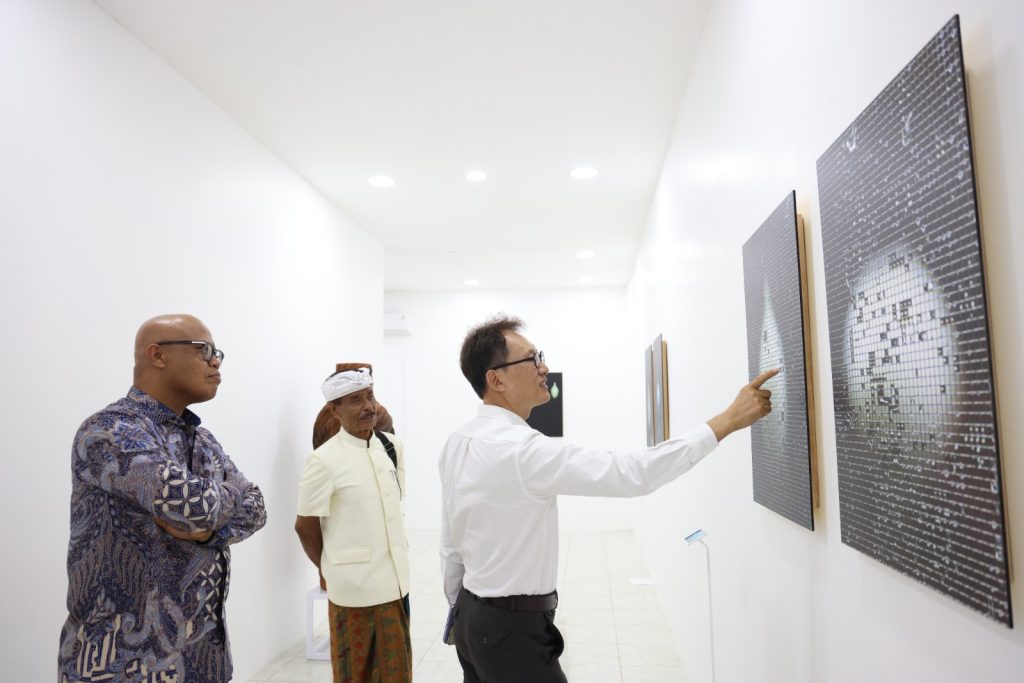
Photo caption: The BURU–JIWA–BUMI art exhibition, entitled Bali–Seoul on Dialogue, at Nata-Citta Arts Space (N-CAS), Indonesian Institute of the Arts Bali (ISI Bali), Friday, 16 October 2026.
The Indonesian Institute of the Arts Bali (ISI Bali), in collaboration with the Korea–Indonesia Center (KIC), presents the visual arts exhibition BURU–JIWA–BUMI as part of the sixth Bali Padma Bhuwana International Festival. The exhibition is featured in the Bali-Bhuwana Rupa #2 programme, entitled Bali–Seoul on Dialogue. It was officially opened by Anak Agung Gde Rai, founder of the Agung Rai Museum of Art (ARMA), on Friday, 16 October, at Nata-Citta Arts Space (N-CAS), ISI Bali.
The exhibition brings together four artists from Bali and South Korea through ceramics, photography, earthenware, and painting, exploring the relationships between human beings, inner experience, and nature. The participating artists are Prof. Wayan Kun Adnyana, Young Choi, I Ketut Muka Pendet, and Hyonsun Kim. Curated by Prof. Koh Young Hun and Warih Wisatsana, the exhibition transforms differences in cultural backgrounds and artistic media into a space for intercultural dialogue.
In his welcoming remarks as the host representative, the Vice Rector for Student Affairs and Cooperation of ISI Bali, Prof. Dr. Komang Sudirga, stated that the exhibition also reflects the close and sustained relationship between ISI Bali and South Korea. This collaboration has been realised through various academic and artistic initiatives that bring together the communities of both countries.
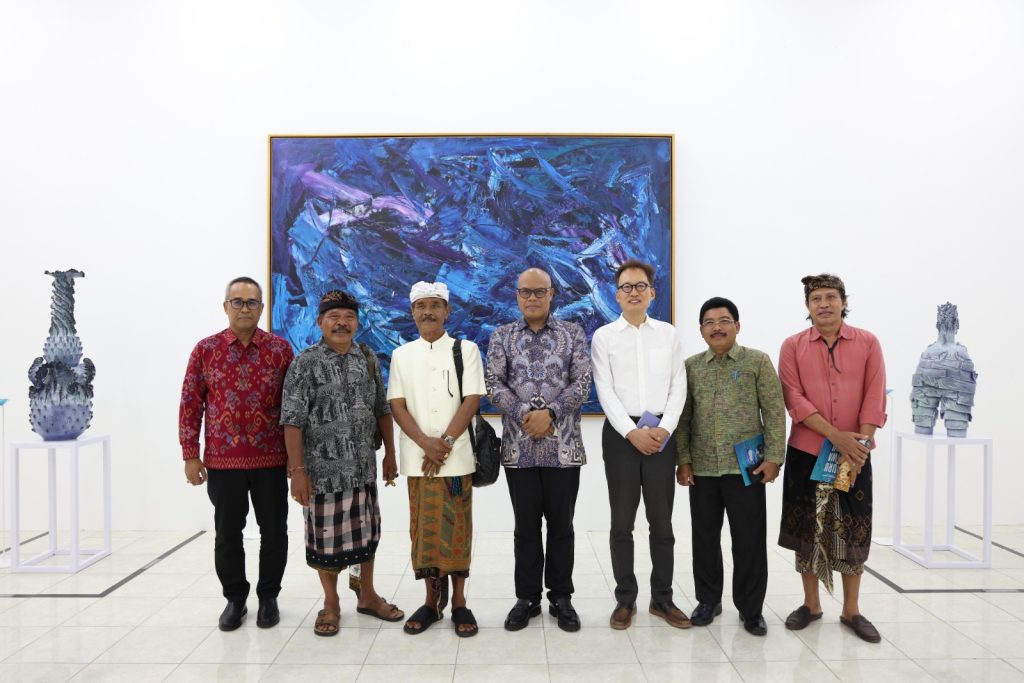
Photo caption: The BURU–JIWA–BUMI art exhibition, entitled Bali–Seoul on Dialogue, at Nata-Citta Arts Space (N-CAS), ISI Bali, Friday, 16 October 2026.
In 2025, ISI Bali collaborated with KIC, Hankuk University of Foreign Studies (HUFS), and the Korea Association of Malay-Indonesian Studies (KAMIS) to organise the fifth Bali-Bhuwana Waskita International Seminar, entitled Pram–Bhuwana–Prana (Pramoedya–World–Paradigm). The event commemorated the centenary of the birth of Indonesian literary figure Pramoedya Ananta Toer.
Beyond academic collaboration, ISI Bali has also regularly featured works by South Korean photographers in various exhibitions, including Bali-Bhuwana Rupa and Bali-Global Art Maps (B-GAME), organised as part of the Bali-Global Axis of Arts and Design (B-GAAD).
According to Komang Sudirga, these collaborations demonstrate that art and culture can serve as bridges between communities while fostering mutual understanding. Through BURU–JIWA–BUMI, this relationship is further strengthened by creating a shared space for artistic encounters and cross-cultural exchanges of ideas.
Curator Warih Wisatsana explained that BURU–JIWA–BUMI originates from the conception of artistic creation as a journey of searching and self-discovery. Buru represents the courage to explore new possibilities; Jiwa embodies the experiences that shape one’s character and artistic language; while Bumi signifies both the source and the living environment in which experiences take root.
This conceptual framework also intersects with the Japanese aesthetic philosophy of wabi-sabi, which recognises beauty in imperfection, irregularity, and impermanence. From this perspective, artworks are regarded not merely as visual objects but also as spaces for contemplation on life and the relationship between human beings and nature.
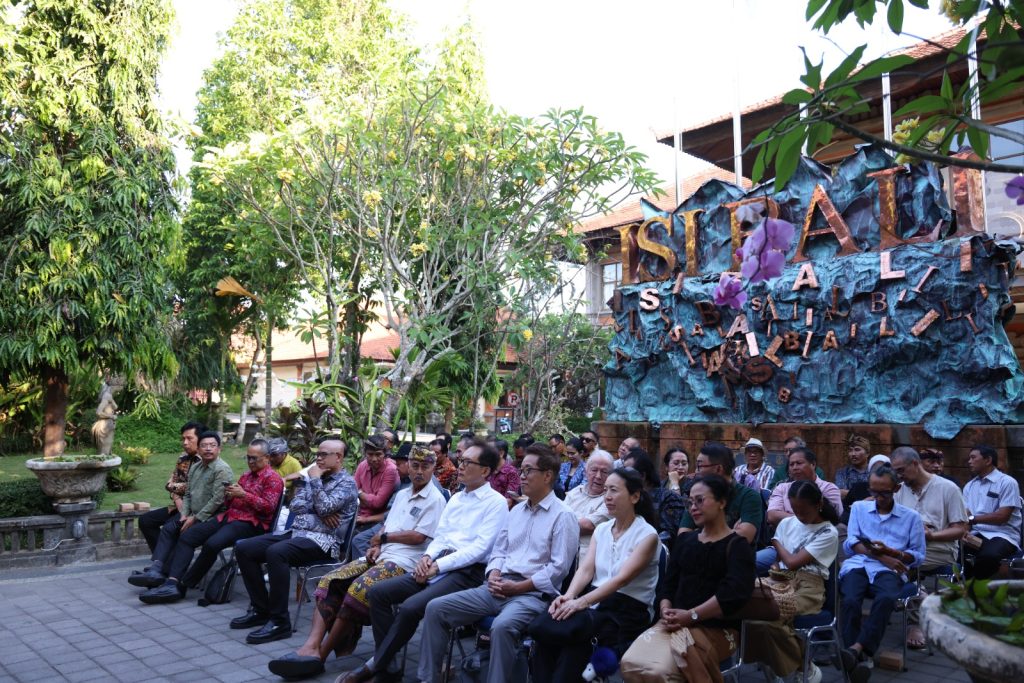
Photo caption: The BURU–JIWA–BUMI art exhibition, entitled Bali–Seoul on Dialogue, at Nata-Citta Arts Space (N-CAS), ISI Bali, Friday, 16 October 2026.
Each artist presents a distinctive artistic approach. Hyonsun Kim explores clay through expressive ceramic forms. Young Choi works with light, shadow, and spatial relationships in photography to offer new perspectives on ceramic objects. Meanwhile, I Ketut Muka Pendet explores the spiritual and cultural significance of the kumba, a vessel used to hold sacred water in Balinese tradition, through his earthenware works.
Wayan Kun Adnyana, in turn, explores abstraction through layers of colour, brushstrokes, and textures that embody traces of experience and the passage of time. His works demonstrate the development of a visual language that goes beyond depicting reality, instead reinterpreting experience through artistic freedom.
Through the convergence of these four artistic approaches, BURU–JIWA–BUMI does not seek to homogenise differences. Rather, it creates a space in which diverse perspectives can coexist and enrich interpretations of nature, tradition, and life. The exhibition also serves as a platform for the exchange of artistic ideas between Bali and Seoul, using the language of art to transcend the boundaries of artistic media and cultural backgrounds.


