Buleleng, Bali — Efforts to sustain traditional arts amid rapid social change and technological development continue to evolve through various innovative approaches. One such initiative is implemented through the Nusantara Arts Innovation Program (Program Inovasi Seni Nusantara/PISN), which focuses on revitalizing the Rejang Keraman Dance in Kedis Village, Busungbiu District, Buleleng Regency, Bali.
The program is not only aimed at preserving the form and ritual functions of the Rejang Keraman Dance as inherited from previous generations, but also at sustaining the cultural knowledge system so that it remains alive, understood, and transmitted to future generations.
The Rejang Keraman Dance is a sacred traditional dance that holds an important position in the social and religious life of the Kedis Village community. The dance is performed as part of traditional religious ceremonies and is distinctive in that it involves both women and men on an equal basis. This participation reflects values of togetherness, mutual cooperation, and equality of roles embedded in the local community.
However, the continuity of the Rejang Keraman Dance faces challenges arising from changing patterns of community life and technological development. To date, the transmission of the dance has relied largely on oral instruction and direct practice from senior practitioners to younger generations. While this approach remains valuable because it facilitates the direct transfer of embodied experience, it also faces challenges as younger generations become increasingly familiar with visual, audiovisual, and digitally mediated learning methods.
These conditions have become a major concern in the implementation of the PISN program. Limited systematic learning resources may create challenges in the regeneration process, including simplification of movement structures, insufficient understanding of floor patterns, and declining comprehension of the symbolic meanings embedded in the Rejang Keraman Dance.
Consequently, the preservation of traditional arts cannot rely solely on a conservative approach that maintains existing forms. Instead, preservation needs to be developed as an adaptive process that enables cultural knowledge to remain alive amid changing times.
Bridging Tradition and Technology
Through the PISN program, the community engagement team has developed a learning approach that integrates traditional artistic practices with audiovisual media. The instructional videos are designed not merely as documentation of performances, but as knowledge-transfer media that can be utilized in the teaching and practice of the Rejang Keraman Dance.
The media are developed to assist participants in understanding movement structures, floor patterns, as well as the cultural context and symbolic meanings of the dance in a more systematic manner. Step-by-step visualization of the movements is expected to facilitate young people’s learning while helping preserve the accuracy of the movements inherited from previous generations.
Through this approach, technology is not positioned as a replacement for traditional practice but as a supporting instrument to strengthen the process of cultural transmission. Knowledge that was previously conveyed primarily through oral instruction and direct practice can now be reinforced through audiovisual documentation that can be reviewed repeatedly.
This approach also creates a more adaptive environment for arts education. Young people can continue learning directly from senior dancers and cultural practitioners while having supplementary learning materials that allow them to review the material independently outside collective rehearsal sessions.
Building on the Potential of the Kedis Village Community
The program involves the Kencana Jaya Paksi Art Group (Kelompok Seni Kencana Jaya Paksi) as its community partner. The group plays an important role in the artistic and cultural activities of the Kedis Village community and is directly involved in the practice of the Rejang Keraman Dance.
The human resources available within the partner organization constitute a major asset in implementing the program. Local artists and senior dancers possess empirical knowledge concerning movement forms, performance procedures, and the cultural context of the Rejang Keraman Dance. This knowledge serves as a primary source for the documentation process and development of learning materials.
At the same time, the partner community has identified the need for more structured learning methods, movement documentation that can serve as a reference, and learning resources that can be utilized sustainably.
The convergence of these potentials and needs provides the foundation for a collaborative program. The community engagement team does not simply introduce technology to the community; it also learns from the local knowledge possessed by traditional practitioners.
In this way, the revitalization process does not diminish the community’s authority as the custodian and practitioner of its cultural heritage. Instead, the community is positioned as an essential participant in the production of knowledge, documentation, learning, and the long-term sustainability of the Rejang Keraman Dance.
Implemented in Stages from May to August
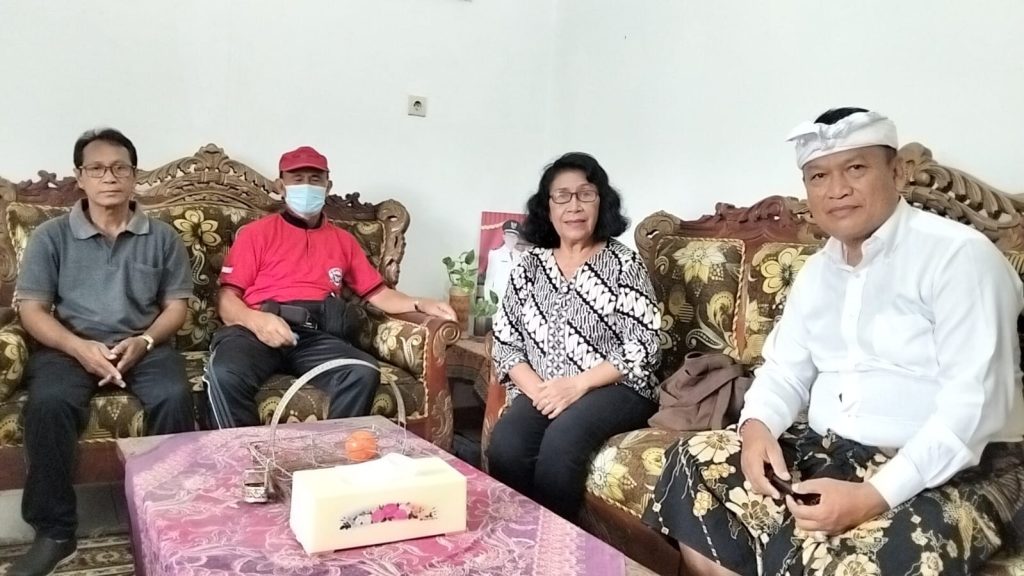
The PISN program was implemented through several stages from May to August 2026. The initial stage in May focused on internal coordination among the implementation team, program socialization with partners and stakeholders, identification of needs and mapping of partner challenges, as well as preparation of Rejang Keraman Dance training materials.
These activities provided an important foundation before the program entered the training and media-production stages. The needs assessment was conducted to ensure that the innovations developed were genuinely aligned with community conditions and partner requirements.
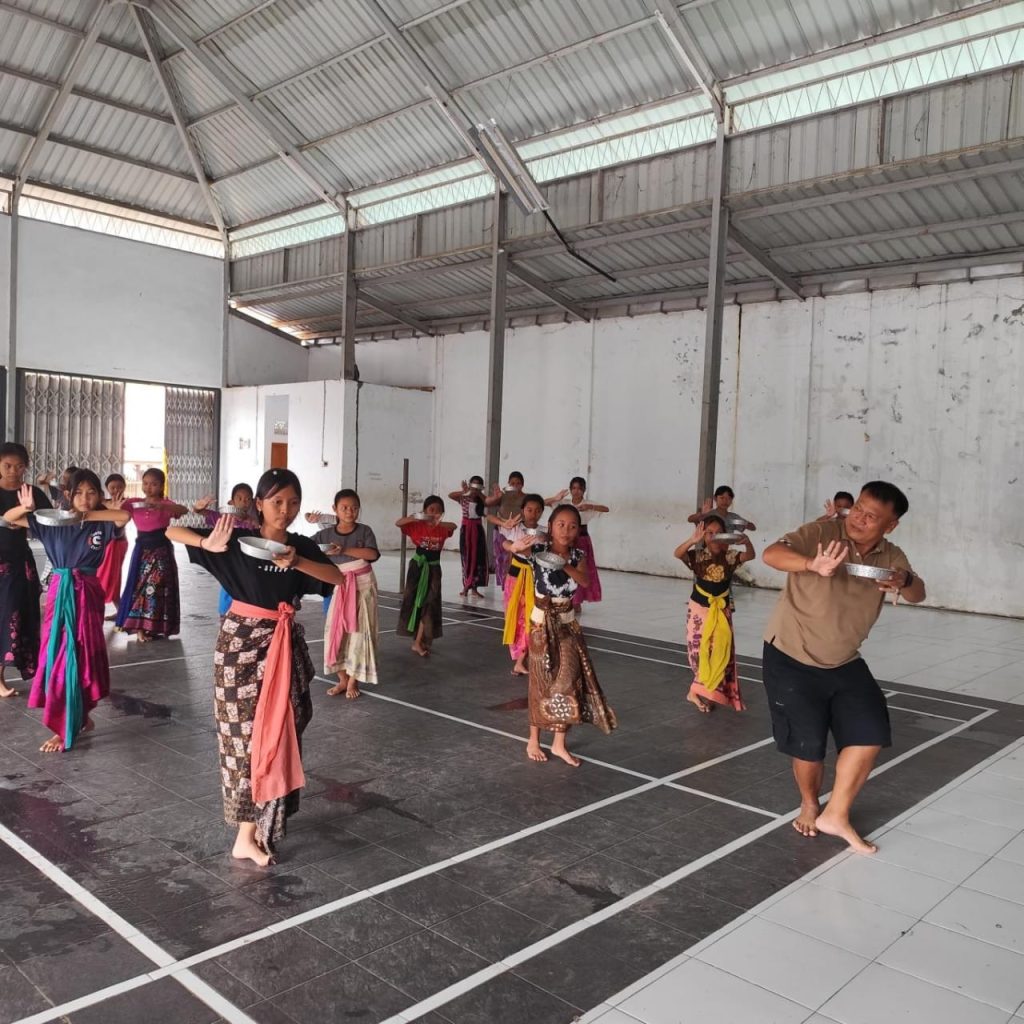
From June to August, the program continued with Phase I and Phase II Rejang Keraman Dance training, movement recording and documentation, development and production of interactive learning media, and testing of the learning media during training activities.
The recording process considered not only visual aesthetics but also the systematic documentation of dance movements so that the materials could function as learning resources. The resulting documentation was subsequently processed into learning media that were more communicative and accessible for training activities.
The media were tested together with the community partner during actual rehearsal sessions. This stage was important for obtaining practical feedback on the extent to which the media supported the learning process and how they could be further adapted to participants’ needs.
From Cultural Preservation to the Sustainability of Cultural Knowledge
The revitalization of the Rejang Keraman Dance demonstrates that the preservation of traditional arts in the digital era does not require tradition and technology to be viewed as opposing forces. Instead, the two can be integrated through strategies that continue to respect the values, meanings, ritual functions, and local knowledge embedded within an artistic tradition.
The instructional videos developed through this program are expected to serve as instruments for strengthening dancer regeneration and maintaining the continuity of knowledge associated with the Rejang Keraman Dance. Furthermore, these materials may become part of the cultural documentation system of the Kedis Village community, providing resources that can be utilized by both present and future generations.
This initiative is also relevant to the development of Indonesia’s human resources. The development of technology-based learning media for traditional arts is not solely concerned with cultural preservation; it also encourages communities to adapt to technological developments without losing their cultural roots.
The program is aligned with the spirit of Asta Cita toward Golden Indonesia 2045, particularly the agenda of strengthening human resources through education, science, technology, and achievement. At the same time, innovative learning for traditional arts is relevant to the Sustainable Development Goals (SDGs), particularly SDG 4 on Quality Education, through the development of more innovative and contextual learning opportunities, and SDG 10 on Reduced Inequalities, through the use of technology to strengthen community knowledge capacity in rural areas.
Appreciation for Government Support and the Community Engagement Team
The revitalization of the Rejang Keraman Dance has been supported by the Ministry of Higher Education, Science, and Technology through BIMA under the Nusantara Arts Innovation Program (PISN). This support provides higher education institutions with opportunities not only to fulfill their educational and research functions but also to engage directly with communities through the development and application of artistic innovations rooted in local needs.
The community engagement team extends its deepest appreciation and gratitude to the Ministry of Higher Education, Science, and Technology through BIMA for its support of the Nusantara Arts Innovation Program (PISN). Through this program, the team has been able to contribute directly to sustaining traditional arts while providing tangible benefits to the community through technology-based innovations in arts education.
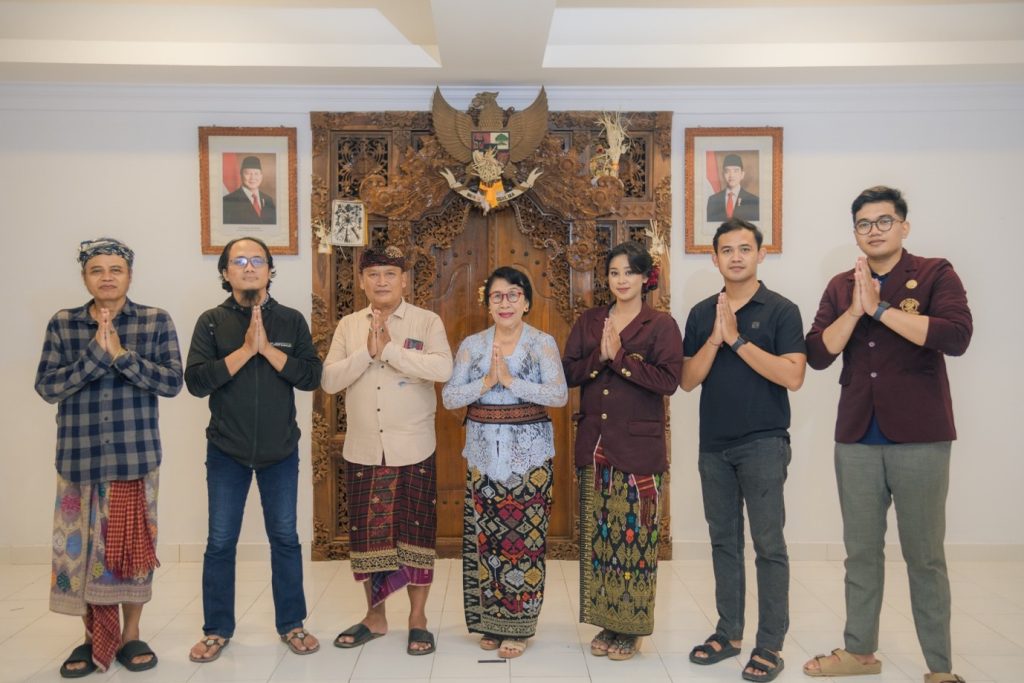
The team also expresses its appreciation to the Kedis Village community, local artists, traditional village stakeholders, and the Kencana Jaya Paksi Art Group for their active participation throughout the program.
The program was implemented by a community engagement team consisting of Prof. Dr. Ni Luh Sustiawati as Team Leader, Dr. I Nyoman Larry Julianto as a team member, and Dr. I Gusti Putu Sudarta as a team member. Collaboration among higher education institutions, government, and communities is an important component in ensuring that the innovations developed do not remain limited to a single program but generate sustainable benefits.
Keeping Tradition Alive
Ultimately, the revitalization of the Rejang Keraman Dance is not merely about documenting a traditional dance. More fundamentally, it represents an effort to preserve the knowledge, values, identity, and cultural practices of the community so that they remain alive amid changing times.
Tradition does not have to remain confined to the past. With appropriate strategies, technology can serve as a bridge connecting the experiences of previous generations with the learning approaches of today’s younger generation.
Through digital learning innovation, the Rejang Keraman Dance is expected not only to continue its presence within the ritual life of the Kedis Village community but also to remain understood, learned, practiced, and transmitted to future generations.
Thus, the preservation of traditional arts is not simply about maintaining what once existed; it is about ensuring that cultural knowledge continues to possess life, function, and meaning for communities in the present and the future.