
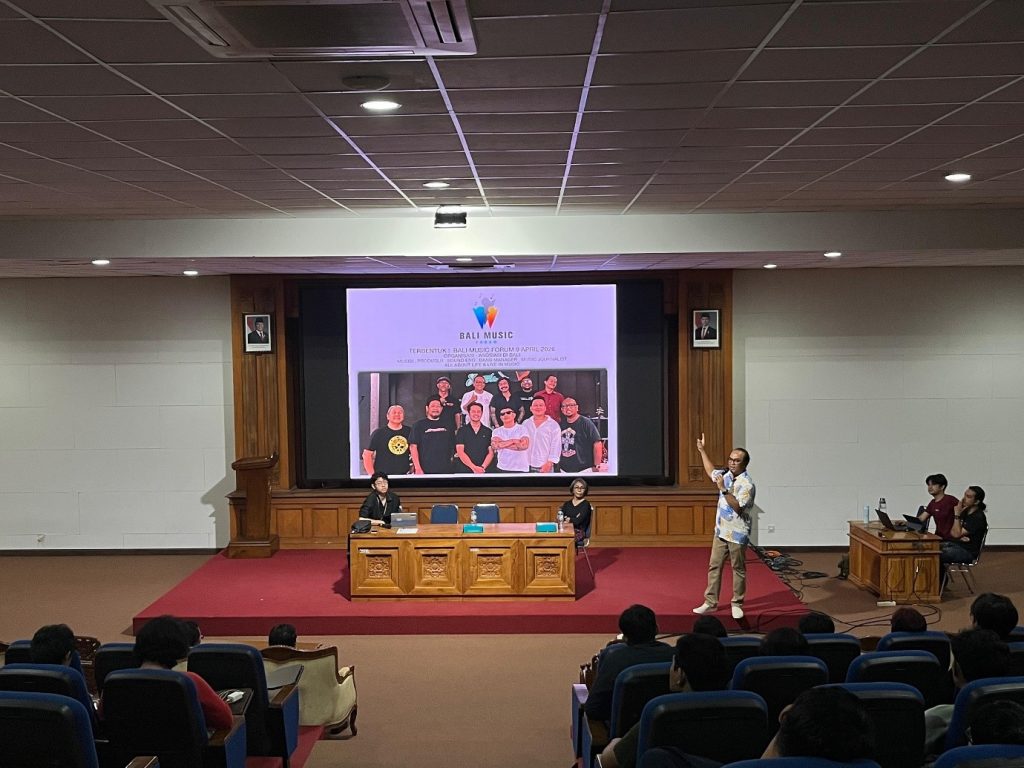
Photo: Public lecture on “Digital Music Industry and Copyright” at the Vicon Room, Citta Kelangen Building, Wednesday (April 15).
The Music Study Program, Faculty of Performing Arts, Indonesian Institute of the Arts Bali (ISI Bali), held a public lecture themed Digital Music Industry and Copyright at the Vicon Room, Citta Kelangen Building on Wednesday (April 15). The program invited two prominent figures from Indonesia’s music industry—Agung Bagus Mantra (Pregina Showbiz Bali) and Trie Utami (singer and songwriter)—as guest lecturers.
This activity aimed to share insights and experiences with students, particularly regarding the digital music industry. A total of 80 participants attended, predominantly students from the Music Study Program.
In his presentation, senior music producer Agung Bagus Mantra highlighted the importance of technological adaptation and intellectual property protection in the modern era. He emphasized that distributing music through digital platforms is not only about business, but also about valuing creative work and leaving a lasting legacy.
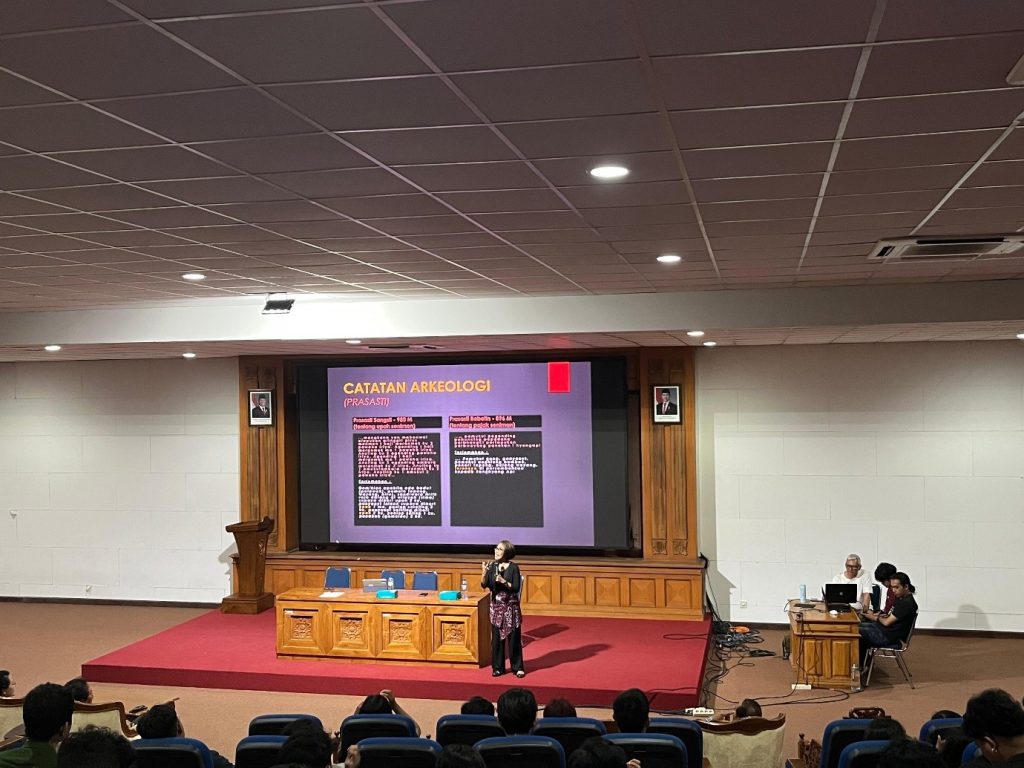
Photo: Public lecture on “Digital Music Industry and Copyright” at the Vicon Room, Citta Kelangen Building, Wednesday (April 15).
Vocalist and songwriter Trie Utami further explored legal issues and royalties. According to her, although copyright law exists, the reality in practice is still far from well-organized compared to systems abroad, which are more integrated.
“Abroad, there are well-structured unions. When you perform, you register, pay, and once your immigration stamp is issued, everything is automatically processed. Meanwhile here, when foreign musicians come, who protects us? There is still no clear system. Our ecosystem is not yet unified,” she explained.
Through her Sound of Borobudur project, Trie Utami also encouraged younger generations to appreciate history. One example is research on temple reliefs, which shows that 1,300 years ago, the archipelago already had a highly advanced musical civilization with a complete orchestral system.
“At Borobudur, there were already complete ensembles, as seen in the reliefs. If they played together, it means there were compositions and arrangements—an ecosystem already existed. When Europe was still in the Dark Ages, in Java we already had orchestral performances. There was even a system of payment records for musicians at that time,” she added.
The event also strengthened the relationship between ISI Bali and the industry. It highlighted the role of Pregina Production, owned by Agung Bagus Mantra, as a key partner in the MBKM (Merdeka Belajar Kampus Merdeka) program, where many students undertake internships and are later recruited for professional work.


