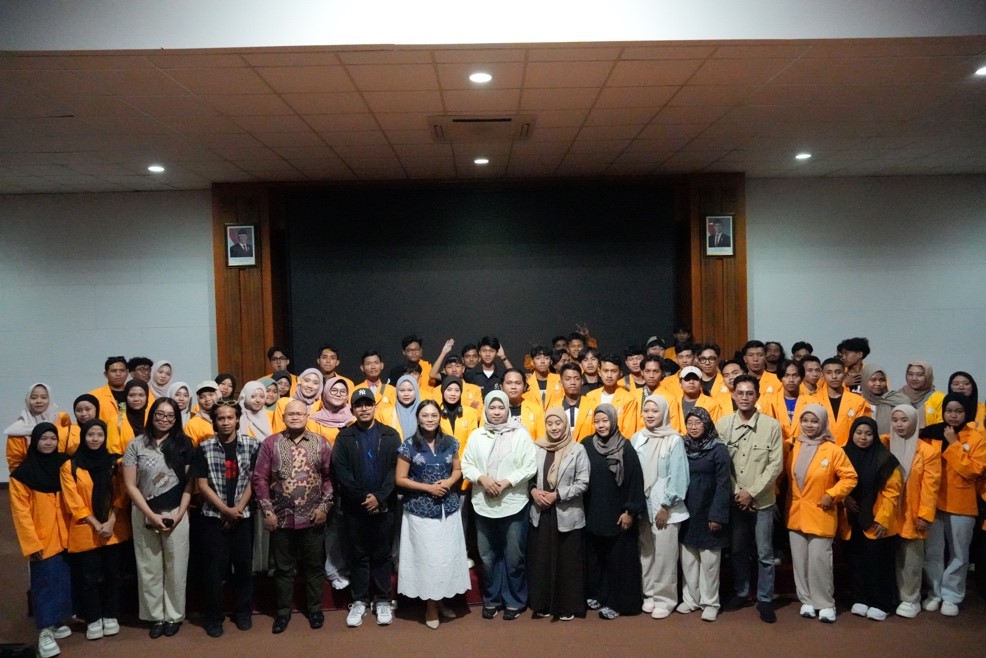
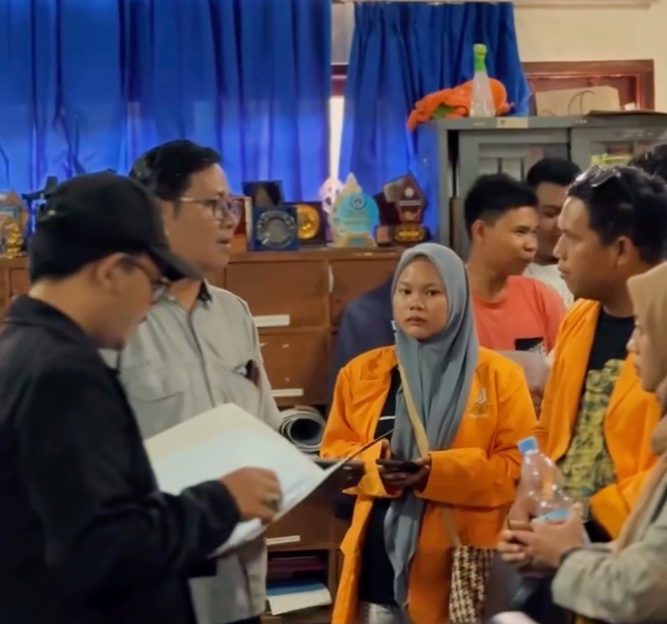
DENPASAR – In the spirit of academic collaboration and the strengthening of creative networks, the Visual Communication Design (DKV) Study Program of the Faculty of Fine Arts and Design (FSRD), Institut Seni Indonesia (ISI) Bali, welcomed an academic excursion visit from the Visual Communication Design Study Program of Universitas Nahdlatul Ulama (UNU) Pasuruan on Friday, 9 January 2026. This meeting served as an important momentum in aligning and connecting the design education visions of both institutions.
Warm Welcome and Strategic Engagement
The delegation of 70 students and 10 accompanying lecturers from UNU Pasuruan was warmly received by the Vice Dean for Student Affairs and Cooperation of the Faculty of Fine Arts and Design (FSRD), ISI Bali, Dr. Ni Luh Desi In Diana Sari, M.Sn. In an atmosphere of collegiality and openness, the UNU Pasuruan delegation was led directly by the Vice Rector III, Dr. Amidatus Sholihat Jamil, accompanied by the Dean of the Faculty of Computer Science, Senjaya Machfudi Zulkif, M.I.Kom., the Head of the Visual Communication Design Study Program, Kharisma Nanda Zenmira, S.Pd., M.Sn., along with the entire faculty members of the DKV Study Program at UNU Pasuruan.
The meeting was complemented by in-depth discussions on the exploration of strategic collaboration within the framework of the Tri Dharma of Higher Education. One of the key issues addressed was the shared commitment to enhancing academic quality through the exchange of authors in scholarly journals, an initiative expected to enrich design-related literature and broaden the intellectual horizons of academics from both institutions.
Guest Lecture: Unpacking the Essence of Bali Branding
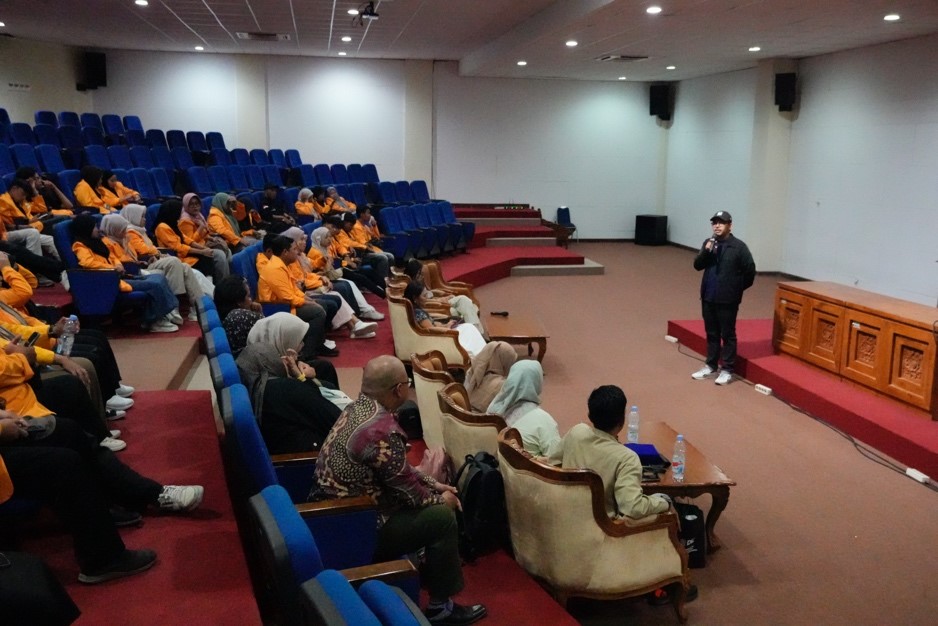
To further strengthen the academic dimension of the visit, a guest lecture entitled “Branding Bali” was conducted. The session was delivered comprehensively by the Coordinator of the Visual Communication Design Study Program at ISI Bali, Gede Bayu Segara Putra, S.Ds., M.Sn. In his presentation, Bayu Segara examined how Balinese cultural elements are strategically managed through visual communication design approaches to construct a strong and globally recognizable regional identity. Students from UNU Pasuruan demonstrated strong enthusiasm in exploring the strategies behind Bali’s visual aesthetics, which have long served as a reference for design practices grounded in local wisdom.
Symbolism of Collaboration and Appreciation of Works
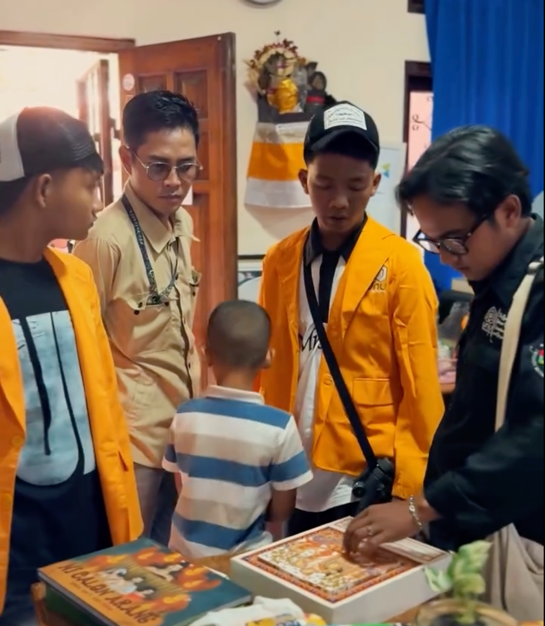
As a manifestation of commitment to fostering future collaborative opportunities, the event continued with a ceremonial exchange of souvenirs. This exchange symbolized the bond of friendship between the two institutions as well as a shared aspiration for the growth of sustainable and mutually beneficial synergy.
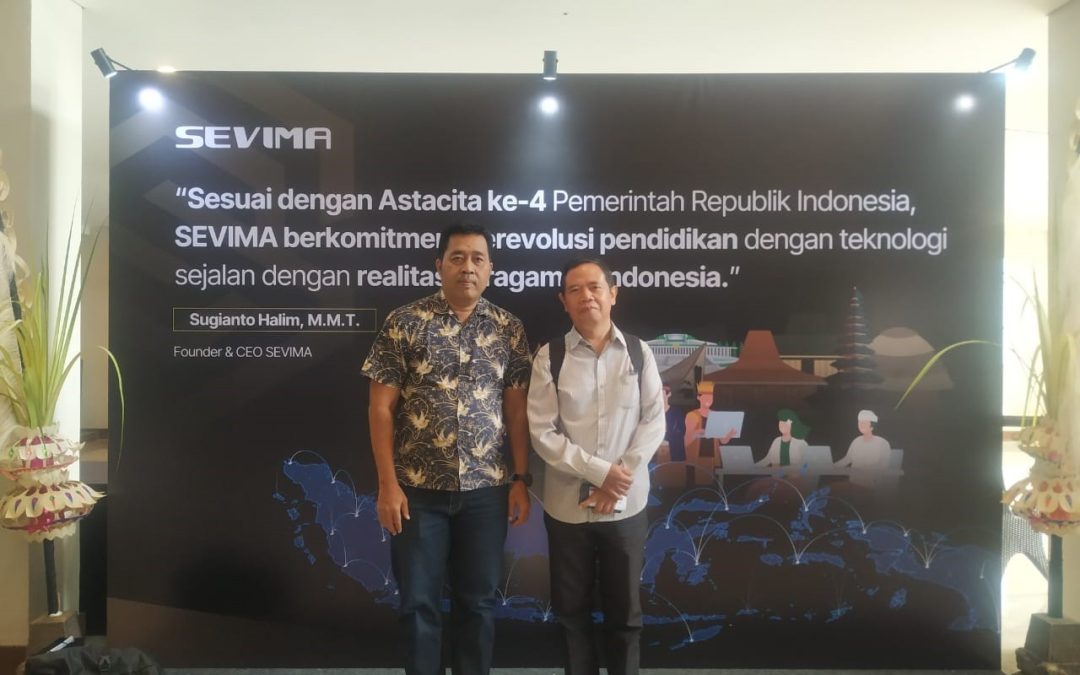
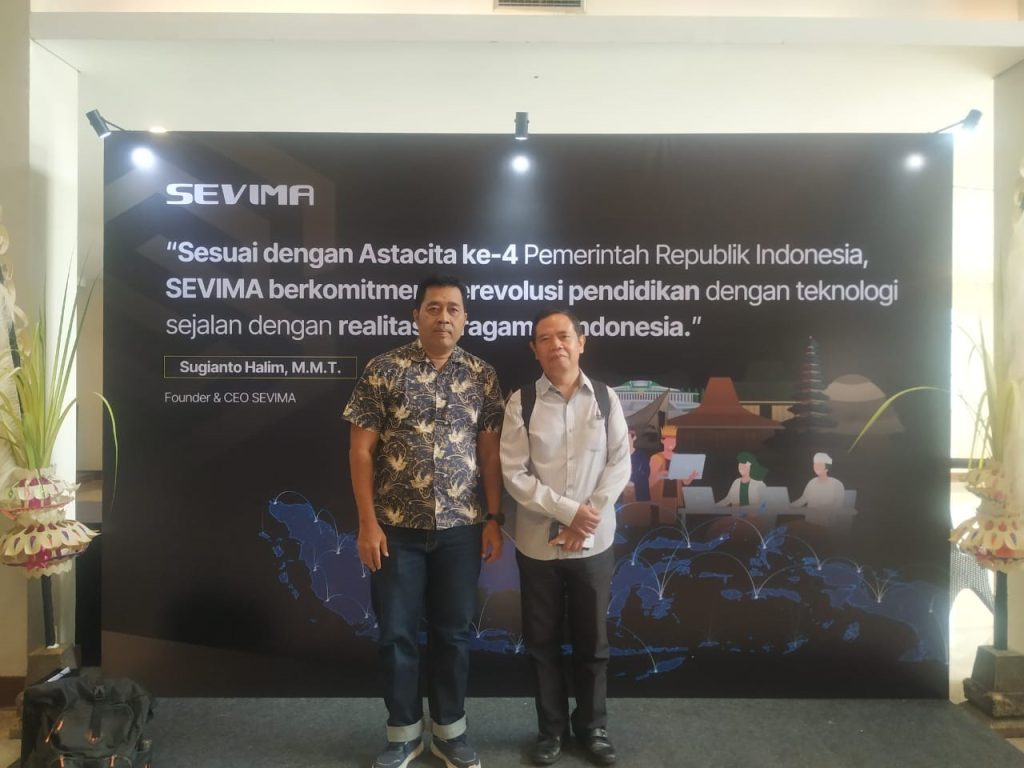
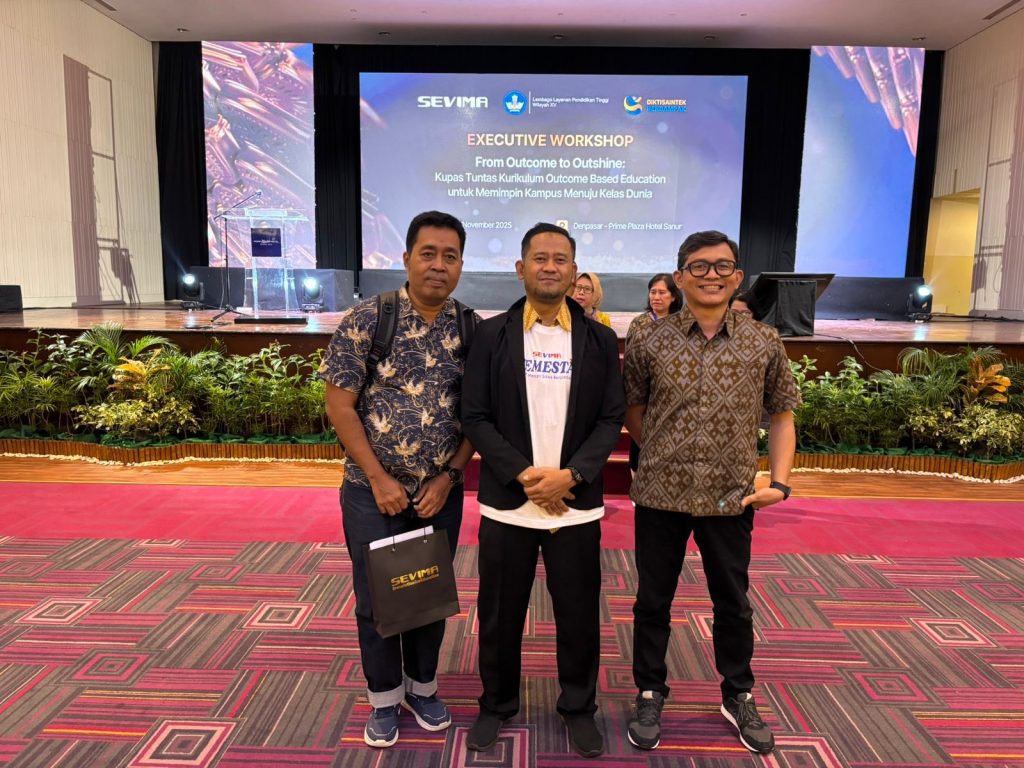
Photo: SEVIMA Workshop Activity at Prime Plaza Hotel Sanur, Denpasar, Bali, Thursday (6 November 2025)
On 6 November 2025, SEVIMA (Academic Evaluation and Management Information System) organized a workshop entitled “From Outcome to Outshine: An In-Depth Exploration of the Outcome-Based Education Curriculum to Lead Universities Toward World-Class Status.” The workshop aimed to provide a deeper understanding of the Outcome-Based Education (OBE) curriculum, which is designed to meet both national and international accreditation standards in higher education.
Participants and Workshop Objectives
The workshop was attended by 294 participants representing various higher education institutions across Indonesia. Held from 09.00 to 16.00 WITA, the event had several primary objectives: to disseminate the latest information on the development of OBE-based curricula, to enhance participants’ understanding of SEVIMA-developed applications that support the efficiency of academic administration, and to provide a forum for discussion on the utilization of technology in education.
Workshop Materials
Key topics discussed during the workshop included an introduction to the OBE curriculum, which is designed to produce high-quality graduates who are competitive and ready to face global challenges. Participants were also introduced to SEVIMA as a platform that assists higher education institutions in managing academic data efficiently. The main features of SEVIMA—such as academic information systems, grade management, and course registration—were explained in detail, with particular emphasis on the platform’s advantages in improving data accuracy and processing speed.
In addition, case study sessions and best practices presented concrete examples of SEVIMA implementation in various universities. Participants were also given opportunities to raise questions and discuss challenges encountered in the implementation of educational technology.
Benefits Gained
The workshop provided new insights into the importance of digitalization in academic data management. Participants reported feeling better prepared to apply the knowledge gained, both in the context of implementing the OBE curriculum and utilizing the SEVIMA platform. The discussions facilitated the emergence of new perspectives on addressing challenges in academic administration within higher education institutions.
Among the key benefits identified were a deeper understanding of the OBE curriculum and SEVIMA features that support work efficiency, as well as valuable opportunities for interaction and knowledge exchange with participants from diverse institutional backgrounds.
Overall, the workshop was highly beneficial in enhancing participants’ understanding of the role of technology in academic administrative management. SEVIMA demonstrated its capacity to offer effective solutions for higher education institutions in managing academic data more efficiently. As a result of the workshop, participants felt more confident and prepared to promote the implementation of OBE curricula and technology-based management systems within their respective institutions.
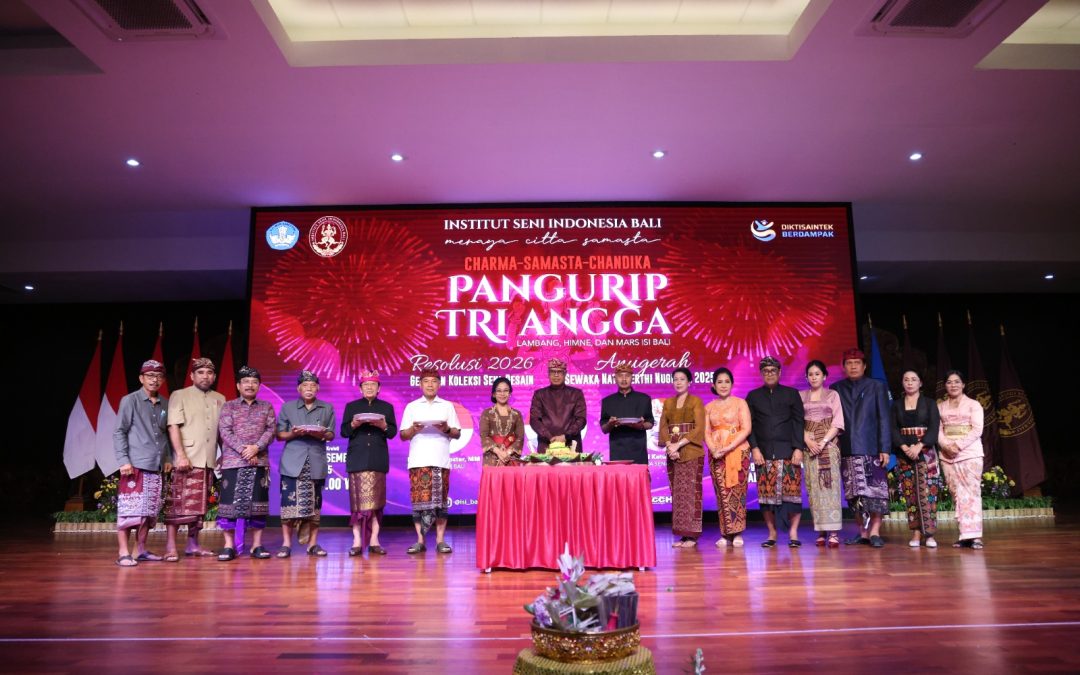
Photo:Pangurip Tri Angga entitled “Charma–Samasta–Chandika,” held on Wednesday (31 December) at the Kirtya Sabha Mahottama Auditorium, ISI Bali.
The transformation of the Indonesian Institute of the Arts Denpasar into the Indonesian Institute of the Arts Bali (ISI Bali) has entered a phase of institutional identity consolidation. Through the Pangurip Tri Angga event entitled “Charma–Samasta–Chandika,” held on Wednesday (31 December) on campus, ISI Bali officially inaugurated its Emblem, Hymn, and March as representations of the renewed institutional character and spirit of Bali’s state higher education institution in the arts.
In his address, the Rector of ISI Bali, Prof. Dr. Wayan ‘Kun’ Adnyana, stated that 2025 marks a significant historical milestone for ISI Bali. Following the institutional transformation from ISI Denpasar to ISI Bali and the promulgation of the Minister of Higher Education, Science, and Technology Regulation Number 28 of 2025 concerning the Organization and Governance of ISI Bali, this transformation was further completed by the issuance of Regulation Number 50 of 2025 on the Statute of the Indonesian Institute of the Arts Bali, enacted on 24 December 2025.
Prof. Kun Adnyana explained that the ISI Bali Statute serves as a fundamental legal foundation that formally establishes the Emblem, Hymn, and March of ISI Bali as the Tri Angga—three noble institutional attributes that simultaneously embody the spirit of ISI Bali. “Today marks the moment for us to cultivate the Pangurip Tri Angga of ISI Bali. These three markers signify the authenticity of human character, illuminate the guiding lantern of ideas, creativity, and artistic works, and represent the enduring dedication to the Tridharma across generations,” stated the Professor of Art History.
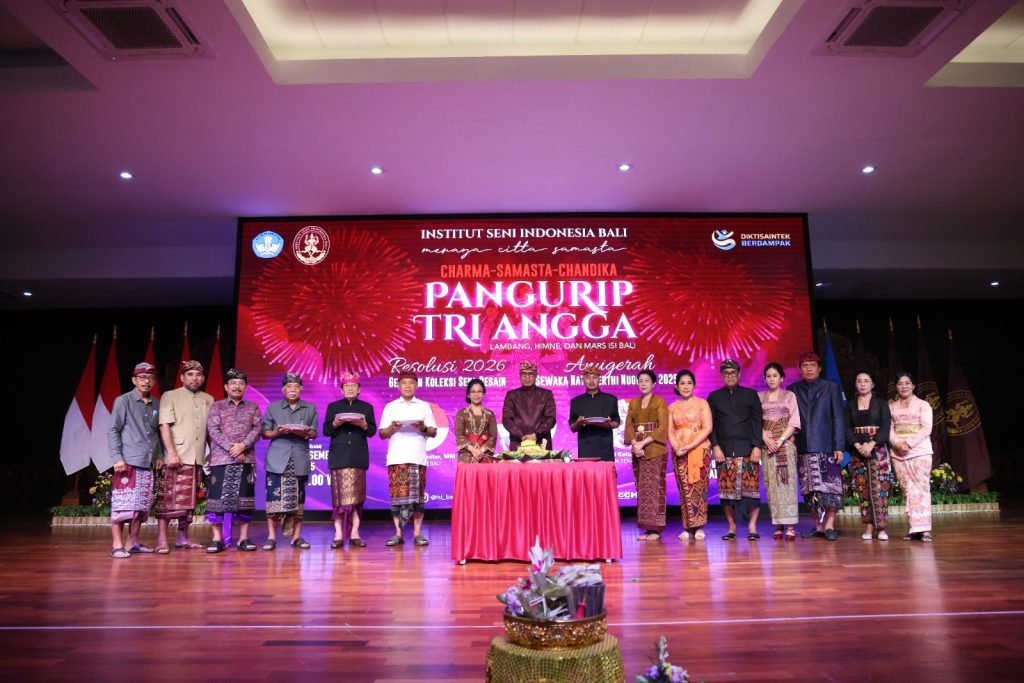
Photo:Pangurip Tri Angga entitled “Charma–Samasta–Chandika,” held on Wednesday (31 December) at the Kirtya Sabha Mahottama Auditorium, ISI Bali.
The Nretya or Nritya Siwa Nataraja emblem constitutes an enduring symbol that has been attached to ISI Bali since its earliest institutional form as ASTI Denpasar. The visual form of the emblem has been transformed through a contemporary artistic and stylistic reinterpretation that embodies the core values of ISI Bali. The authenticity of ISI Bali’s values, along with the lived experience and deep reverence for the institution, forms the foundational rhyme and poetic expression of the grandeur of the ISI Bali Hymn. Meanwhile, the nobility of Indonesian values resonates powerfully in the ISI Bali March.
Beyond the reinforcement of institutional identity, the Rector also presented ISI Bali’s strategic achievements throughout 2025. ISI Bali attained the status of Superior Accreditation (Akreditasi Unggul) from the National Accreditation Board for Higher Education (BAN-PT), as well as Superior Accreditation for the Master’s Program in Design and the Doctoral Program in Arts. These accomplishments were further strengthened by ISI Bali’s success in receiving three Diktisaintek Awards 2025, namely: Gold Winner for Industry Collaboration, Silver Winner for the Integrated Service Unit, and Bronze Winner for International Collaboration.
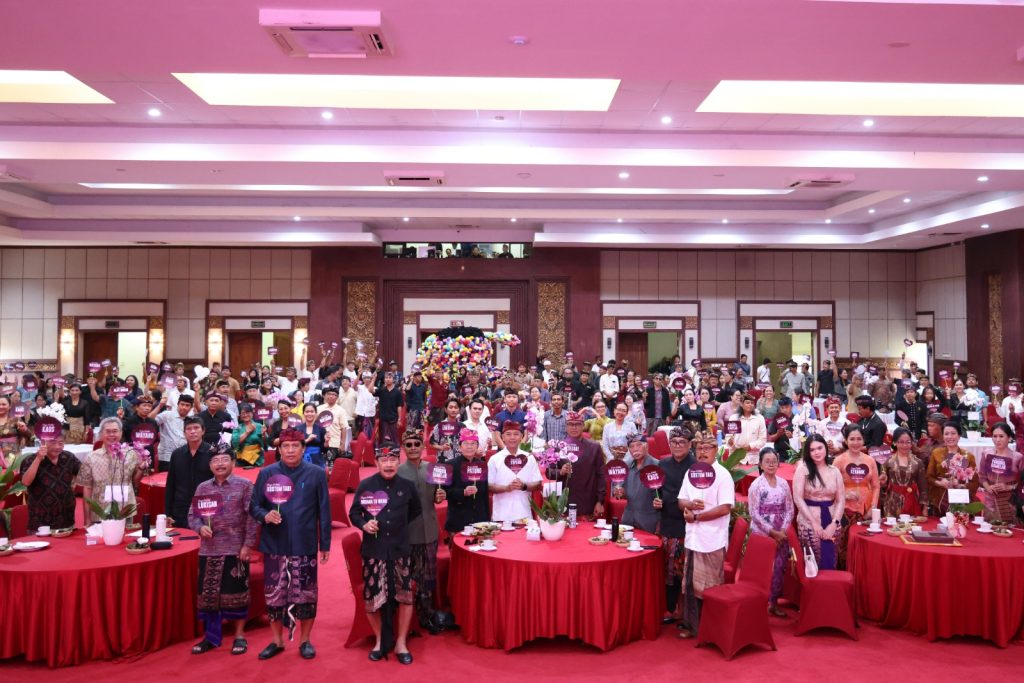
The Pangurip Tri Angga event was attended by various key stakeholders. The Governor of Bali was represented by the Head of the Bali Provincial Office of Culture, Dr. I Gede Arya Sugiartha. The event was also attended by members of the ISI Bali Board of Trustees, the Chair and members of the ISI Bali Senate, Vice Rectors, Deans, heads of work units, faculty members and administrative staff, the Chair and members of the Dharma Wanita Persatuan (DWP) ISI Bali, members of the press, artists, cultural figures, community leaders, strategic partners, and the entire academic community of ISI Bali.
Representing the Governor of Bali, Prof. Dr. Gede Arya Sugiartha, in his remarks, emphasized that the launch of the ISI Bali Tri Angga transcended the mere introduction of institutional symbols. According to him, Pangurip Tri Angga constitutes a significant milestone in strengthening Bali’s cultural identity as a resilient and culturally rooted island.
“Tri Angga of ISI Bali is part of the broader effort to safeguard Bali as an enduring, cultured, and distinctive island. It does not belong solely to the institution, but also represents the cultural values of Bali,” he stated.
Prof. Arya further expressed his highest appreciation to ISI Bali for the implementation of Pangurip Tri Angga. He expressed hope that the Emblem, Hymn, and March of ISI Bali would continually serve as sources of inspiration, reinforce collective identity, and support the representation of Balinese cultural identity at both national and global levels.
As part of the event series, ISI Bali also designated 2026 as the Year of the Art–Design Collection Movement, and conferred the Sewaka Nata Kerthi Nugraha Award 2025 upon three master artists—Dra. I G.A. Susilawati (Balinese Dance Artist), I Made Sukanta Wahyu (Sculptor), and I Nyoman Subrata (Drama Gong Artist)—in recognition of their dedication and lifelong contributions to the elevation of art and culture. (ISIBALI/Public Relations)
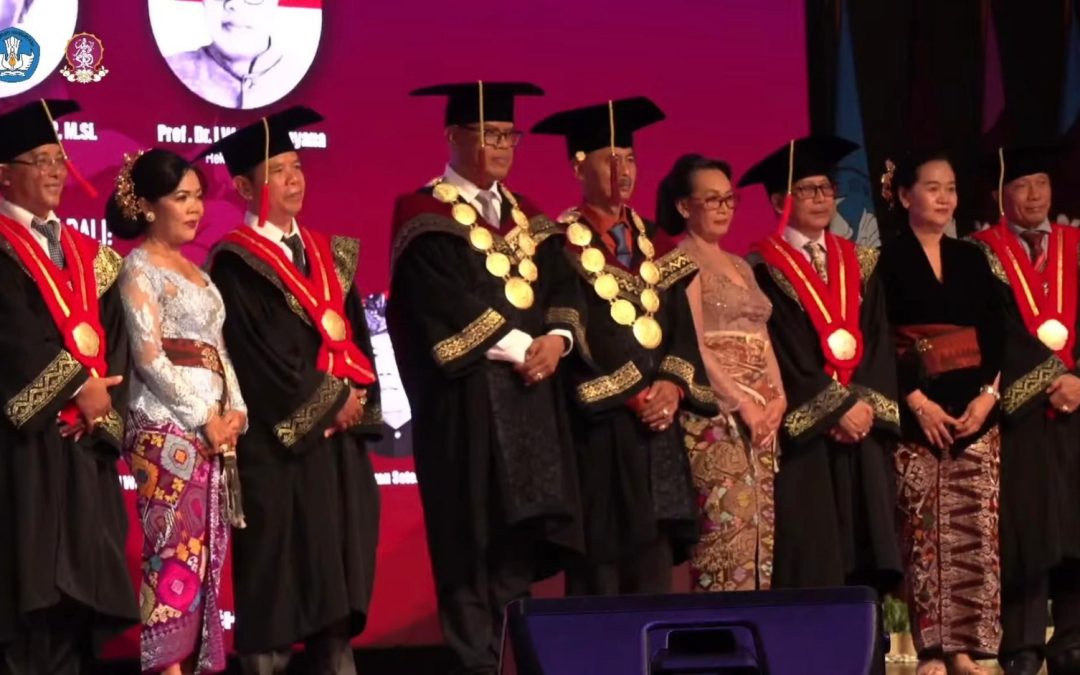
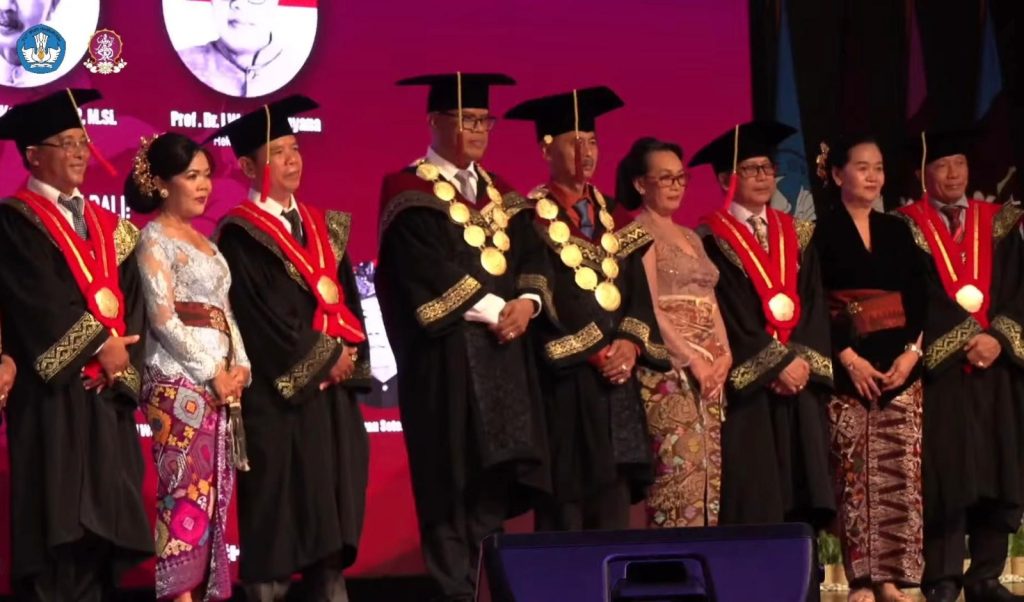
Photo: The Rector of the Indonesian Institute of the Arts Bali (ISI Bali), Prof. Dr. Wayan “Kun” Adnyana, and the Chair of the ISI Bali Senate, Prof. Dr. Ketut Muka, together with four newly inaugurated Professors of ISI Bali, during the Open Senate Session for the Inauguration and Public Address of Professors entitled “Karma–Citta–Waskita,” held on Tuesday (30 December) at the ISI Bali campus.
The Indonesian Institute of the Arts Bali (Institut Seni Indonesia Bali/ISI Bali) closed the end of 2025 with a significant strategic achievement through the inauguration of four newly appointed Professors during an Open Senate Session for the Inauguration and Public Address of Professors entitled “Karma–Citta–Waskita,” held on Tuesday (30 December). This milestone underscores ISI Bali’s consistent commitment to strengthening academic excellence and enhancing its global competitiveness in the fields of art and design.
The four Professors inaugurated were Prof. Dr. Drs. Anak Agung Gede Rai Remawa, M.Sn. (Interior Design and Architecture), Prof. Dr. I Ketut Suteja, SST., M.Sn. (Art Creation), Prof. Dr. I Wayan Setem, S.Sn., M.Sn. (Fine Art Creation), and Prof. Dr. Drs. I Wayan Suardana, M.Sn. (Craft Art Creation). They represent the first generation of Professors at ISI Bali appointed through the Art Creation pathway.
The Rector of ISI Bali, Prof. Dr. Wayan “Kun” Adnyana, stated that this inauguration completed a series of major institutional achievements throughout 2025, following the transformation of the institution from ISI Denpasar into ISI Bali, as well as the attainment of “Excellent” institutional accreditation and similar distinctions for several study programs. According to him, the inauguration of Professors at the close of the year reflects the success of ISI Bali’s sustained academic quality management.
“The end of 2025 marks a highly meaningful moment for ISI Bali. The inauguration of these four Professors affirms the maturity of our institution and our readiness to compete at the global level,” the Rector remarked.
With the addition of these four Professors, ISI Bali in 2025 achieved a professoriate ratio of 10 percent—23 Professors out of 231 permanent lecturers—the highest among all arts higher education institutions in Indonesia. This achievement has contributed to increased public trust and growing interest from prospective students, particularly at the postgraduate and doctoral levels.
Beyond strengthening academic human resources, throughout 2025 ISI Bali also received the Diktisaintek Award 2025, earning distinctions as Gold Winner for Industry Collaboration, Silver Winner for Integrated Service Units, and Bronze Winner for International Collaboration. At the global level, ISI Bali initiated the Bali–Global Axis of Arts and Design (B-GAAD) II, which resulted in the declaration establishing The Asia Pacific’s Axis of Arts and Design Higher Education Network.
The end-of-year inauguration ceremony was attended by the Vice Regent of Gianyar, Anak Agung Gde Mayun, S.H., members of the ISI Bali Board of Trustees, the Chair and Members of the ISI Bali Senate, institutional leaders, lecturers, administrative staff, the Chair and members of the ISI Bali Dharma Wanita Persatuan, artists, cultural figures, community leaders, and the families of the newly inaugurated Professors. The event was also broadcast live through ISI Bali’s official social media channels.
During the ceremony, the Vice Regent of Gianyar, Anak Agung Gde Mayun, S.H., representing the Regent of Gianyar, delivered a welcoming address and expressed appreciation for ISI Bali’s achievements. He conveyed pride in the fact that the four newly inaugurated Professors maintain strong ties to Gianyar Regency. Two of them, Prof. Anak Agung Gede Rai Remawa and Prof. I Wayan Suardana, are native sons of Gianyar. Meanwhile, Prof. I Ketut Suteja is married to a woman from Gianyar, and Prof. I Wayan Setem has chosen to reside in Gianyar.
“On behalf of the Government of Gianyar Regency, we are proud that the Professors inaugurated today have strong cultural and emotional ties to Gianyar. This is a source of regional pride as well as an inspiration for the younger generation of Gianyar,” stated the Vice Regent in reading the Regent’s address.
Furthermore, the Gianyar Regency Government expressed its hope that the Professors would continue to contribute through critical thought, research, and artistic works that support cultural preservation, strengthen local identity, and promote culture-based development. Synergy between ISI Bali and the local government is expected to grow stronger in advancing the arts, culture, and Bali’s creative economy.
During the Open Senate Session, each Professor delivered an inaugural scholarly address reflecting their respective areas of expertise and academic contributions. Prof. Rai Remawa discussed the aesthetic orientation of Balinese traditional interior design and architecture in Poland; Prof. Suteja explored the concept of Tattwa Jnana in the creation of performing arts; Prof. Setem presented ecological art as a medium for sustainable environmental advocacy; and Prof. Suardana introduced an innovative method of craft art creation based on the Tri Prakara Sapta Krama framework.
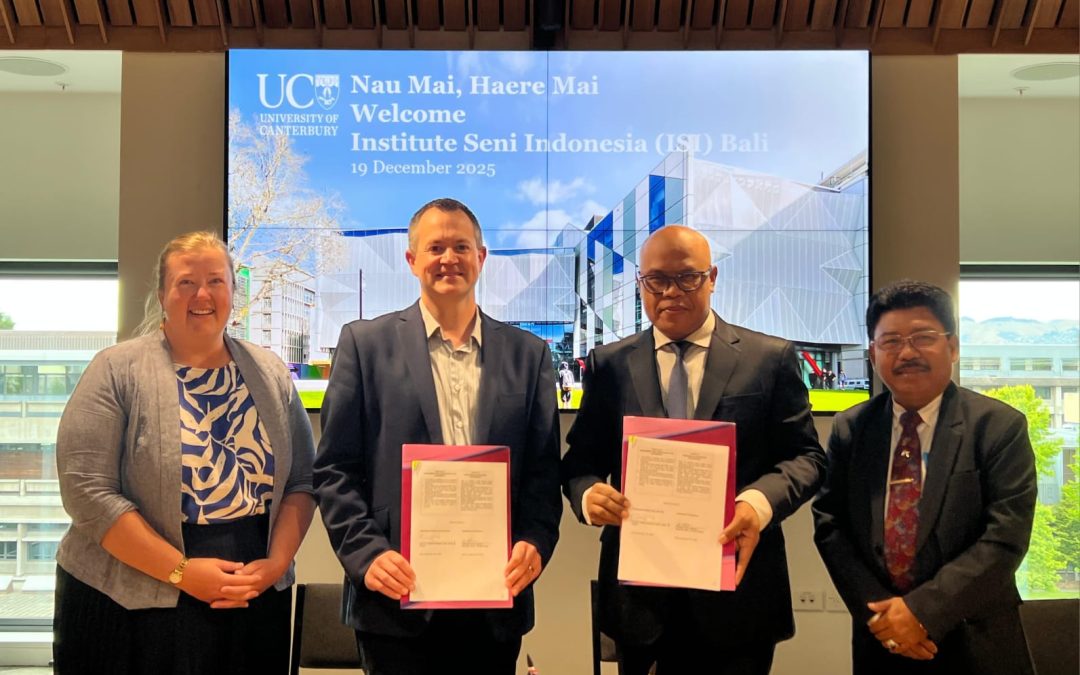
Photo: Signing of the MoU between ISI Bali and the University of Canterbury (UC), Friday (19 December) at the UC campus, Christchurch, New Zealand.
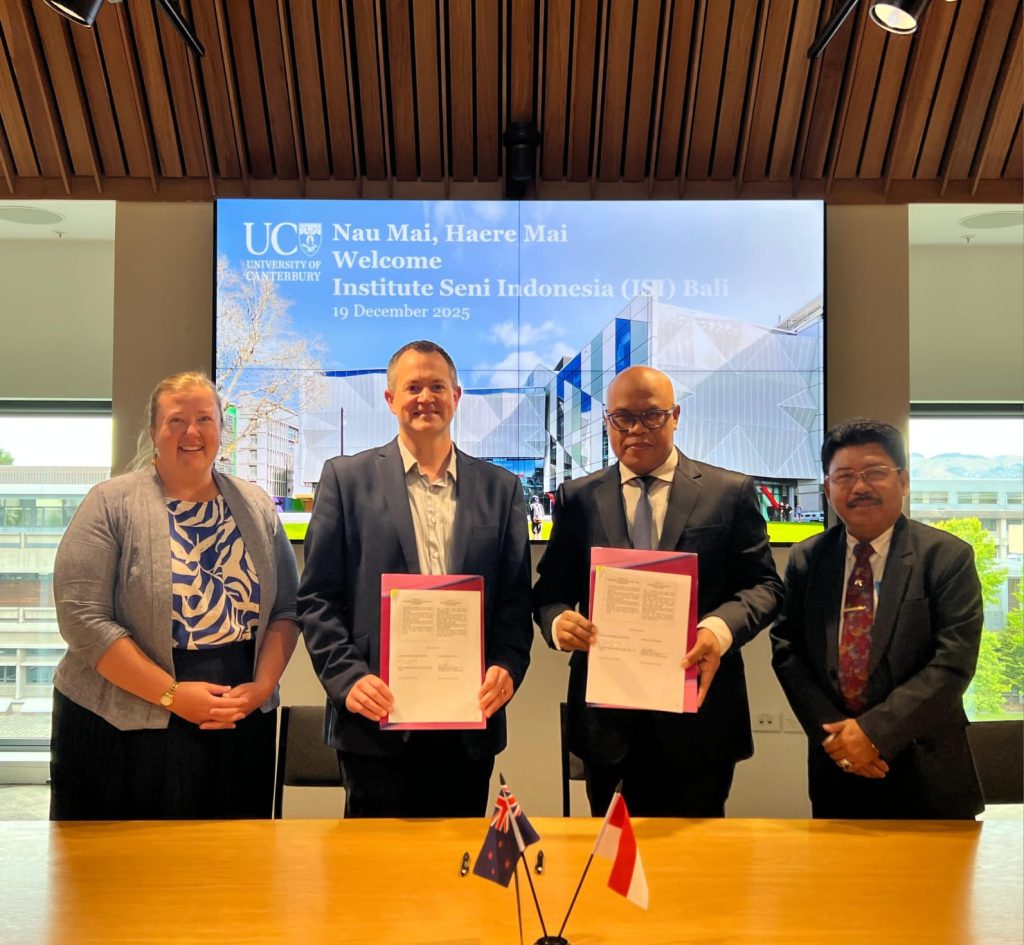
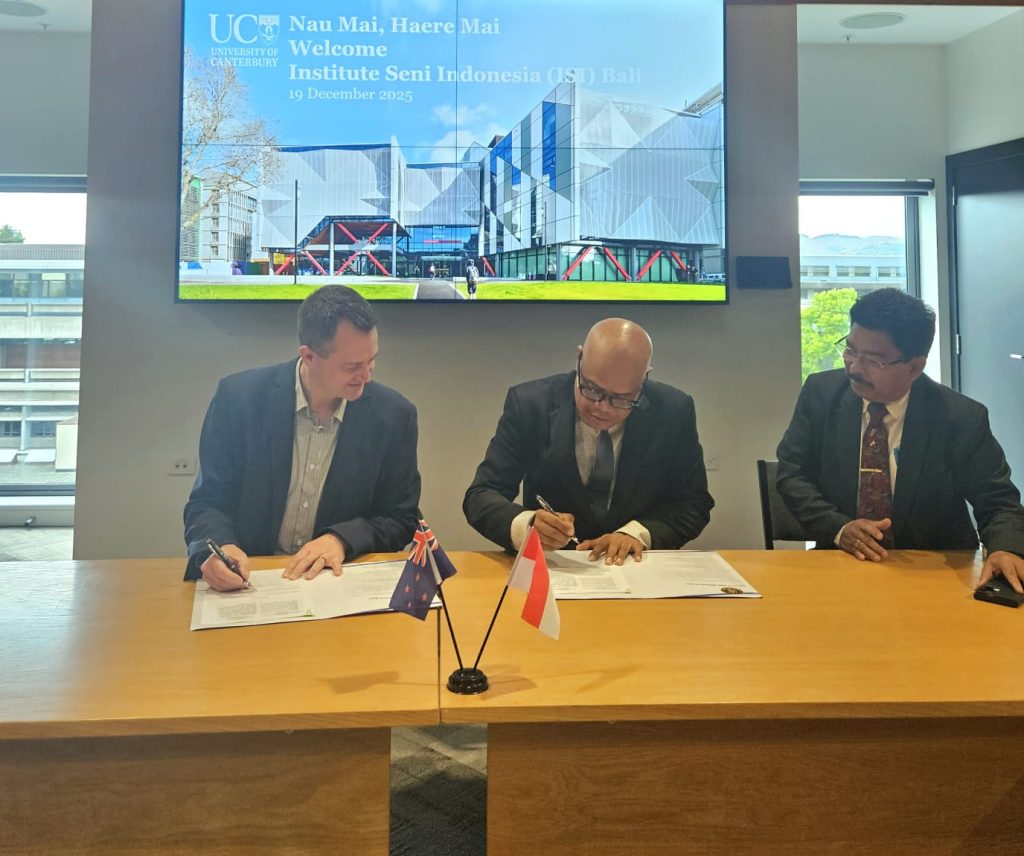
The Indonesian Institute of the Arts Bali (ISI Bali) established a strategic partnership with the University of Canterbury (UC), Christchurch, New Zealand, through the signing of a Memorandum of Understanding (MoU) on Friday (19 December) at the UC campus.
The MoU was signed by the Rector of ISI Bali, Prof. Dr. Wayan “Kun” Adnyana, accompanied by the Vice Rector for Cooperation and Student Affairs, Prof. Dr. Komang Sudirga, together with the Executive Dean of the Faculty of Arts at the University of Canterbury, Prof. Dr. Kevin Watson. The signing ceremony was also witnessed by representatives of UC’s International Cooperation Office, Monique van Veen and Sakinah Tuan Besar.
Photo: Signing of the MoU between ISI Bali and the University of Canterbury (UC), Friday (19 December) at the UC campus, Christchurch, New Zealand.
The agreed cooperation encompasses the development of music and gamelan studies, as well as areas of digital design, including digital screening, sound system technologies, and animation. In addition, the MoU opens opportunities for the expansion of lecturer and student exchange programs between the two institutions.
As part of the series of activities, ISI Bali and the University of Canterbury conducted a Gong Kebyar gamelan workshop, benchmarking activities for digital screening laboratories, and a review of cinema facilities within the UC campus.
The Rector of ISI Bali, Prof. Wayan “Kun” Adnyana, emphasized that the signing of this MoU serves as a gateway to strengthening strategic partnerships among art and design higher education institutions in the Asia-Pacific region. This includes reinforcing the Bali-Axis of Arts and Design (B-GAAD) as a global innovation melting pot for universities within the Asia-Pacific Axis of Arts and Design Higher Education, an initiative launched by ISI Bali in 2024.
As a follow-up to the collaboration, a music professor from the University of Canterbury, Prof. Justin DeHart, also conducted a workshop for students of the ISI Bali Music Study Program on Tuesday (23 December) at the Candrametu Building, ISI Bali Campus. (ISIBALI/Public Relations)
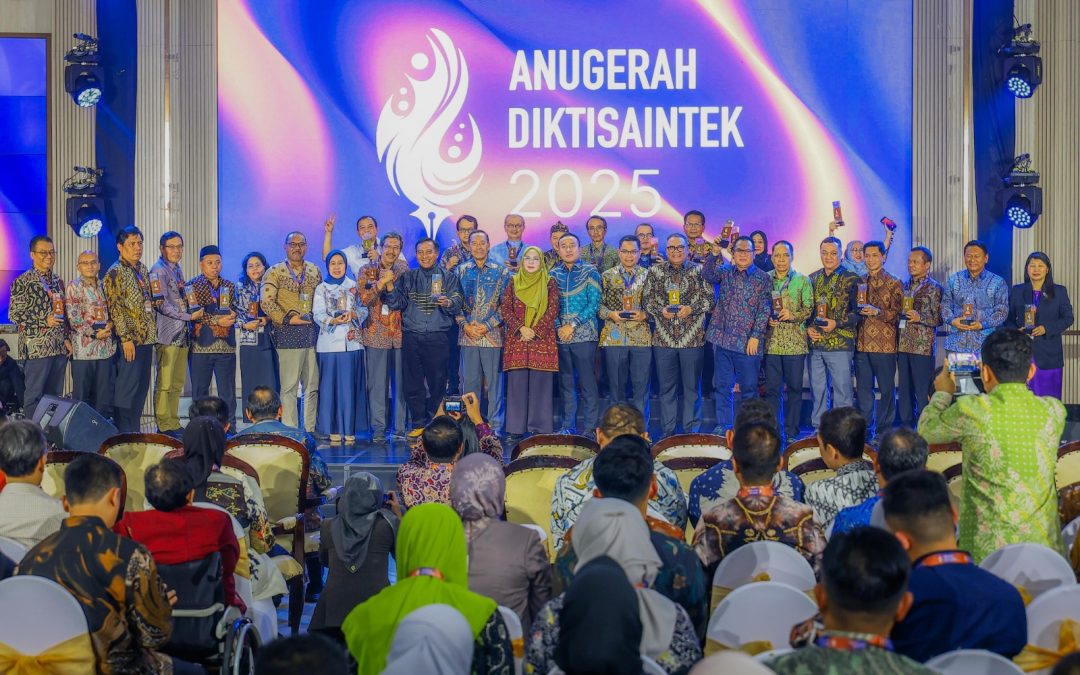
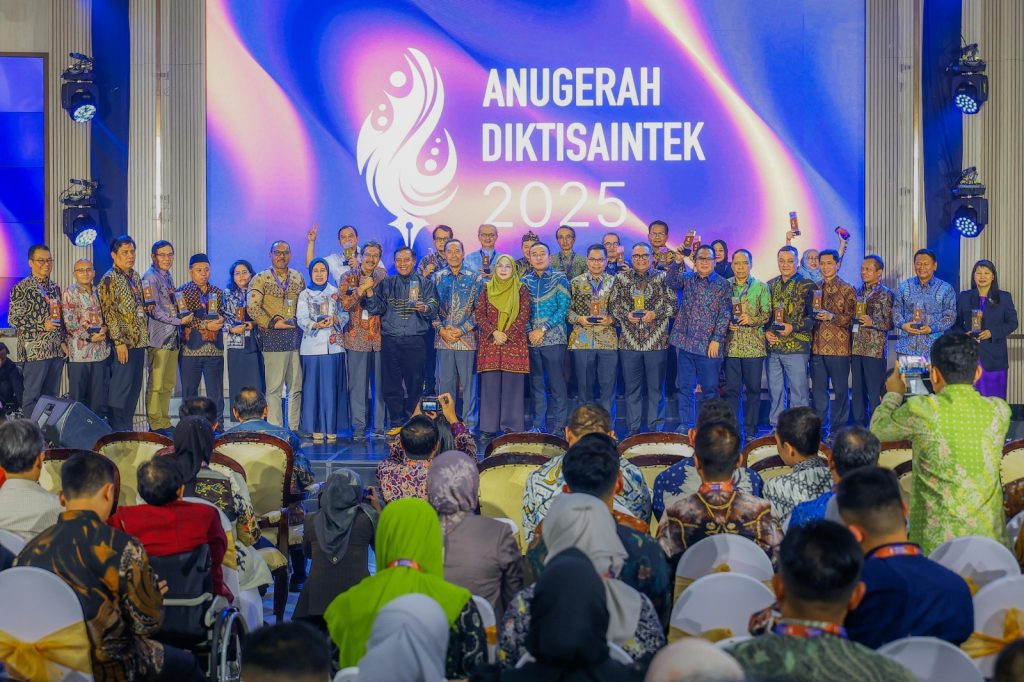
Photo: Presentation of the Diktisaintek Awards, Friday (19 December) in Jakarta.
The Indonesian Institute of the Arts Bali (ISI Bali) successfully received three awards at the 2025 Diktisaintek Awards. The honors included a Gold Winner for the Diktisaintek Collaboration Award in the category of State Universities under the Work Unit Scheme (PTN Satker), subcategory Best Industry Collaboration; a Bronze Winner in the subcategory Best International Collaboration; and a Silver Winner for the Diktisaintek Public Relations Award in the PTN Satker category, subcategory Integrated Service Unit.
The awards were received by the Vice Rector for Planning, Finance, and General Affairs of ISI Bali, Dr. Made Jodong, accompanied by the Head of the Bureau of Academic Affairs, Student Affairs, Planning, and Cooperation, Dr. Komang Arba Wirawan, on Friday (19 December) in Jakarta.
The Rector of ISI Bali, Prof. Dr. I Wayan “Kun” Adnyana, expressed his appreciation and gratitude to the entire collaboration and integrated service teams for their hard work and dedication. He encouraged all members of the academic community to continue enhancing performance in a careful and sustainable manner, in line with the increasingly competitive landscape among higher education institutions striving for excellence.
As is widely known, the 2025 Diktiristek Awards are an annual award program organized by the Ministry of Higher Education, Science, and Technology of the Republic of Indonesia. The awards encompass various categories, including National Priority Awards, Cooperation Partners, Collaboration, Public Relations, Higher Education Database, Learning and Student Affairs, Resources, Institutional Development, Research, Technology, and Community Service, as well as Journalism and Media.
The awards are conferred upon stakeholders from higher education institutions, LLDIKTI, journalists, media organizations, and partners (ministries, institutions, as well as business and industrial sectors) who have achieved outstanding accomplishments and contributed to supporting the implementation of educational transformation initiatives such as MBKM, Key Performance Indicators (IKU), and the Matching Fund program. (ISIBALI/Public Relations)