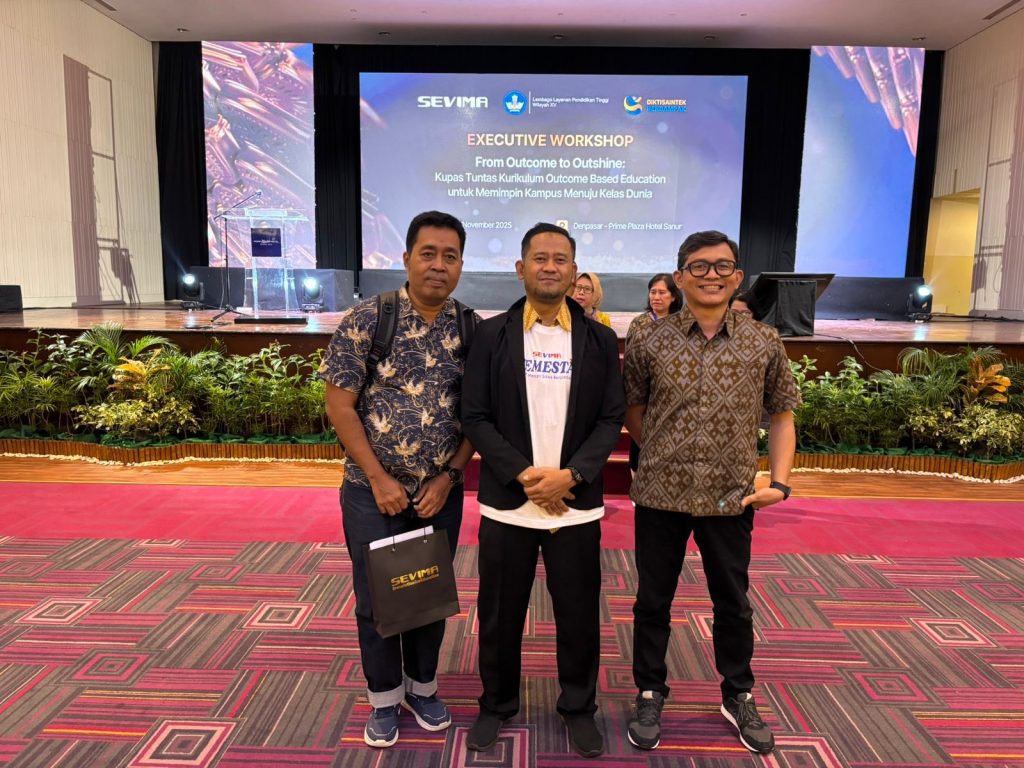
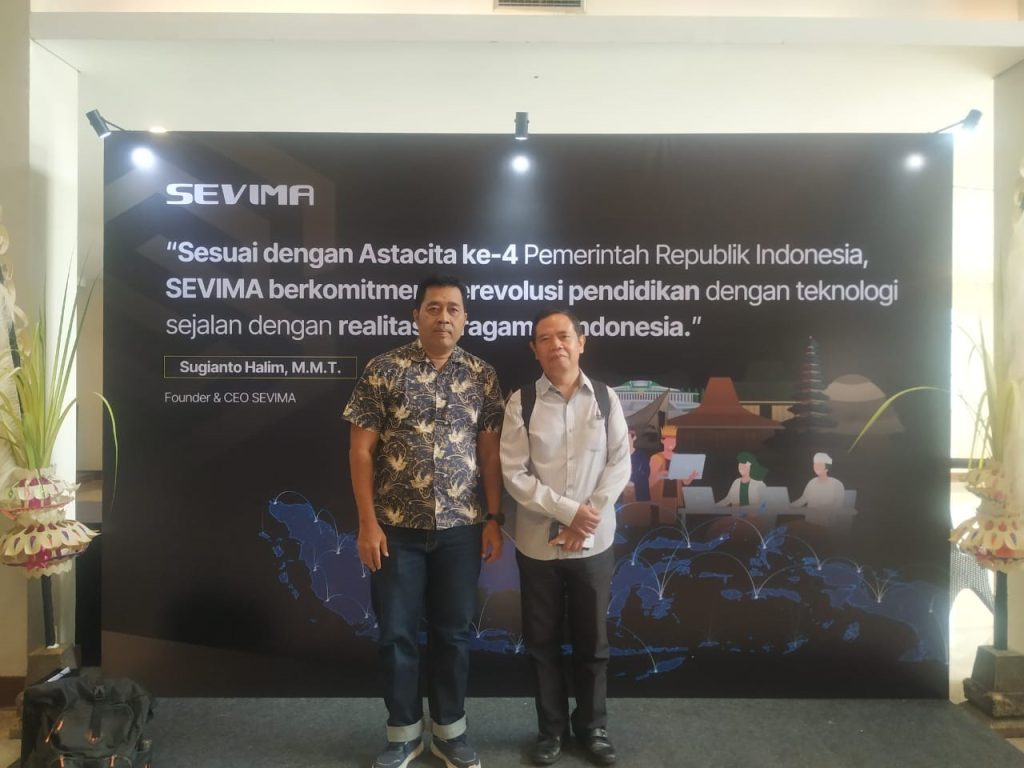
Photo: SEVIMA Workshop Activity at Prime Plaza Hotel Sanur, Denpasar, Bali, Thursday (6 November 2025)
On 6 November 2025, SEVIMA (Academic Evaluation and Management Information System) organized a workshop entitled “From Outcome to Outshine: An In-Depth Exploration of the Outcome-Based Education Curriculum to Lead Universities Toward World-Class Status.” The workshop aimed to provide a deeper understanding of the Outcome-Based Education (OBE) curriculum, which is designed to meet both national and international accreditation standards in higher education.
Participants and Workshop Objectives
The workshop was attended by 294 participants representing various higher education institutions across Indonesia. Held from 09.00 to 16.00 WITA, the event had several primary objectives: to disseminate the latest information on the development of OBE-based curricula, to enhance participants’ understanding of SEVIMA-developed applications that support the efficiency of academic administration, and to provide a forum for discussion on the utilization of technology in education.
Workshop Materials
Key topics discussed during the workshop included an introduction to the OBE curriculum, which is designed to produce high-quality graduates who are competitive and ready to face global challenges. Participants were also introduced to SEVIMA as a platform that assists higher education institutions in managing academic data efficiently. The main features of SEVIMA—such as academic information systems, grade management, and course registration—were explained in detail, with particular emphasis on the platform’s advantages in improving data accuracy and processing speed.
In addition, case study sessions and best practices presented concrete examples of SEVIMA implementation in various universities. Participants were also given opportunities to raise questions and discuss challenges encountered in the implementation of educational technology.
Benefits Gained
The workshop provided new insights into the importance of digitalization in academic data management. Participants reported feeling better prepared to apply the knowledge gained, both in the context of implementing the OBE curriculum and utilizing the SEVIMA platform. The discussions facilitated the emergence of new perspectives on addressing challenges in academic administration within higher education institutions.
Among the key benefits identified were a deeper understanding of the OBE curriculum and SEVIMA features that support work efficiency, as well as valuable opportunities for interaction and knowledge exchange with participants from diverse institutional backgrounds.
Overall, the workshop was highly beneficial in enhancing participants’ understanding of the role of technology in academic administrative management. SEVIMA demonstrated its capacity to offer effective solutions for higher education institutions in managing academic data more efficiently. As a result of the workshop, participants felt more confident and prepared to promote the implementation of OBE curricula and technology-based management systems within their respective institutions.